Protection prayers against evil exist in nearly every faith — short, time-tested words people say when they feel unsafe, whether the threat is physical, spiritual, or emotional. Below are five of the best-known from five different traditions, presented as their believers understand them, with the history of each prayer included.
Last updated: October 24, 2026
- The St. Michael prayer was written by Pope Leo XIII in 1886 and is still said daily by millions of Catholics.
- Ayat al-Kursi is verse 255 of Surah Al-Baqarah (the Quran’s second chapter) — one of the most memorized verses in Islam.
- The Hanuman Chalisa contains 40 verses and was composed by the poet-saint Tulsidas in the 16th century.
- Psalm 91 has 16 verses and is among the most-quoted chapters in the Bible for comfort and safety.
- Buddhist metta (loving-kindness) meditation is drawn from the ancient Karaniya Metta Sutta and is still practiced daily in monasteries worldwide.
What is a protection prayer? A protection prayer is a short, repeated prayer in which a person asks God, or a holy figure, to shield them and their loved ones from harm, evil, and fear. These prayers are centuries old, and each one below is still used daily by millions of people.
| Prayer | Tradition | When believers say it |
|---|---|---|
| St. Michael prayer | Catholic Christianity | Mornings, before travel, when feeling spiritually attacked |
| Ayat al-Kursi | Islam | After each prayer, before sleep, over children |
| Hanuman Chalisa verse | Hinduism | Tuesdays and Saturdays, before sleep, in times of fear |
| Psalm 91 | Bible (Jewish/Christian) | At bedsides, before journeys, in hospital wards |
| Metta (loving-kindness) | Buddhism | Daily meditation, when fear or anger strikes |
1. The St. Michael Prayer (Catholic Christianity)

Catholics believe the archangel Michael leads the fight against evil — the Book of Revelation describes him casting Satan from heaven. In 1886, Pope Leo XIII wrote a short prayer asking Michael to “defend us in battle” and “be our protection against the wickedness and snares of the devil.” It is still recited after Mass in many parishes and is the prayer Catholic exorcists recommend to laypeople — including in Opus Dei’s article on the prayer for deliverance.
“Saint Michael the Archangel, defend us in battle. Be our protection against the wickedness and snares of the devil. May God rebuke him, we humbly pray; and do thou, O Prince of the heavenly host, by the power of God, thrust into hell Satan, and all the evil spirits, who prowl about the world seeking the ruin of souls. Amen.”
2. Ayat al-Kursi (Islam)

Ayat al-Kursi — the “Verse of the Throne” (Quran 2:255) — describes God’s total power over all creation. Muslims believe reciting it brings protection: a well-known saying (hadith) holds that whoever recites it after each prayer, nothing stands between them and Paradise except death. It is commonly said before sleep, before travel, and over children at night.
“Allah! There is no deity except Him, the Ever-Living, the Sustainer of existence. Neither drowsiness overtakes Him nor sleep. To Him belongs whatever is in the heavens and whatever is on the earth…” (a widely used English rendering of the opening lines)
3. The Hanuman Chalisa (Hinduism)

The Hanuman Chalisa is a 40-verse hymn to Lord Hanuman, the monkey-god of strength and devotion, composed in the 16th century by the poet-saint Tulsidas. Devotees believe Hanuman — who embodies courage and selfless service — shields his worshippers from ghosts, evil spirits, and fear itself. One verse is quoted everywhere as the protection promise:
“Bhoot pisaach nikat nahin aave, Mahavir jab naam sunaave.”
(“Ghosts and evil spirits do not come near when they hear the name of Mahavir.”)
It is traditionally chanted on Tuesdays and Saturdays, and many recite it before sleep to calm fear of the dark. See our guide to where to place Hanuman’s photo at home useful for home protection practices.
4. Psalm 91 (Judeo-Christian Bible)

Psalm 91 is nicknamed the “soldier’s psalm” — its 16 verses promise divine shelter to “whoever dwells in the secret place of the Most High.” Believers across Judaism and Christianity have leaned on it for centuries: it is read aloud at funerals, in hospital wards, before dangerous journeys, and in homes where people feel spiritually unsafe.
“He that dwelleth in the secret place of the most High shall abide under the shadow of the Almighty. I will say of the LORD, He is my refuge and my fortress: my God; in him will I trust.” (King James Version, public domain)
Most people pray the first few verses, or verse 11’s promise that God “shall give his angels charge over thee” — families often read the whole psalm together once a week.
5. Loving-Kindness / Metta (Buddhism)
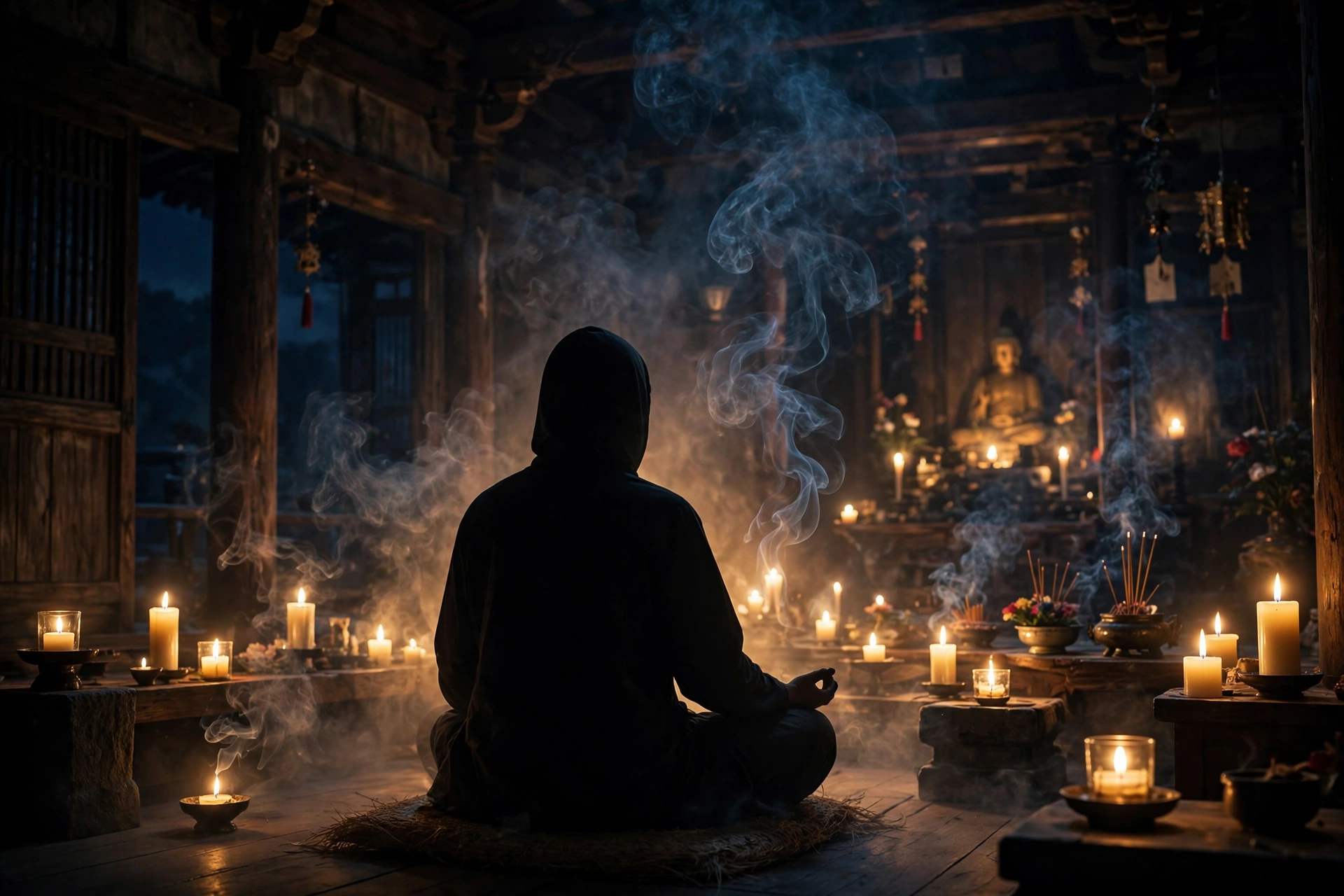
Buddhist protection works differently: instead of asking a deity to fight demons, metta (loving-kindness) meditation fills the mind with goodwill toward all beings — self, loved ones, strangers, even enemies. The Karaniya Metta Sutta teaches that a mind soaked in loving-kindness is protected from fear and ill will, because you cannot feel terror and goodwill at the same time.
“May all beings be happy. May all beings be free from suffering. May I be safe. May my loved ones be safe. May this home be safe.”
Practitioners repeat these phrases for 10–15 minutes, expanding the circle from themselves outward; when fear strikes at night, five minutes of metta breathing usually dissolves it.
Bible Verses Believers Pair With Protection Prayers
Many Christians do not stop at one prayer — they pair protection prayers with short Bible verses they repeat like anchors. These are the three most-cited:
| Verse | What believers take from it |
|---|---|
| Psalm 91:11 — “For he will command his angels concerning you to guard you in all your ways.” | Angelic protection on the road and at home |
| Ephesians 6:11 — “Put on the whole armor of God, that you may be able to stand against the schemes of the devil.” | Spiritual readiness against unseen harm |
| Isaiah 41:10 — “Fear not, for I am with you; be not dismayed, for I am your God.” | Comfort in moments of raw fear |
How to Use These Prayers in a Daily Routine
Pick the one that fits your faith — believers across traditions follow a similar rhythm:
- Morning: one protection prayer before you leave the house, said slowly and out loud.
- Over your home: walk through your rooms once a week, saying the prayer in each doorway — a practice found in Catholic house blessings, Muslim home recitations, and Hindu griha rituals alike.
- For family: say the prayer over sleeping children or a loved one who is struggling.
- In the moment of fear: sit up and repeat your chosen prayer until calm returns — many pair this with our guide to cleansing your home’s energy.
Can You Pray for Someone Else’s Protection?
Yes — and believers say this carries special weight. Every tradition above includes prayers for others: the St. Michael prayer is said over families, Ayat al-Kursi is recited over sleeping children, Hanuman devotees chant for sick relatives, Psalm 91 is read at bedsides, and metta explicitly radiates kindness outward. If someone you love is frightened, praying for them is one of the oldest comforts there is. Pair it with practical steps too — see our guides on making a spiritual protection spray and cleansing your home’s energy.
When Prayer Isn’t Enough: Get Real Help Too
An important word of honesty: if you are experiencing persistent fear, hearing voices, or believe you are being harmed by someone, prayer brings comfort but is not a substitute for real help. Talk to a trusted person, a religious leader, or a counselor. And if a person — not a spirit — is threatening you, contact the authorities. True safety covers the practical side as well as the spiritual one. For a calmer home environment, many readers also start with removing negative energy from the home.
People Also Ask
What is the most powerful prayer against evil?
No tradition agrees on a single “strongest” prayer — Catholics often name the St. Michael prayer, Muslims name Ayat al-Kursi, Hindus the Hanuman Chalisa, Christians Psalm 91, and Buddhists metta. Believers across traditions say sincerity of faith matters far more than which formula you choose.
Which prayer protects against demons?
The St. Michael prayer explicitly asks for defense against evil spirits, and Ayat al-Kursi is believed in Islam to guard against unseen harm. The Hanuman Chalisa verse “bhoot pisaach nikat nahin aave” is recited for the same purpose. These are beliefs held by followers, not scientifically verifiable effects.
Can I pray in a different religion’s words for protection?
You can read and learn from any tradition, but adopt a prayer into your daily practice with respect — understand its meaning and, if possible, learn from someone in that faith. Many people find that a prayer from their own background carries the most personal power.
How often should you say a protection prayer?
Traditions vary: many Catholics say the St. Michael prayer each morning, Muslims recite Ayat al-Kursi after each daily prayer and before sleep, Hindus chant the Chalisa on Tuesdays and Saturdays, and Buddhists practice metta daily. A simple daily rhythm — morning or bedtime — is the most common pattern.
Frequently Asked Questions
What is the most powerful protection prayer?
There is no universally agreed “strongest” prayer — each tradition holds its own highest regard, and believers say genuine faith matters more than the formula.
Can I pray a prayer from a religion I don’t follow?
You can read and learn from any tradition. If you adopt one into daily practice, do so respectfully and consider learning from someone in that faith first.
Can protection prayers keep demons away?
Within each tradition, believers hold that sincere prayer invites divine protection. What is certain is that many people feel calmer and less afraid after praying — itself a real, valuable effect.
More Protection stories
- How to Sage Your House for Negative Energy
- How to Make a Spiritual Protection Spray at Home
- Salt in Corners of the Room for Negative Energy
Published by the NegativeVibeFix editorial team.
This article presents traditional beliefs and folklore for informational purposes only, not as proven fact. If you experience persistent distress, please consult a qualified professional.