
A full moon ritual is a short personal ceremony held on the night the moon is full, built around one simple act: writing down what you are ready to release, and letting it go. Below is a complete 15-minute version — no experience needed, and no special tools beyond a candle and a sheet of paper.
Last updated: October 24, 2026
- A full moon repeats roughly every 29.5 days — that is 12 to 13 full moons per calendar year.
- The moon looks full for about 3 nights, so you have a generous window; there is no single minute you must catch.
- Most practitioners count a window of 24–48 hours around the exact full moon as the working time for release rituals.
- The Moon sits about 384,400 km from Earth — its light reaches you in about 1.3 seconds.
- Full moon ceremonies called “esbats” have been practiced in Wiccan and Pagan communities for many decades as moments for endings and spiritual growth.
What is a full moon ritual? It is a brief, intentional ceremony done around the full moon to review what has reached a natural end and symbolically release it. Many traditions keep these ceremonies simple by design — see the Universal Life Church’s guide to full moon ceremonies for another perspective. Think of it less as a spell and more as a monthly emotional reset with a candle on.
The 15-Minute Full Moon Ritual, Step by Step
Here is the full ritual, timed for any evening.
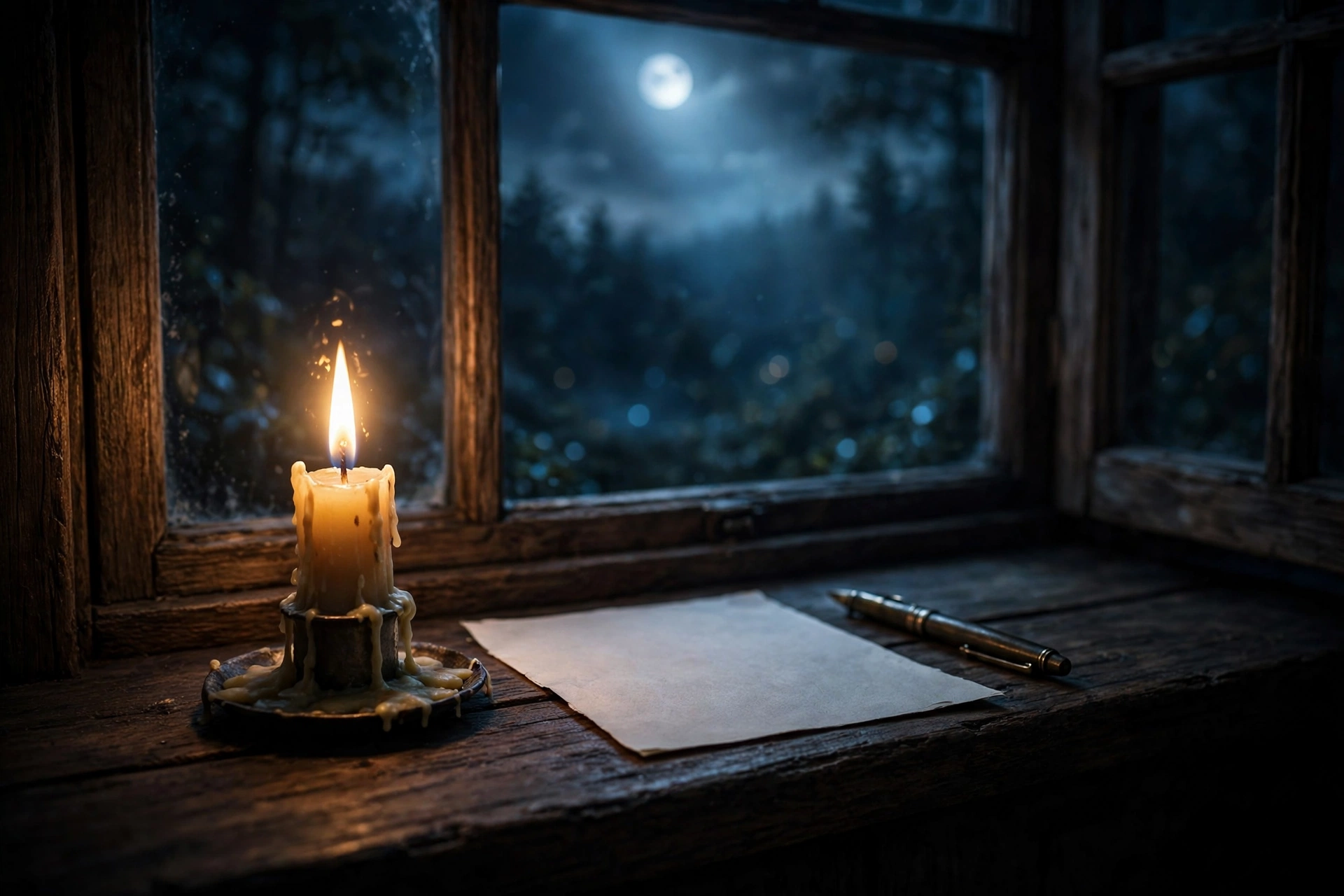
Minutes 0–3: Set the scene. Pick a quiet room where you will not be interrupted. Put your phone on silent and face-down. Light one candle. Place a pen and one sheet of paper in front of you, plus a bowl of water or a fireproof dish beside it. That is your whole setup.
Minutes 3–6: Ground yourself. Sit comfortably and take nine slow breaths — in through the nose, out through the mouth, letting your shoulders drop with each exhale. Say once, out loud: “I am here. I am letting go of what I no longer need.”
Minutes 6–10: Name what goes. Pick ONE thing to release — one burden, one habit, one story about yourself that has expired. Write it in one or two lines, addressed to the moon if you like: “Dear Moon, tonight I release my anger about ___.” Be specific. “I release the fear that I am not good enough to apply for better work” beats “I release fear” every time.
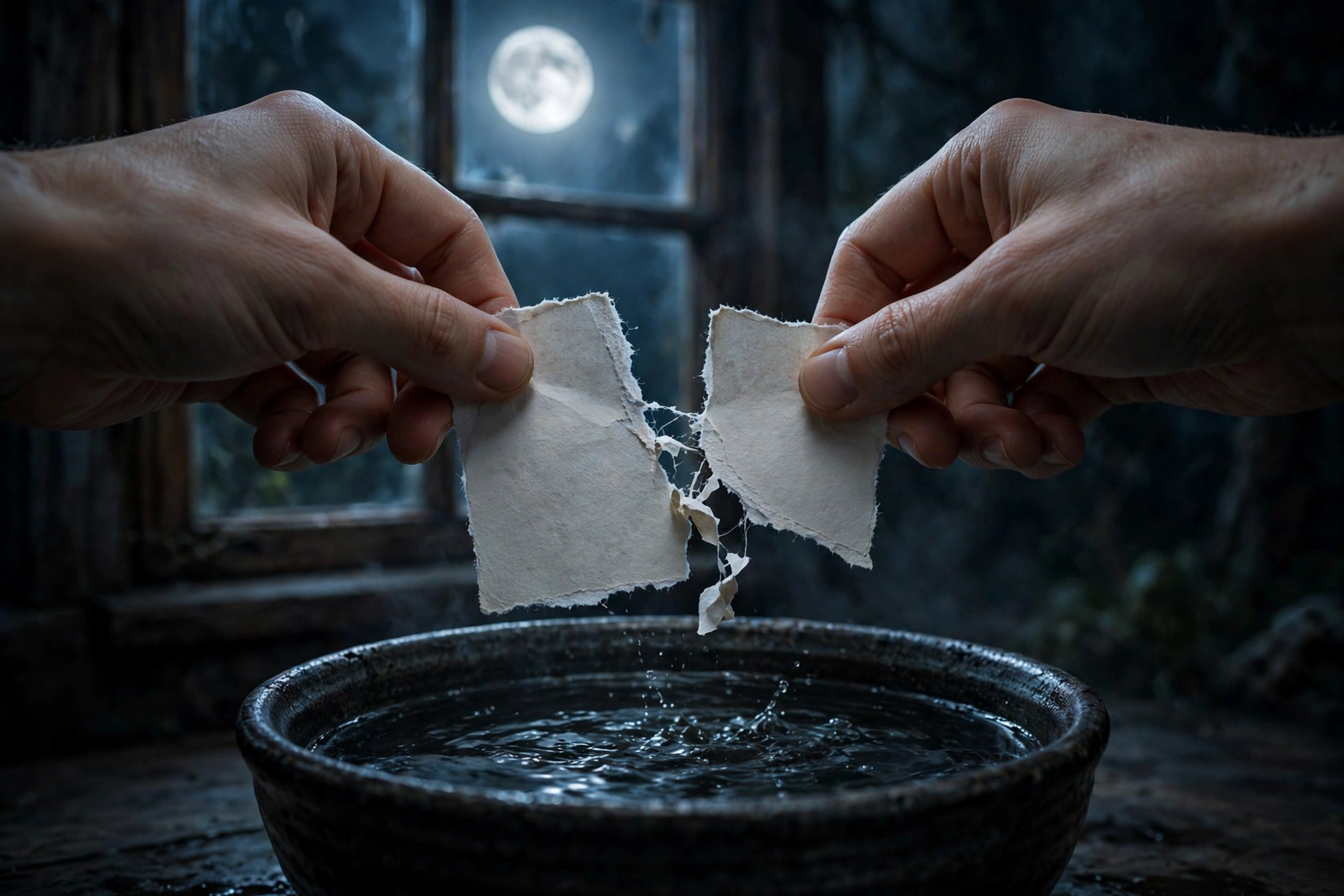
Minutes 10–13: The release. Read what you wrote aloud once, then tear the paper slowly into the bowl of water — or burn it safely in a fireproof dish, water within arm’s reach. Watch it break apart, say “It is done,” and sit in silence for a full minute.
Minutes 13–15: Close with thanks. Name one thing you are keeping from this cycle — a lesson, a win, a person. Blow out the candle, wash your hands and face with cool water. Done.
What You’ll Need (and What You Can Skip)
You need: a candle, one sheet of paper, a pen, and a bowl of water or a fireproof dish. That is it. Crystals, incense, moonstone, sage — all optional. They can make the evening feel special, but the ritual works without them. Beginners often assume they need an altar; what they actually need is fifteen quiet minutes.
If you do want to add items, keep them simple: a white candle (traditionally linked to the moon’s light), a bowl of water left in moonlight for an hour, or a piece of selenite. One or two additions at most — a cluttered altar distracts you from the one job, which is the release.
| Item | Must-have? | What it does |
|---|---|---|
| Candle | Yes | Marks the evening as special; gives your eyes a focal point |
| Paper and pen | Yes | Carries what you release |
| Bowl of water or fireproof dish | Yes | Receives the torn or burned paper |
| Sage, incense, or essential oil | Optional | Scent helps some people settle; skip if it distracts you |
| Crystals (selenite, moonstone) | Optional | Traditional lunar correspondences — atmosphere only |
When Exactly Should You Do a Full Moon Ritual?
The night of the full moon is ideal, but the moon looks full for roughly three nights, so any evening within a day or two works. Many people schedule it for the hour after sunset — the moon hangs low and large, and the day is done. If you miss the exact night, the night after is perfectly fine.
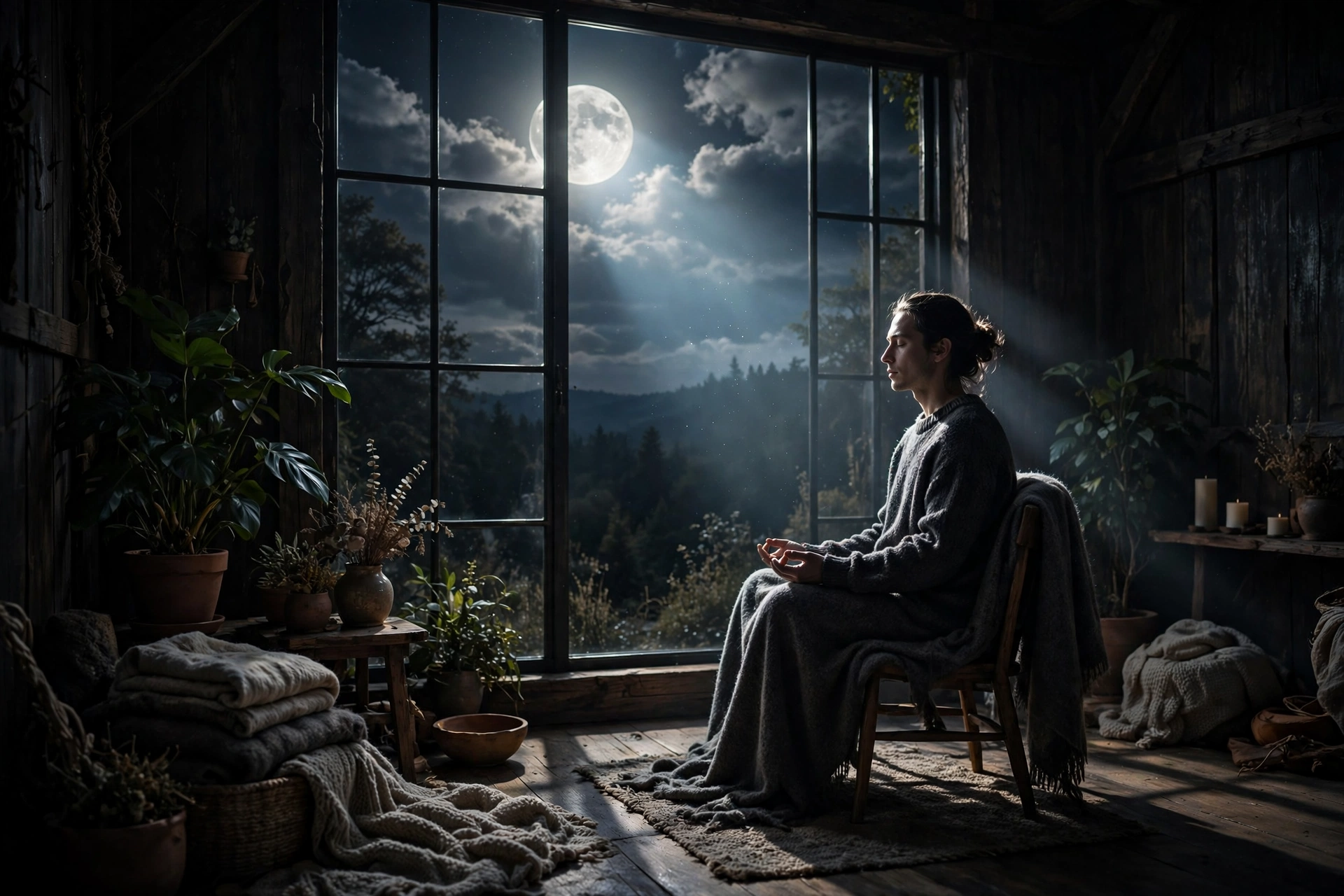
Do not stress about catching an exact minute, and clouds do not cancel it — the ritual happens in your room, not in the sky. Do it around each full moon so it becomes a rhythm: one release, one cycle, repeated.
What to Write on the Release Paper
This is where beginners freeze. Use this four-line template — it covers everything:
- Acknowledge: “I have been carrying ___ for ___ months.”
- Name the cost: “It has cost me ___ (sleep, peace, focus, courage).”
- State the release: “Tonight I release it completely. I return it to the earth and the water.”
- Close with thanks: “Thank you, Moon, for holding what I release.”

Write by hand, not on a phone, and read it aloud once before you tear or burn it — hearing your own voice name the thing gives it weight. If tears come, let them; it usually means the release is real.
Full Moon Ritual vs New Moon Ritual: What’s the Difference?
The most common beginner mistake is mixing these two up. They are opposite jobs:
| Aspect | Full Moon Ritual | New Moon Ritual |
|---|---|---|
| Direction | Outward — letting go | Inward — setting intentions |
| Core question | “What is finished?” | “What am I starting?” |
| Main act | Write it down, tear or burn it | Write the intention, keep it somewhere safe |
| Energy image | The exhale | The inhale |
Trying to manifest during a full moon is like shouting into a gale — the phase is built for release. Save your wish-lists for the new moon two weeks later. New moon rituals set intentions while full moon rituals release, so the two guides pair across one lunar cycle.
5 Mistakes Beginners Make (and What Science Says)
1. Releasing too much at once. A list of twelve problems scatters your focus. Pick one burden per moon — there are twelve full moons a year, so nothing is waiting.
2. Using the ritual to dodge real processing. Release work pairs with journaling or therapy — it does not replace them. If what you are releasing is trauma, work with a professional alongside the practice.
3. Skipping the grounding. People light the candle and rush to the burning. The three minutes of slow breathing at the start is what turns this from a craft project into a ceremony.
4. Doing it during an eclipse. Many traditions treat eclipse energy as chaotic and unstable — fine for quiet reflection, not for active release work. Save your ritual for a standard full moon.
5. Forgetting to eat and rest afterward. Have something warm afterward — soup, tea, bread. Endings are tiring; treat your body kindly when the candle goes out.

The honest footnote: no peer-reviewed study shows the moon’s gravity acting on emotions — the physics is far too weak. What IS documented is that ritual helps: naming a problem aloud, a physical symbolic act, and marking a boundary in time all reduce stress and help people close chapters. The moon gives you a schedule; the relief comes from what you do with it.
People Also Ask
What do you do during a full moon ritual?
You light a candle, spend a few minutes in quiet breathing, write down one thing you want to release, and tear or safely burn the paper as a symbolic goodbye. Most versions close with a word of thanks. The entire beginner ritual takes about 15 minutes.
Can I do a full moon ritual indoors?
Yes — most people do. You do not need to see the moon, be outside, or have any special setting. A quiet room with a candle and a sheet of paper is enough, and cloudy nights change nothing about the practice.
What should I write down for a full moon release?
One specific burden: a grudge, a fear, a habit, or an old story about yourself. Name what it has cost you and state that you release it. Specific wording works better than vague lines — “I release my anger about the missed promotion” beats “I release anger.”
Do full moon rituals actually work?
There is no scientific evidence that moon phases change your emotions, but the ritual steps themselves — writing things down, speaking them aloud, and performing a symbolic goodbye — are known to reduce stress and help people move past problems. The value is in the practice, not the astronomy.
Frequently Asked Questions
How often should you do a full moon ritual?
Once per lunar cycle. With 12–13 full moons a year, most practitioners treat it as a monthly checkpoint: review what has run its course, release it, and begin the next cycle clean. For more cleansing practices, see cord-cutting rituals and protection sprays for your home.
Is it safe to burn the release paper?
Only with a fireproof bowl, water nearby, and never leaving the flame alone. If burning is not safe where you live, tearing the paper into a bowl of water is an equally valid release — the meaning of the act is what matters. You can also read our guide on removing negative energy at home for more house-cleansing ideas.
Do you need to follow a religion?
No. The beginner version here is a personal reflection practice that anyone can adapt to their beliefs.
More Ritual stories
- Cord-Cutting Ritual: The Two-Candle Method
- How to Do an Egg Cleanse (Mexican Limpia)
- Egg Cleanse Meanings: Reading Your Results
Published by the NegativeVibeFix editorial team.
This article presents traditional beliefs and folklore for informational purposes only, not as proven fact. If you experience persistent distress, please consult a qualified professional.