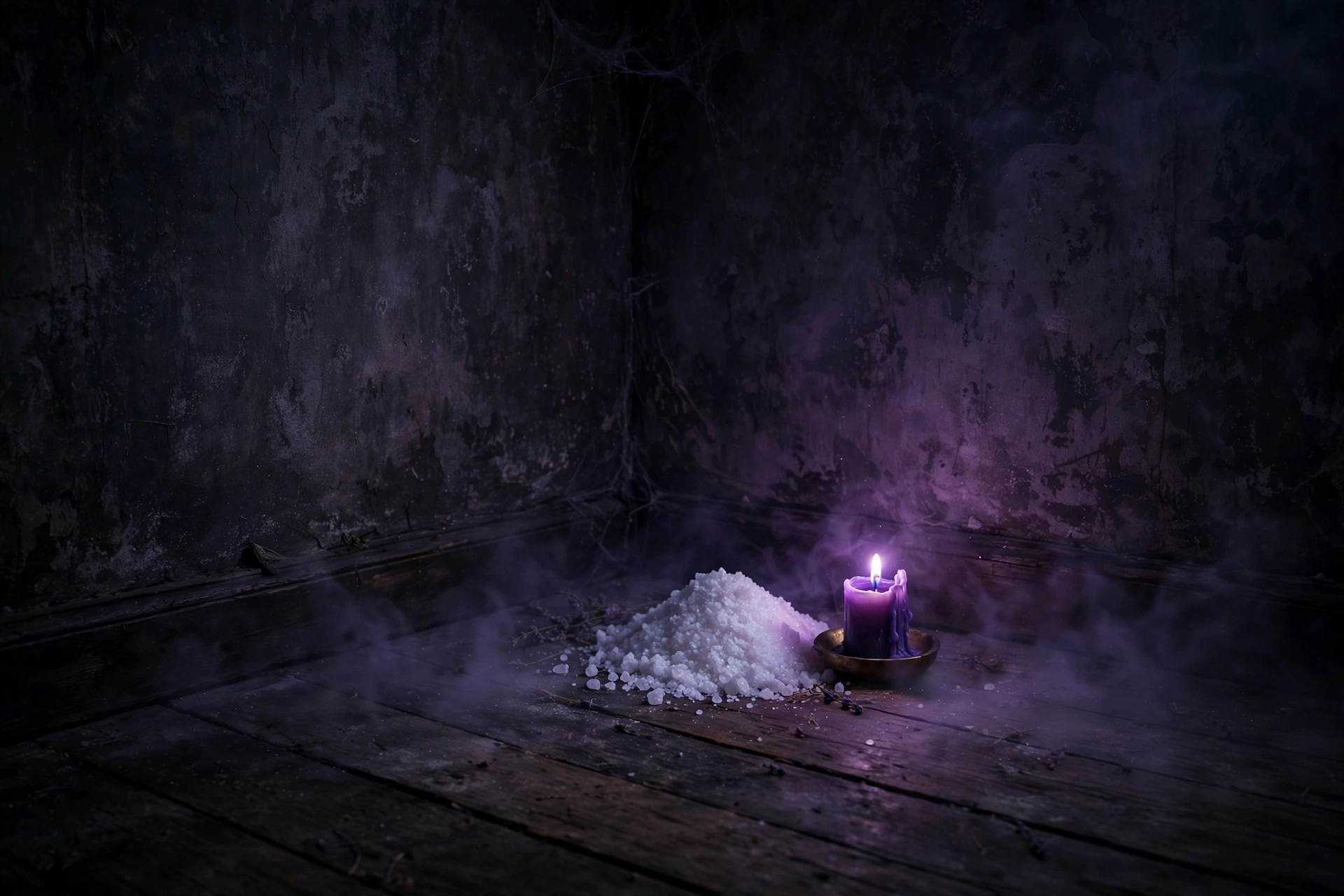
Walk into some homes and you’ll spot small piles of salt tucked into the corners of rooms. It’s one of the oldest space-clearing rituals in the world — and one of the most searched: salt in corners of room for negative energy. People do it after arguments, breakups, illness, or just when the house feels “heavy.” But does it actually work, or is it pure superstition? This guide covers the traditional method step by step, what practitioners believe is happening, and what science can honestly confirm.
Does Salt in Corners of a Room Remove Negative Energy?

The honest answer: tradition says yes, science says “partly.” Across cultures — from European folk magic to Asian cleansing rituals — salt has been treated as a purifier for thousands of years. Practitioners say it draws out heavy, stagnant, or “low” energy the way a sponge draws water, and that you can feel the room lighten after the ritual.
What science confirms is narrower but still meaningful. Salt is hygroscopic — it pulls moisture from the air. Less moisture means fewer musty odors, less mold-friendly dampness, and air that genuinely smells and feels cleaner. A room that smells fresh feels lighter, and that feeling is real even if the mechanism isn’t mystical. There’s also a solid psychological layer: performing a deliberate clearing ritual gives people a sense of control during stressful times, which measurably lowers anxiety. So the ritual “works” — just not always for the reasons people think.
How to Put Salt in Room Corners: Step-by-Step Method
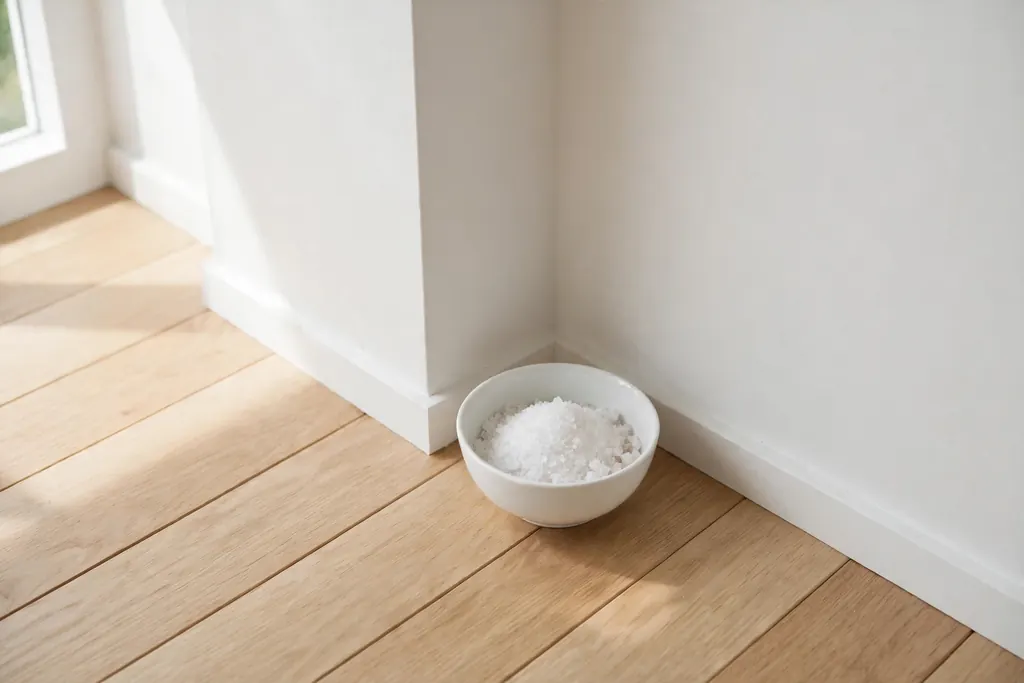
The traditional method is simple, and most versions agree on these steps:
- Choose your salt: Sea salt or Himalayan pink salt are the classic picks. About a tablespoon per corner is plenty.
- Use small bowls or direct piles: Bowls are tidier and safer; direct piles on the floor are the older folk style. Avoid placing salt directly on wood or marble — it can stain.
- Place in all four corners of the room, ideally after a normal cleaning. Some traditions start at the corner farthest from the door.
- Set an intention: As you place each pile, say aloud (or think) that the salt is absorbing heaviness and negativity. Practitioners insist this focus matters.
- Leave for 24–48 hours. Don’t touch or disturb the salt during this time.
- Remove and discard: Sweep or vacuum it up and throw it in an outside bin — never reuse ritual salt, and don’t pour it on plants.
- Ventilate: Open windows for a while after removal to let fresh air circulate.
What Kind of Salt Works Best for Negative Energy?
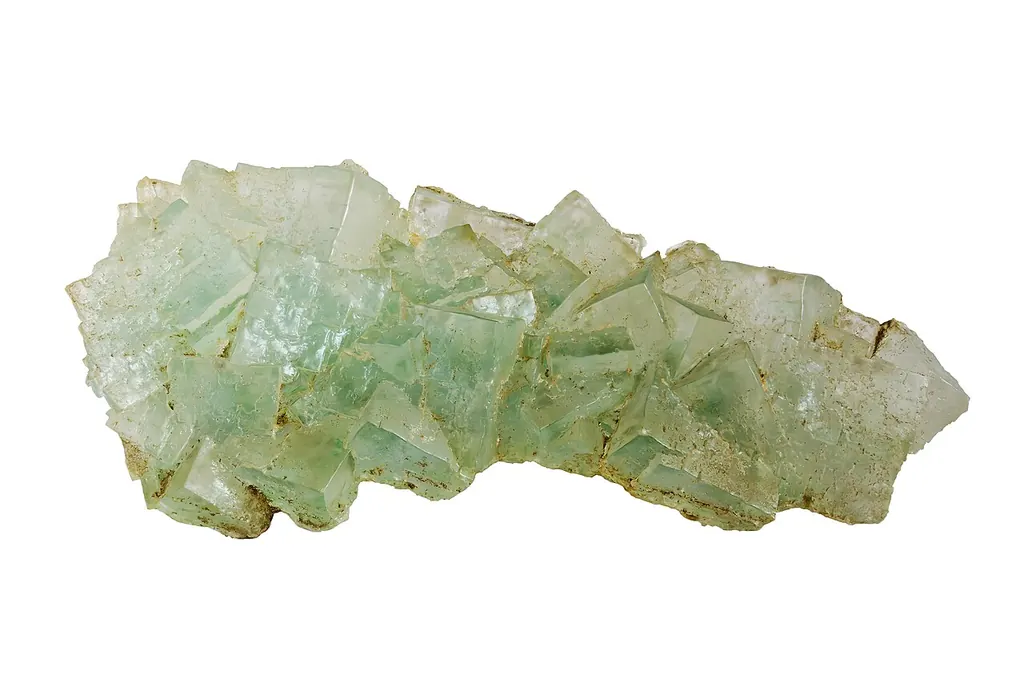
Not all salts are treated equally in folk practice. Here’s the common breakdown:
- Sea salt: The all-rounder — traditional, unrefined, and the most recommended for room corners.
- Himalayan pink salt: Popular in modern spiritual circles; believed to carry “earth energy.” Practically identical to sea salt in effect.
- Plain table salt: Works fine for the moisture-absorbing part. Purists avoid it because of anti-caking additives, but for a basic clearing it’s acceptable.
- Black salt (kala namak): Used in stronger protection rituals in South Asian tradition. It can stain floors and has a strong sulfur smell — use in bowls only, if at all.
What is the salt actually doing? Physically, every type absorbs ambient moisture and traps some odor molecules. Symbolically, salt’s incorruptible nature — it never spoils — made it humanity’s go-to emblem of purity long before refrigeration. The ritual leans on both properties at once.
When Should You Do the Salt Corner Ritual?
Practitioners most often reach for this ritual at specific moments:
- After an argument or tense period at home — the classic use case.
- After illness in the house, once the person has recovered.
- After moving into a new home or after guests leave — a “reset” for the space.
- When a room feels heavy for no clear reason — musty, stagnant, hard to relax in.
- During seasonal deep-cleans — many do it alongside spring cleaning.
A practical note: if a room persistently feels oppressive, check the mundane causes first — poor ventilation, hidden mold, damp walls, or clutter. Fixing a mold patch does more for a room’s “energy” than any ritual. Salt corners are a complement to good housekeeping, not a substitute.
Salt vs Sage Smudging: Which Clears a Room Better?
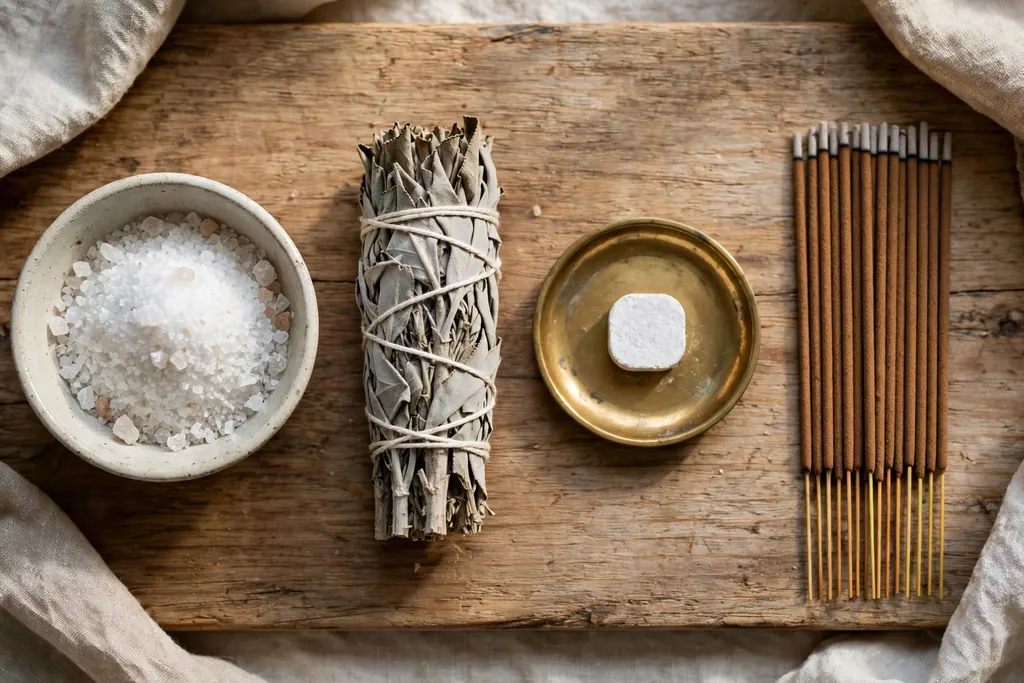
The two most popular clearing methods get compared constantly, so here’s a straight comparison:
- Salt corners: Silent, scent-free, safe around smoke alarms, takes 24–48 hours, costs almost nothing. Best for renters and shared homes.
- Sage smudging: Immediate, dramatic, aromatic — but produces smoke that bothers asthma sufferers, pets, and smoke detectors. Some Indigenous groups also raise concerns about commercial sage harvesting.
- Best results: Many practitioners do both — smudge first for an instant reset, then set salt corners to “hold” the cleared feeling.
Neither method has scientific proof of moving “energy,” but both have proven secondary effects: sage smoke does have mild antimicrobial properties, and salt cuts humidity. Pick the one that fits your home and health.
For deeper salt-based clearing methods, see how to cleanse a room with salt, the water-and-salt negative energy test, and clearing negative vibes from the kitchen. The science of salt absorbing moisture is explained here.
Salt in Corners: People Also Ask

Does putting salt in the corners of your house really absorb negative energy?
Folk tradition says salt absorbs stagnant, heavy energy from a room’s corners, where energy is believed to collect. Science confirms salt absorbs moisture and odors, which makes rooms feel fresher and lighter. The energy-absorbing claim has no scientific proof, but the ritual’s calming psychological effect is well documented.
How long do you leave salt in corners for cleansing?
Most traditions recommend 24 to 48 hours. After that, sweep or vacuum the salt up and discard it in an outside bin — tradition says the salt has absorbed negativity and should never be reused or eaten. Replace weekly if you practice regularly.
Can I use regular table salt in room corners?
Yes. Table salt absorbs moisture just like sea salt or pink salt. Traditionalists prefer unrefined sea salt or Himalayan salt for rituals, but for the practical freshening effect, any salt works. Keep the piles small and use bowls on delicate floors.
Is the salt corner ritual safe with pets and kids?
Mostly, with care. Salt can upset pets’ stomachs if eaten in quantity, so use covered bowls or place piles where animals and toddlers can’t reach. Keep salt off wood and marble floors to avoid stains, and vacuum thoroughly afterward.
Frequently Asked Questions
Q: Does putting salt in the corners of a room remove negative energy?
A: Tradition says yes — salt is believed to absorb heavy, stagnant energy. Science confirms salt absorbs moisture and odors, which genuinely makes a room feel fresher. The energy-absorbing claim itself has no scientific proof, but the ritual’s calming effect on the people doing it is real.
Q: How long should you leave salt in the corners of a room?
A: Most traditions say 24 to 48 hours, then sweep or vacuum it up and throw it away outside the home — never reuse it. Replace it weekly if you practice this regularly, and keep it away from pets and small children.
Q: What kind of salt works best for corners?
A: Sea salt and Himalayan pink salt are the traditional favorites for energy rituals; plain table salt works the same for the practical moisture-absorbing part. Black salt is sometimes used for stronger protection rituals but can stain floors.
This article presents traditional beliefs and folklore for informational purposes only, not as proven fact. If you experience persistent distress, please consult a qualified professional.