
Last updated: October 20, 2026
Is the Ouija board dangerous? Nobody has ever proven the board itself can physically hurt you — but the stories people tell after using one would give anyone pause. Forums and case files are full of strange encounters, sleepless weeks, and unwelcome “visitors.” Meanwhile, science offers an ordinary explanation for the moving pointer. For the 1891 patent story and what science says about whether boards really work, see Do Ouija Boards Really Work? 1891 Patent & Science.
- February 10, 1891 — the US Patent Office grants Elijah Bond a patent for the “Ouija, or Egyptian luck-board,” filed by Baltimore’s Kennard Novelty Company
- 1966 — Parker Brothers buys the rights; in 1967 they sell 2 million boards, outselling Monopoly
- 1852 — physiologist William Benjamin Carpenter coins the “ideomotor effect,” the brain science behind the moving planchette
- 1944 — one New York department store sells 50,000 boards in five months, at the height of World War II
- Blindfolded users can’t spell coherent messages — the skeptics’ strongest proof the hands need to see the board
What is a Ouija board? A flat surface printed with letters, numbers 0–9, and the words “yes,” “no,” and “goodbye,” used with a heart-shaped pointer called a planchette. People rest their fingertips on it, ask questions, and watch it spell out answers. “Ouija” (pronounced “wee-ja”) is a Hasbro trademark; the generic term is talking board.
What do Ouija board users report?

The same stories turn up again and again: a “helpful” presence that turns hostile, a planchette that flies or spells threats, and afterward a feeling of being watched — nightmares, a heaviness in the house.
The 1949 “Roland Doe” case — a Maryland boy whose family reported strange events after his aunt introduced him to a board, ending in Catholic exorcisms — became the basis for The Exorcist. His behavior began after his aunt’s death: grief and suggestion were already in the room.
Is the Ouija board dangerous? What science says about the moving planchette
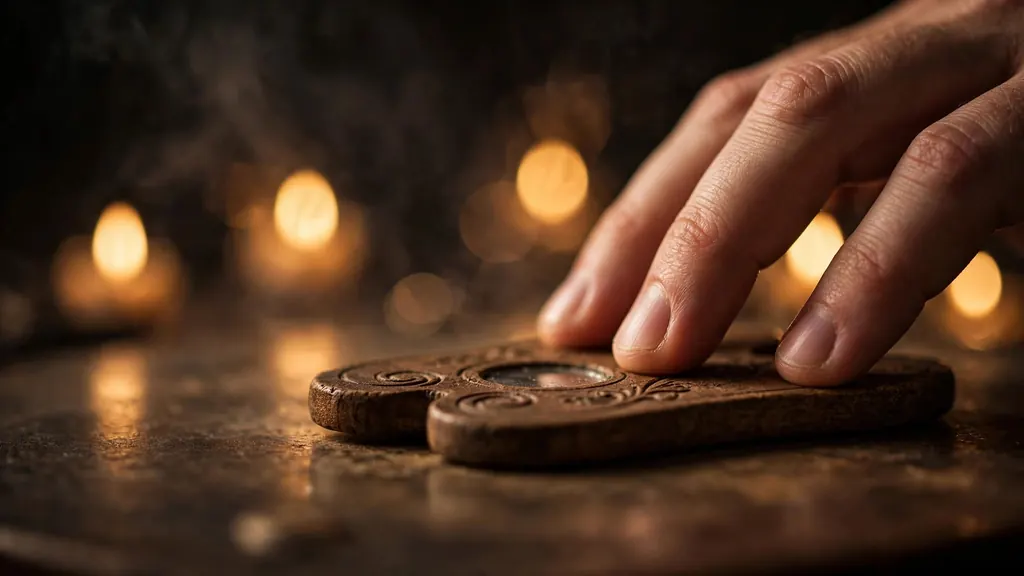
The standard explanation is the ideomotor effect: tiny, unconscious muscle movements made in response to an idea. The planchette glides so freely that small pushes from several people add up into purposeful-looking motion.
The cleanest test is the blindfold: sitters who can’t see the board stop spelling sensible words, and the planchette drifts over random letters. If a spirit guided the pointer, sight wouldn’t matter.
The wrinkle: a 2012 study found board users answered yes-or-no questions more accurately than when guessing — the subconscious answering questions the conscious mind fumbles, much like reported sleep paralysis visions draw on deepest fears (see Smithsonian Magazine’s history of the Ouija board).
Where did the Ouija board actually come from?
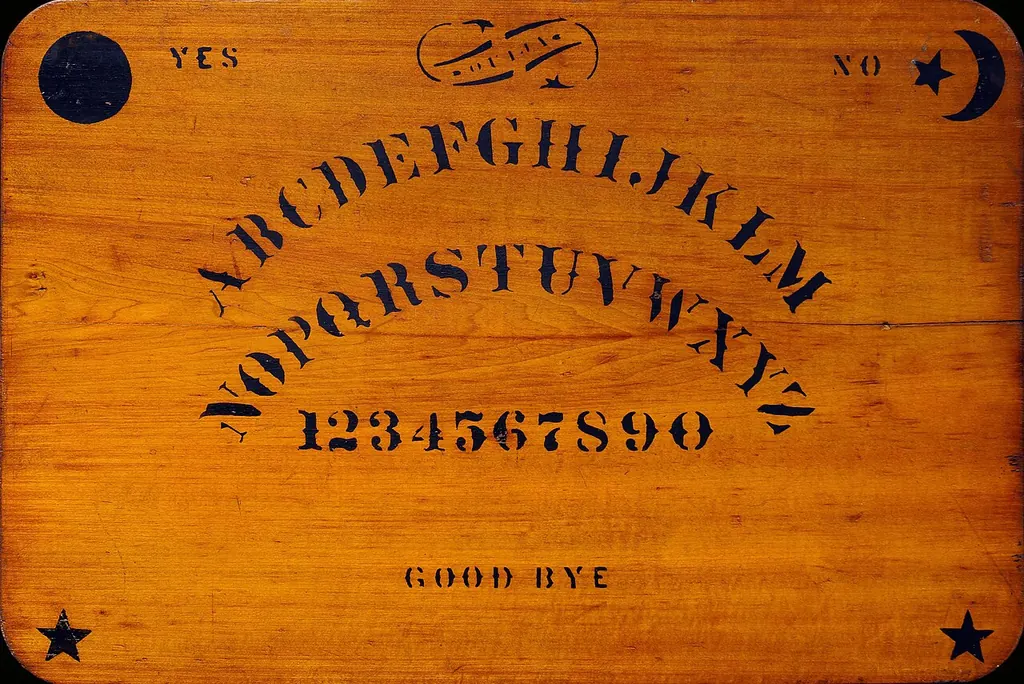
Not from ancient Egypt, despite what the makers implied. In 1890, Charles Kennard’s investors formed the Kennard Novelty Company to mass-produce “talking boards.” The name came through a session: medium Helen Peters asked the board what it should be called, and it spelled O-U-I-J-A — likely a misreading of “Ouida,” the writer in her locket.
Elijah Bond demonstrated the board for the chief patent officer, who asked it to spell his name — and it did, earning the February 10, 1891 patent. Parker Brothers bought the rights in 1966 and sold 2 million boards the next year, before 1973’s The Exorcist gave the board its darker reputation.
Ouija board history: key dates
| Year | What happened |
|---|---|
| 1852 | Carpenter coins the term “ideomotor effect” |
| 1890 | Kennard Novelty Company founded in Baltimore |
| Feb 10, 1891 | Elijah Bond granted the US patent |
| 1944 | One NY department store sells 50,000 boards in five months |
| 1949 | Roland Doe exorcisms — the case behind The Exorcist |
| 1966 | Parker Brothers buys the rights; 2 million boards sold in 1967 |
| 1973 | The Exorcist film cements the board’s dark reputation |
What do religious traditions say about Ouija boards?
This is reported guidance from faith traditions, not a claim about what the board does. The Catholic catechism forbids all divination; priest Malachi Martin taught that talking boards open a person to demonic oppression. Protestant churches point to Deuteronomy 18:10–12 against consulting the dead.
Many believers hold the dead can’t be summoned at all, so anything answering must be something else. Exorcist priests say they regularly meet people whose troubles, in their telling, began at a board. The warnings aren’t about the object — they’re about the intent: seeking knowledge from “whatever answers.”
Is the Ouija board dangerous? Safety rules experienced users follow
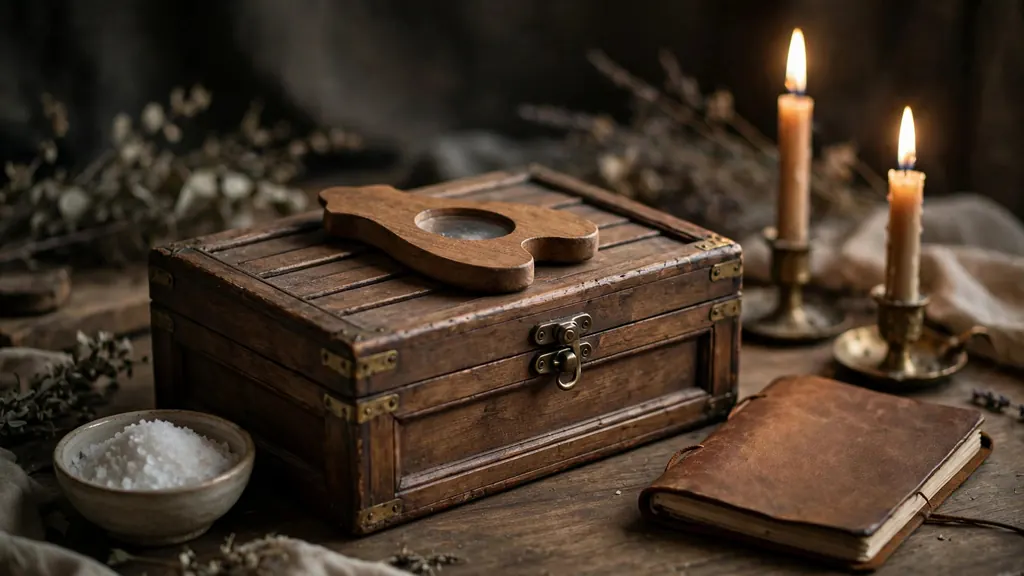
People who use boards seriously repeat the same rules. These are reported practices, not endorsements:
- Never use it alone. No witness to say “that’s not right” when things turn dark.
- Always say goodbye. End every session by moving the planchette to “goodbye” together.
- Don’t use it scared, drunk, or grieving. Fear and grief invite the messages you don’t want to hear.
- Stop if the session turns. Planchette circling corners, counting down, spelling cruelty, anyone uneasy — end it.
- If it feels wrong, get rid of it. Lorraine Warren’s advice: some boards carry associations you can’t clean off.
What users report vs what research shows
| What users report | What research shows |
|---|---|
| The planchette moves by itself | Unconscious micro-movements of the sitters’ hands (Carpenter, 1852) |
| “Zozo” and other named entities respond | Responses track the sitters’ fears and expectations |
| Blindfold tests fail | Blindfolded sitters can’t spell coherent messages |
| Users feel watched for weeks after | Expectation and suggestibility can cause real anxiety |
| Messages reveal “unknowable” facts | A 2012 study: users beat guessing — subconscious knowledge, not spirits |
Talking boards around the world
| Board | Where | How it works (as reported) |
|---|---|---|
| Ouija / spirit board | USA, from 1890 | Alphabet board and planchette; sitters read the letters aloud |
| Kokkuri-san | Japan | Shrine-gate paper, coin as pointer; burned within a day |
| Fuji spirit writing | China, since the Song dynasty | A stylus traces characters in sand or ash |
| Charlie Charlie | Latin America | A pencil game opening with “Can we play?” |
People also ask
Why do people say never to use a Ouija board alone?
Spiritually, users say a solo sitter has no protection and no one to help close the session. Practically, a partner can call a stop when messages turn cruel. Both agree: a frightened person alone with a board is when things go worst.
What is the Zozo Ouija board phenomenon?
“Zozo” is a name that turns up in an extraordinary number of Ouija sessions reported online — usually a hostile, mocking presence. Skeptics note everyone at the table has heard of Zozo beforehand, so expectation writes the script and the planchette performs it.
Has anyone actually been hurt by a Ouija board?
No controlled evidence links the board to physical harm. The record does show psychological fallout: a 1921 New York Times report of a Chicago woman hospitalized with “religious hallucinations” after intense sessions. Disturbing sessions can upset people — the dispute is only about the cause.
Why can’t blindfolded people spell words with a Ouija board?
Because the sitters’ hands do the spelling. The ideomotor effect steers the planchette toward letters the brain already expects — but only if the eyes can see the board. Remove sight and the pointer drifts. It needs the people, not the board.
Frequently asked questions
Q: Is the Ouija board dangerous to use alone?
A: No documented evidence shows the board causing physical harm. The reported risks are psychological: anxiety, sleeplessness, dread after sessions. Folk rules — never alone, always say goodbye — show how seriously people take them.
Q: What does the ideomotor effect mean?
A: The ideomotor effect: the brain produces tiny, unconscious muscle movements in response to an idea — the standard scientific explanation for the moving planchette.
Q: Can a Ouija board really summon a demon?
A: No controlled study has shown the board contacting anything beyond the people at the table. Belief shapes experience, though: many report hostile entities like “Zozo,” and the Warrens warned it opens doors users can’t close.
Q: What should I do if a Ouija board session feels wrong?
A: Stop at once, say goodbye, and move the planchette to “goodbye” together. Put the board away rather than pushing through fear. If distress lingers, talk to someone you trust.
More Haunted stories
- Sleep Paralysis Demon: Why You See a Figure
- Marble Rolling Sound on Roof at Night
- Most Haunted Places in the World
This article presents traditional beliefs and folklore for informational purposes only, not as proven fact. If you experience persistent distress, please consult a qualified professional.
Published by NegativeVibeFix — folklore, mysteries, and the science behind them.