Last updated: 26 October 2026
Do Ouija boards really work? If you mean does the planchette move and spell out answers, then yes, it does. If you mean does it contact spirits, no study has ever shown that. The honest answer sits between those two facts, and it starts with a 19th-century patent, not a haunted house. The Ouija board was invented as a parlour game during America’s Spiritualism craze, and the way it moves has a plain, testable explanation: the people touching the pointer move it themselves, without realising it.
Quick answer: Ouija boards move through the ideomotor effect, where tiny unconscious muscle movements steer the planchette. Elijah Bond patented the board in 1891 with Charles Kennard. No lab test has found spirit contact, but the feeling that something else is moving the pointer is genuine, and it has a known cause.
Key stats:
- 1891 – the year Elijah Bond’s talking-board patent was granted in the United States.
- 1901 – the year William Fuld took over Ouija board production and built it into a household name.
- 1853 – the year Michael Faraday described the ideomotor effect while studying table-turning.
- 2012 – a lab study found Ouija yes-or-no answers beat guesswork, pointing to unconscious knowledge, not spirits.
- 40 – the number of people in an Aarhus University eye-tracking study of how Ouija sessions work.
- 2 million+ – boards sold in a single year at the height of its fame, a year it outsold Monopoly.
What is a Ouija board? In traditional terms, a Ouija board is a flat board printed with letters, numbers, and the words yes, no, and goodbye. It is also called a spirit board, a talking board, or a witch board. Players rest their fingers lightly on a small heart-shaped pointer called a planchette, ask a question out loud, and watch the pointer slide across the board to spell an answer. Believers say spirits guide it. Researchers say the players guide it, without knowing they are doing so. Both sides agree on one thing: the pointer really does move. The name Ouija is a trademark now owned by Hasbro, inherited from Parker Brothers, though people use it for any talking board.
Who invented the Ouija board?
The short version: no single person invented it alone. Talking boards grew out of the Spiritualism movement of the 1800s, when seances were popular entertainment and grieving families paid mediums to contact the dead. In the 1880s, reports of a talking board craze spread through Ohio newspapers. Charles Kennard, a Baltimore businessman, and E. C. Reiche, a coffin maker, began making their own boards. Kennard then pitched the idea to investors until Elijah Bond, a local lawyer, backed it.
Bond’s patent gave the board legal standing, and the story used to win that patent became part of the legend. Bond’s sister-in-law, Helen Peters, was said to be a strong medium. During the patent office session, she asked the board what to call it, and it spelled out O-U-I-J-A, which she said meant good luck. Historians later noted that Peters was wearing a locket with the name Ouija on it at the time. Either way, the Kennard Novelty Company began making the boards, and the name stuck.
William Fuld, who had worked for Bond’s company, took over production in 1901. Fuld pushed the second origin story, that Ouija joins the French oui and the German ja, both meaning yes. He also claimed for years that he had invented the board himself, a claim historians do not support. What Fuld did do was sell it brilliantly. The board boomed during times of mass grief, first around the First World War and again in later decades, when people longed to hear from lost loved ones. Bond’s patent was passed on 10 February 1891, and the Kennard Novelty Company registered Ouija as a trademark at the same time. Parker Brothers bought Fuld’s business in 1966, and Hasbro bought Parker Brothers in 1991, so Hasbro owns the Ouija trademarks today.
How did the Ouija board become a divining tool?
For its first years, the board was sold as an innocent parlour game with no link to the occult. That changed during the First World War, when American spiritualist Pearl Curran made the board famous as a divining tool. Curran, a St. Louis housewife, said she channelled a 17th-century Englishwoman named Patience Worth through the board. From a breakthrough session on 8 July 1913, Curran produced millions of words attributed to Worth, including novels, poems, and plays that were published and praised by literary critics of the day.
Whether you read Curran’s output as spirit writing, as a hoax, or as the work of a gifted writer who believed her own story, it changed what the board meant to the public. In the 1920s and 1930s it became a hugely popular parlour game, painted by Norman Rockwell on the cover of the Saturday Evening Post on 1 May 1920 and later shown on television shows such as I Love Lucy. The board’s image flipped again after 1973, when The Exorcist tied it to possession in the minds of filmgoers, even though the film’s story was fiction.
Ouija board timeline: from seances to toy shelves
| Year | What happened |
|---|---|
| 1886 | Spiritualists at camps in Ohio used talking boards much like the modern Ouija board to speed up spirit communication |
| 10 February 1891 | Elijah Bond’s commercial Ouija patent was passed; Kennard Novelty Company registered the trademark |
| 1901 | William Fuld took over production of the board |
| 1913 | Pearl Curran’s Patience Worth sessions began, making the board a divining tool during the First World War era |
| 1920 | Norman Rockwell painted a Ouija board session for the Saturday Evening Post cover |
| 1966 | Parker Brothers bought Fuld’s Ouija business |
| 1973 | The Exorcist gave the board its lasting sinister screen image |
| 1991 | Hasbro bought Parker Brothers and took over the Ouija trademarks |
For the full recorded history, see the Ouija board history on Wikipedia, which lists the patent, the trademark trail, and the scientific criticism in one place.
How is a Ouija board supposed to work?
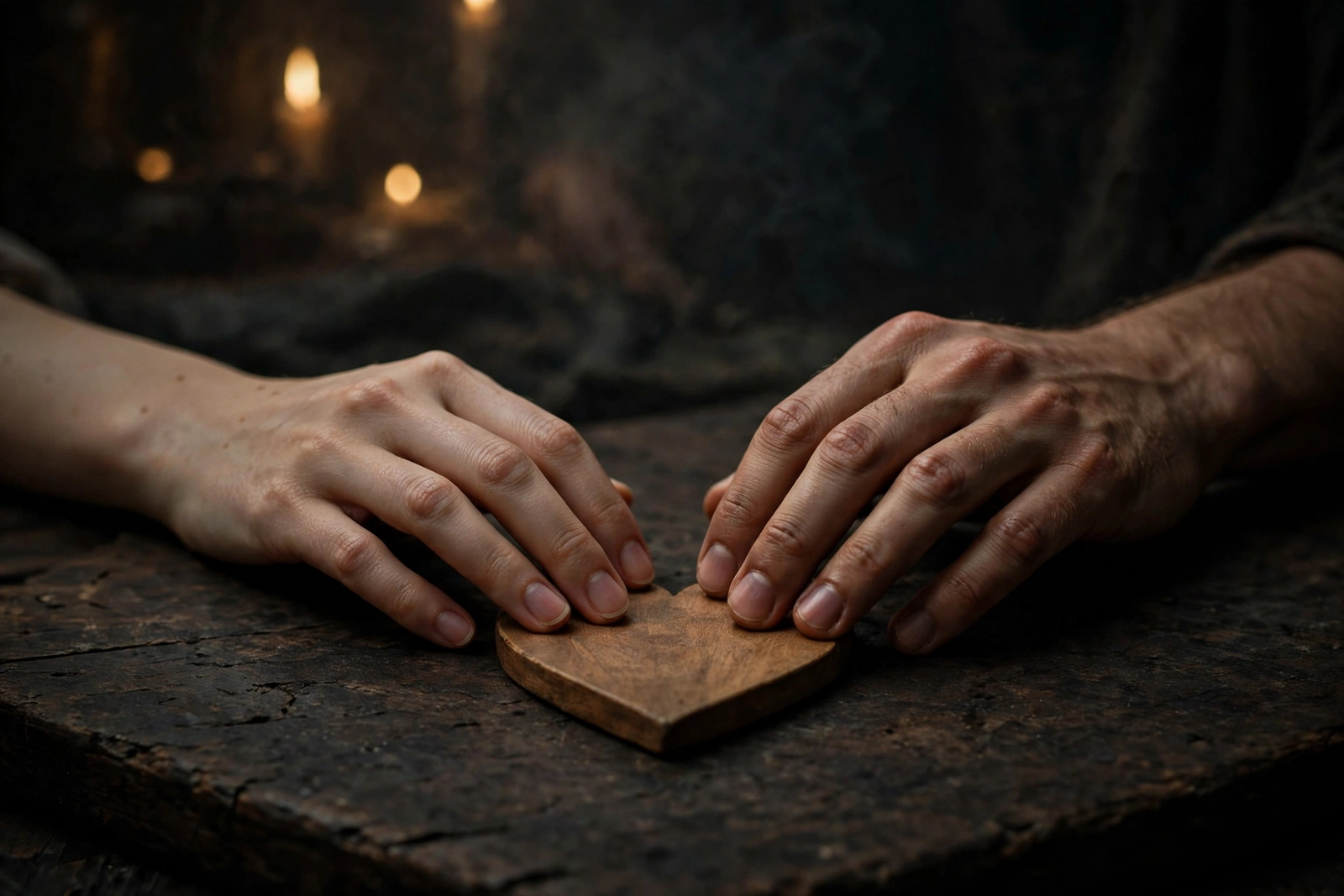
A session follows a simple pattern. Two or more people sit around the board, place their fingertips lightly on the planchette, and agree on a question. Someone asks it out loud. After a pause, the pointer starts to drift. It may stop on yes or no, or it may slide from letter to letter until a word forms. When the session ends, players slide the pointer to goodbye.
Believers hold that a spirit takes hold of the pointer and guides it. They point to sessions where the answers seemed too specific or too quick for the players to have planned. Some also say the board should only be used with care, that sessions should always be closed with goodbye, and that the board should never be used by someone who is frightened or unwell. Those rules are part of the folklore, not the instruction sheet that came in the box, which sold the board as a parlour game.
The board itself has no moving parts of its own. It is wood or cardboard, printed letters, and a pointer on small feet that glide easily. That matters, because anything that moves that freely will also pick up the smallest push from a hand. Keep that fact in mind as you read what science found.
Do Ouija boards really work? What science says
Here is the direct answer to the question most people ask: Ouija boards work as a psychological effect, not as a spirit telephone. The effect has a name, the ideomotor effect, and it was first described by scientist Michael Faraday in 1853 while he studied table-turning, a related seance craze. It means your muscles can make small movements driven by thoughts and expectations, without your conscious mind noticing or claiming the movement.
Lab tests back this up. In one 2012 study, people using a Ouija board answered yes-or-no questions more accurately than chance would allow. That sounds spooky until you read the fine print: the researchers concluded the answers came from the players’ own unconscious knowledge, not from outside the room. Your brain often knows more than you think it knows, and the board gives that quiet knowledge a way out through your hands.
A later eye-tracking study at Aarhus University in Denmark watched 40 people play the board while wearing eye-tracking glasses. The researchers found that the players’ eyes moved ahead of the planchette, as if their brains were steering toward an answer before the pointer arrived. In other words, the movement started with the players, even when every player swore they were not pushing. You can read a plain-language account of that study on Big Think’s report on the science behind Ouija boards.
That is why blindfold tests change everything. When players are blindfolded and the board is quietly turned around, the pointer spells gibberish instead of sensible words. If spirits were guiding it, the answers should stay clear no matter where the letters sit. They do not. The effect depends on the players being able to see the board, which is exactly what the ideomotor explanation predicts.
Why does a session feel so real?
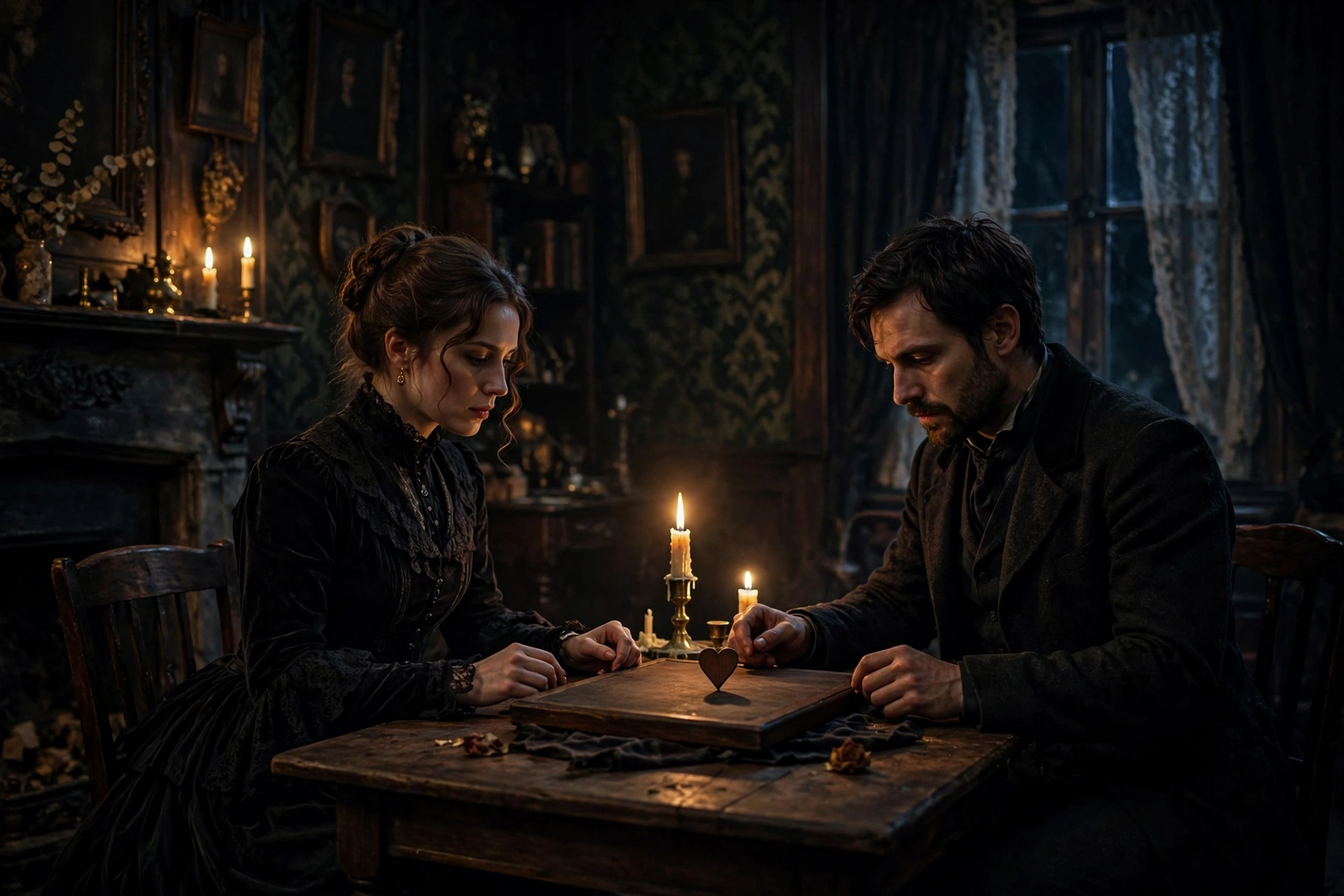
Three things make a session feel uncanny. First, the movement is genuinely unconscious. Nobody in the group is lying when they say they were not pushing. The pushes are too small to notice, and when several hands share the pointer, no single person feels responsible. Second, expectation shapes the result. If the group hopes for a sad message, the pointer tends to drift toward sad words. If someone fears a dark answer, fear steers the hands that way too.
Third, the setting does a lot of the work. Candlelight, a quiet room, a question about someone who has died: all of it primes the mind to find meaning in random movement. Grief makes this stronger. Many people first try a board after losing someone, when the wish to hear from them is at its peak. That wish is human and understandable, and it also makes the brain more likely to read a message into the pointer’s path. If sleep troubles or night-time fears follow a session, the folklore around Old Hag syndrome and sleep paralysis shows how the same mix of fear, darkness, and expectation shapes other night-time experiences too.
Ouija boards in films and pop culture
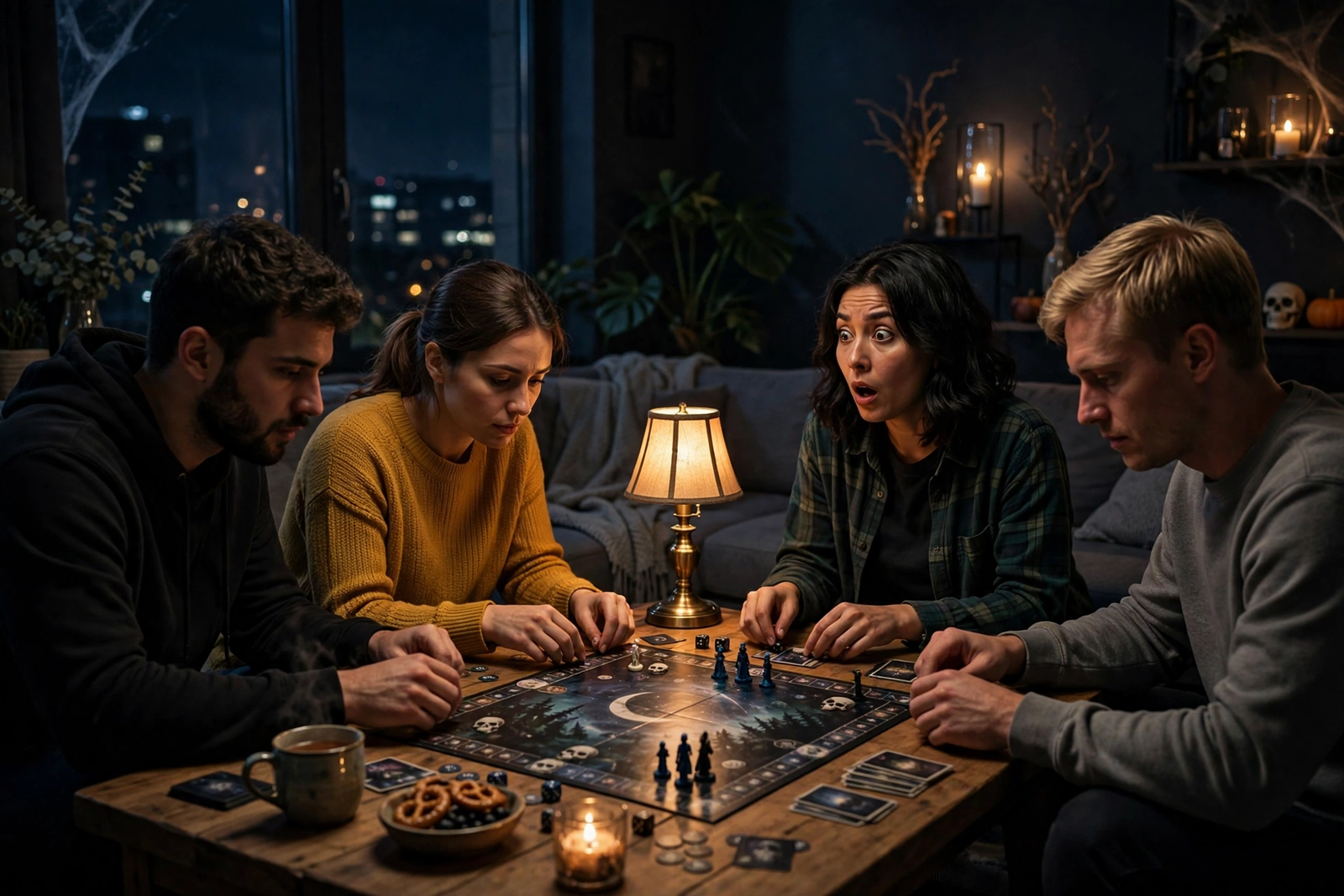
Hollywood did more for the Ouija board’s dark image than any seance ever did. The Exorcist (1973) showed a girl using a board before her possession, and audiences linked the two for decades after. Later films, including Ouija (2014) and Ouija: Origin of Evil (2016), built whole horror plots around the board. Search interest still spikes around the films: in late October 2026, searches for Ouija films on streaming services jumped sharply in several countries, which is why this question is trending again now.
The films also explain why many people now see the board as dangerous rather than as a game. In real life, the board spent most of its history on toy shelves, marketed as mystical oracle and wholesome amusement in the same breath. The gap between the toy-box label and the movie image is part of the fascination. People buy it as a game, then use it as if it were something else entirely.
Are Ouija boards dangerous?
Believers and sceptics give different answers here, so it helps to split the question in two. Is there proven danger from spirits? No evidence supports that. Religious groups have long warned against the board, and horror films have made those warnings vivid, but warnings are not measurements. Our separate guide to whether the Ouija board is dangerous looks at those claims in full.
Is there real-world risk? Yes, but it is psychological, not supernatural. A session can leave an anxious person more anxious, especially if the answers are threatening or if the session touches on grief. Children and people going through a bereavement or a mental health crisis are the worst audience for a board that seems to speak for the dead. If a session leaves you distressed, talk to someone you trust or a qualified professional, and do not keep testing the board for answers about your health or your future.
| Claim | What believers say | What history and science show |
|---|---|---|
| The pointer moves by itself | A spirit guides it | Players move it through tiny unconscious muscle movements |
| The board is ancient | It comes from ancient Egypt | It was patented in 1891 as a modern parlour game |
| Answers reveal hidden truth | Spirits know what players do not | Lab tests point to the players own unconscious knowledge |
| Blindfold sessions still work | Spirits do not need eyes | Blindfolded answers turn to gibberish when the board is moved |
People also ask about Ouija boards
Can you use a Ouija board alone?
Yes, one person can move a planchette, since the effect only needs one pair of hands. Group sessions are still the classic form, because shared hands make the movement feel less personal. A solo session also removes the social check of other players, so strange answers can feel even more personal than they are.
Where does the name Ouija come from?
Two stories compete, and historians have not settled it for good. The first says the board spelled the word itself and that it meant good luck, told during the patent session by Helen Peters. The second says it joins French oui and German ja, both meaning yes. Fuld spread the second story once he ran the company.
Why do people ask Ouija boards about the future?
People ask about love, jobs, and death because those are the questions with no clear answer in daily life. A board that seems to answer feels like a shortcut through uncertainty. The answers usually mirror what the group already hopes or fears, which is why they can feel so accurate in the moment and so vague later.
Should you end every session with goodbye?
Folklore says yes: always slide the pointer to goodbye to close the session properly. Players who skip it sometimes report unease afterwards, which is easy to understand after a tense, dimly lit session. As a practical rule, a clear ending helps everyone leave the game behind instead of carrying its mood into the night.
So, do Ouija boards really work? They work as a window into your own unconscious mind, dressed up as a game. The inventors built a clever toy, the patent office stamped it, and a century of films turned it into a horror icon. The pointer moves, the answers feel personal, and the cause is sitting at the table with you. That is less spooky than a spirit, but in its own way, it is stranger: your hands can spell out thoughts you did not know you had.
More paranormal stories: Is the Ouija Board Dangerous? | Old Hag Syndrome: Sleep Paralysis Folklore Explained | Stove Top Stuffing Mandela Effect
This article presents traditional beliefs and folklore for informational purposes only, not as proven fact. If you experience persistent distress, please consult a qualified professional.
1 thought on “Do Ouija Boards Really Work? 1891 Patent & Science”