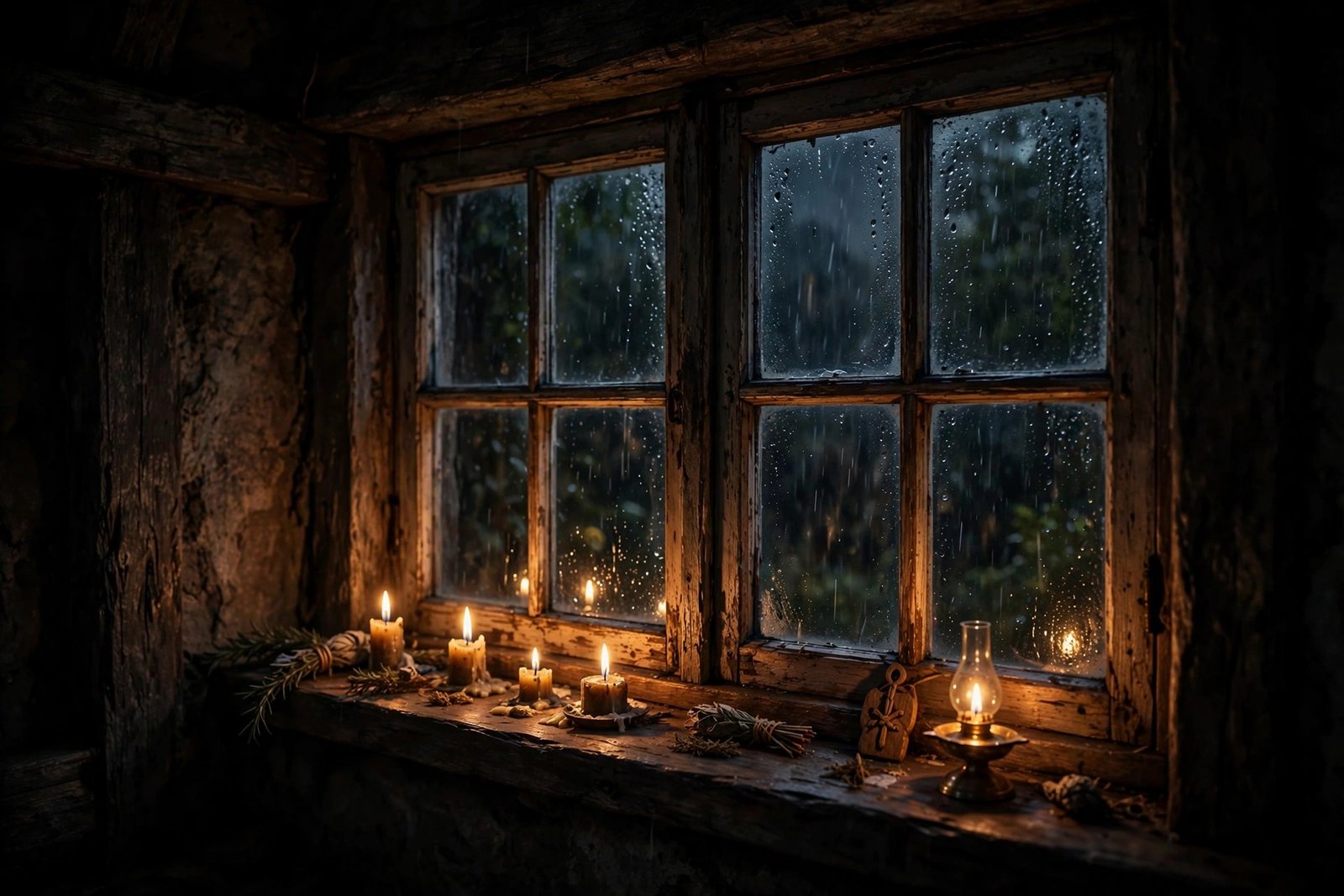
Windows have always been called the eyes of a house. In folk traditions across South Asia, the Middle East, and parts of Europe, an open window was never just an opening for wind and light — it was also a doorway for unwanted energies. That belief gave rise to the spiritual protection ritual for sealing window sills with oil: a thin line of oil on your sills, a short prayer, and an intention of safety. Below: the traditional steps, the oils’ meanings, the best timing, and the practical angle behind it.
Quick answer: The spiritual protection ritual for sealing window sills with oil is a folk practice: a line of mustard or sesame oil drawn along window sills with a prayer or mantra, symbolically sealing the home against negativity. A belief-based custom, not a proven method — though the routine doubles as useful window maintenance.
Definition: The window-sill oil ritual is a folk custom in which a householder draws a thin, unbroken line of oil along each window’s inner ledge with a prayer or mantra. Known in rural North India, Nepal, and Pakistan — with cousins like olive oil in Mediterranean homes and chalk lines in old European practice — it symbolically seals the home against negativity, the evil eye, and restless spirits.
What is the spiritual protection ritual for sealing window sills with oil?
It is a folk custom in which a householder anoints each window’s inner ledge with oil, creating a symbolic seal against negative forces, the evil eye (nazar), and restless spirits. Every opening in a home traditionally needs a threshold guardian — a visible line of oil marks that boundary. Best known in rural North India, Nepal, and Pakistan, it has cousins elsewhere — olive oil in Mediterranean homes, blessed oil in Christian tradition, chalk lines in old European folk practice.
Oil is picked for two reasons: it glistens and lingers for days, and oil means light in nearly every culture — lamps and diyas burn oil, and light beating back darkness is one of humanity’s oldest symbols. These are traditional beliefs, best read as folklore; see our piece on nazar dosh lakshan upay for the evil eye’s traditional meaning.
Why mustard oil and sesame oil? What do the oils mean in this ritual?
Mustard oil (sarson ka tel) is the North Indian default: folk belief says its pungency “burns off” negativity, and mustard-oil lamps appear in Saturday customs linked with Shani. It was also the cheapest oil in many kitchens. Sesame oil (til ka tel) leans toward purity — a temple oil used in lamps and deity rituals. Where mustard oil is said to drive things away, sesame oil is said to invite stillness. Coconut oil plays the same role in South India, olive oil in the Mediterranean. The meaning lives in the culture, not the chemistry — use the oil your grandmother would recognize.
| Oil | Region | Folk meaning |
|---|---|---|
| Mustard oil | North India | pungency “burns off” negativity |
| Sesame oil | temples, pan-India | purity; invites stillness |
| Coconut oil | South India | same protective sealing role |
| Olive oil | Mediterranean | blessed protection at thresholds |
How to do the spiritual protection ritual for sealing window sills with oil at home?
The ritual takes fifteen minutes. Here is the traditional sequence:
- Pick your oil and a clean cloth. Mustard or sesame oil, a small bowl, and a cotton cloth.
- Clean each sill first. Wipe away dust and grime — oil over dust just makes mud.
- Draw one thin, unbroken line. Trace one line along the sill’s inner edge, corner to corner — unbroken line, unbroken seal.
- Say your prayer as you draw. A mantra, dua, Psalm verse, or plain words like “may this home stay safe” — intention matters more than exact wording.
- Wipe away the excess. Aim for a thin glistening line, not a puddle — blot pooling oil so it cannot drip or turn rancid.
- Wash your hands and finish calmly. Some families light a small diya afterward — keep flames far from curtains and oil rags, never unattended.
Renters: a thin, wiped line leaves no mark on most sills — just patch-test light paint first.
When is the best time to perform this ritual?
Folk timing points to Tuesday or Saturday evenings, Diwali, moving day (griha pravesh), or after illness or household conflict. The ritual also works as a psychological reset — a deliberate act that calms you even if you hold the spiritual claims lightly. Tie it to seasonal window care — pre-monsoon in India, autumn in the US and UK — and it becomes a twice-yearly habit.
What is the practical side — and what are the risks — of oiling window sills?
Whatever you believe, the ritual forces a genuine home inspection: each sill can reveal rot, cracks, and gaps where drafts, rain, and insects enter, and touching every window reminds you to test latches and locks — a working latch is proven protection. You also clear dust and mold from neglected sills. Protective home customs exist worldwide — Smithsonian Magazine documents centuries of them — and the modern version is weatherproofing. If your home often feels uneasy, our guide on signs your home feels energetically heavy separates folklore from fixable issues.
The cautions: too much oil stains paint and turns rancid in heat — keep the line thin and blot the excess; drips make floors slippery; keep any diya far from oiled wood and curtains. And this ritual never replaces real security — working locks, window pins, and good lighting are what actually protect a home.
Mustard oil vs sesame oil: which one should you use for the ritual?
Both are traditional; neither is measurably “stronger.” Choose by meaning, smell, and habit:
- Folk meaning: mustard oil is linked with driving negativity away; sesame oil with purity and temple use.
- Smell: mustard oil is pungent and lingers; sesame oil is milder and nuttier.
- Staining: both can tint pale paint — mustard oil’s deeper yellow marks more, so patch-test either way.
- Cost: in India, mustard oil is usually cheaper and already in the kitchen.
Pick the oil your family tradition favors, or the one whose smell you can live with. The value is in the deliberate act, not the chemistry.
✦ Key Takeaways
- The full ritual takes about fifteen minutes: pick the oil, clean each sill, draw one thin unbroken line corner to corner, speak a prayer, and blot away excess.
- Mustard oil is the North Indian default — folk belief says its pungency “burns off” negativity; sesame oil leans toward purity and stillness; coconut and olive oils play the same role in South India and the Mediterranean.
- Traditional timing points to Tuesday or Saturday evenings, Diwali, moving day (griha pravesh), or after illness or household conflict.
- Aim for a thin glistening line, not a puddle — blot pooling oil so it cannot drip or turn rancid; oil over dust just makes mud, so clean sills first.
- Renters can relax: a thin wiped line leaves no mark on most sills — just patch-test light paint first.
People also ask
Does sealing window sills with oil really keep evil spirits out?
No scientific evidence supports oil lines blocking spirits or negative energies — that is traditional belief, not proven fact. What the ritual does is calm the performer and prompt a useful round of window inspection and cleaning. Treat it as a meaningful folk custom over real home care, not a supernatural barrier.
Can I do this ritual if I live in a rented apartment?
Yes — it is one of the most renter-friendly rituals there is. A thin line of oil, wiped down right after, leaves no lasting mark on most sills. Patch-test painted wood somewhere hidden, keep the line light, and blot excess. Done carefully, your landlord will never know.
What should I chant while applying the oil on window sills?
Use whatever fits your faith: a Gayatri mantra, a short dua, a Psalm verse, or plain words like “may this home stay safe.” Tradition values sincere intention over exact wording. Speak deliberately while drawing the line rather than rushing through in silence.
Will putting oil on window sills damage the wood?
A thin, wiped application is harmless on most finished wood and can slow minor drying of unfinished timber. Damage comes only from pooling, which stains paint and turns rancid. Patch-test light sills first, keep the line thin, blot the excess — then nothing to worry about.
Frequently asked questions
Do I need to follow a particular religion to perform this ritual?
No — it is a folk custom, not a religious rite. Hindu households may use a mantra, Muslim households a dua, Christian households a prayer, others a spoken intention. The heart of it is marking a boundary and asking for safety — fitting any belief system, or none.
How often should I repeat the ritual?
It varies: some families repeat it every Tuesday or Saturday evening, others only at Diwali, when moving house, or after illness or conflict. A seasonal rhythm works well — do it while inspecting and cleaning windows.
Does this ritual replace locks and home security?
Not at all — oiling a sill is symbolic and offers no physical security. Real protection comes from working latches, window locks, security pins, and good lighting. Treat the ritual as a meaningful habit on top of real home security, never a substitute.
I already feel heavy or uneasy energy at home. Will this ritual alone fix it?
The ritual may calm you, but lasting unease deserves more: deep cleaning, better light and airflow, cleansing a room with salt and honest talk about household stress. If distress continues, see a counselor or qualified professional.
This article presents traditional beliefs and folklore for informational purposes only, not as proven fact. If you experience persistent distress, please consult a qualified professional.