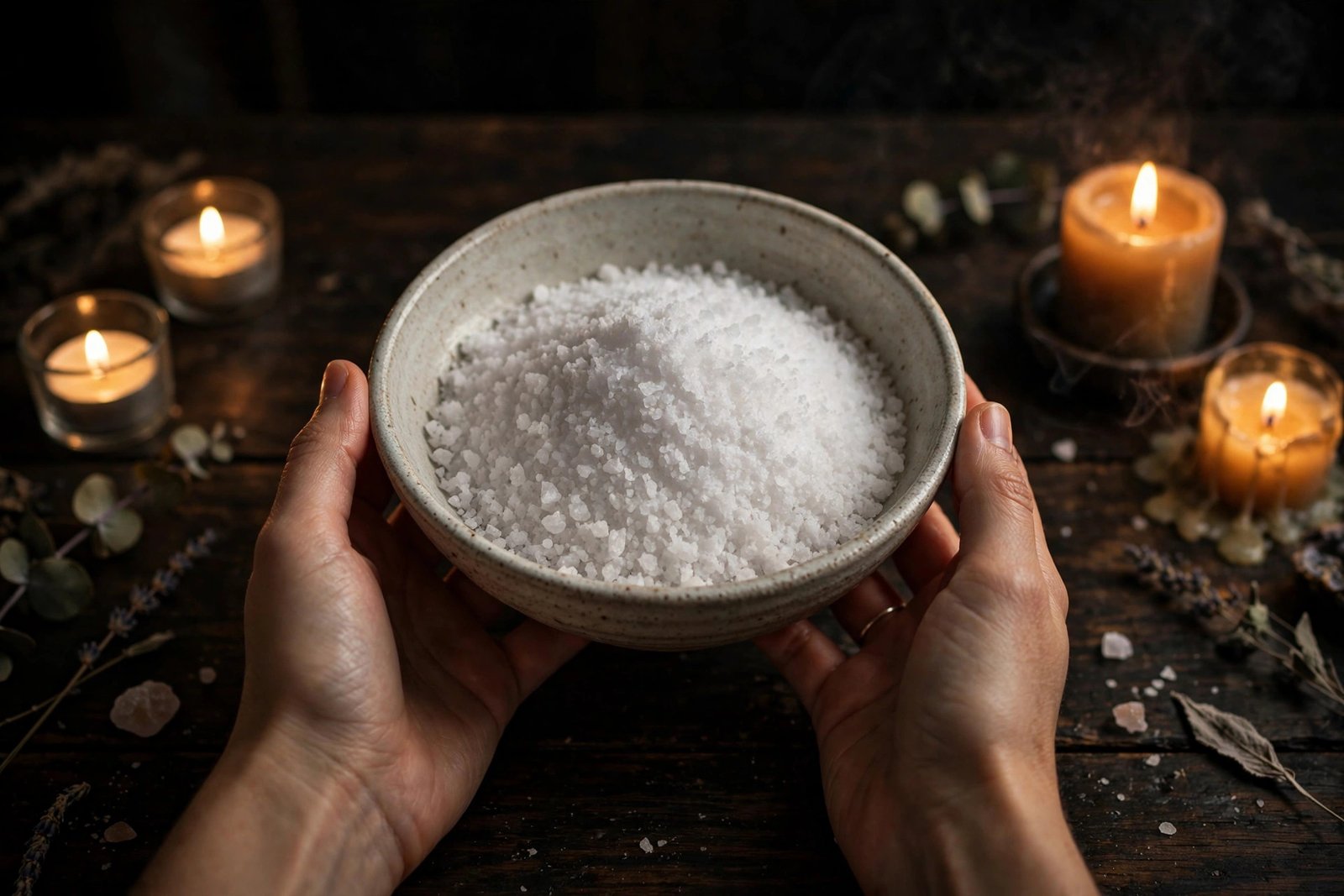
You may have heard it from a grandmother, a Vastu consultant, or a wellness blog: place bowls of salt in the corners of a room overnight to absorb negative energy. But what is the salt in corners of room overnight meaning, exactly? Where did this tradition come from, how do you do it properly, and does it actually work? This guide covers the complete tradition — the method step by step, what practitioners claim, and the grounded, practical perspective.
Quick answer: Placing salt in the corners of a room overnight is a folk tradition believed to absorb negative energy. To try it: place small bowls of sea salt in each corner, leave for 24 to 48 hours, then discard the salt outside without touching it. There is no scientific proof it removes energy, but many find the ritual itself calming.
Salt in Corners of Room Overnight Meaning: Origins of the Tradition
The meaning of keeping salt in the corners of a room overnight comes from folk traditions found across India, China (Feng Shui), and parts of Europe. The core belief is simple: salt is a natural purifier that absorbs heavy, stagnant, or “negative” energy from a space, much like it draws moisture from the air.
In Indian households, salt has long been associated with protection and cleansing — see our broader home cleansing guide for related methods. People add salt to mopping water, keep salt bowls during festivals like Diwali, and use salt in nazar utarna (evil-eye removal) rituals. Feng Shui practitioners describe salt as an element that “grounds” chaotic energy. European folk magic similarly used salt lines across doorways to keep harmful influences out.
Practitioners who follow this tradition say the corners of rooms matter because energy — like dust — is believed to collect and stagnate in corners where air and movement are lowest. Leaving the salt overnight gives it hours of undisturbed contact with the space. In the morning, the salt is discarded (never reused), symbolically carrying the absorbed negativity away.
To be clear: this is a traditional belief, not a scientifically established effect. Its power for many people lies in the ritual itself — a deliberate act of caring for one’s space.
How to Cleanse a Room with Salt: Step-by-Step Method
Here is the traditional method, as described by practitioners:
What you need
- Sea salt, rock salt (sendha namak), or Himalayan pink salt — about 2–4 tablespoons per corner. Traditionalists prefer unprocessed salt over refined table salt.
- Small bowls, preferably glass, ceramic, or clay (avoid plastic if you want to follow tradition strictly).
The method
- Step 1 — Choose your rooms: Focus on bedrooms, the living room, or any room that feels “heavy.” You can do one room or the whole home.
- Step 2 — Fill the bowls: Put 2–4 tablespoons of salt in each bowl.
- Step 3 — Place in corners: Set one bowl in each corner of the room, on the floor or a low surface. Some traditions add a few drops of water; others keep the salt dry.
- Step 4 — Set an intention: As you place each bowl, silently state your intention — for example, “may this space be cleared of heaviness.” Practitioners consider this the most important step.
- Step 5 — Leave overnight: Leave the bowls undisturbed for at least one night. Many people leave them for 24–48 hours, or up to a week for a first deep cleanse.
- Step 6 — Dispose properly: In the morning, collect the salt and flush it down the toilet or throw it in outdoor trash — never reuse it for cooking and don’t scatter it in your garden. Wash the bowls thoroughly before other use.
- Step 7 — Repeat as needed: Monthly, after arguments or illness in the home, or after moving into a new place.
Reading the salt (folk interpretation)
Some practitioners “read” the salt afterward: salt that has clumped, darkened, or become damp is traditionally interpreted as having absorbed significant negativity, while dry unchanged salt suggests the space was already clear. This is pure folklore — salt naturally absorbs moisture from the air, especially in humid weather.
What Practitioners Claim Salt Does
Those who practice salt cleansing describe several effects:
- Lighter atmosphere: rooms feel fresher, calmer, and easier to relax in.
- Better sleep: many report sleeping more peacefully after cleansing the bedroom.
- Reduced tension: households report fewer arguments and a calmer mood.
- Protection: salt at entrances is traditionally believed to stop negative influences from entering.
Believers attribute these effects to salt drawing out stagnant energy. Ask any practitioner about the salt in corners of room overnight meaning and you’ll hear the same core idea: the salt acts as a silent, passive cleanser while you sleep. Skeptics note that the ritual itself — tidying corners, setting intentions, paying attention to one’s home — reliably improves how a space feels, regardless of any energetic mechanism.
Salt in Corners of Room Overnight Meaning: Does It Really Work?
From a scientific standpoint, there is no evidence that salt absorbs “negative energy” — a concept science does not recognize. However, several real, grounded factors explain why people feel better after the ritual:
- Salt is hygroscopic: it genuinely absorbs moisture from the air, which can slightly freshen a damp, musty room.
- Ritual psychology: deliberate cleansing rituals reduce anxiety and create a sense of control — well-documented psychological benefits.
- Attention to space: the process forces you to notice corners, declutter, and care for neglected areas, which improves any room.
- Placebo and intention: believing your space is clearer genuinely changes how you experience it.
- Scent and freshness: many people combine salt bowls with opening windows or mopping with salt water, which physically freshens the home.
In short: the meaning of salt in corners of a room overnight is cultural and psychological rather than physical — but the felt result is real for many people. Understanding the salt in corners of room overnight meaning helps you practice it with the right mindset: as a mindful ritual of care for your space. If a simple, harmless ritual makes your home feel better, that outcome has value in itself.
Safety Notes
- Keep salt bowls away from pets and small children — ingesting large amounts of salt is harmful to animals.
- Don’t place salt directly on wooden floors or metal surfaces for long periods; it can cause staining or corrosion. Use bowls.
- Salt cleansing complements but never replaces real problem-solving: persistent dampness needs ventilation, and persistent distress needs professional support.
- If you have high blood pressure concerns in the household, remember this salt is never eaten — but keep the distinction clear for children.
For a fuller home reset, combine salt cleansing with decluttering, daylight, and protective objects like black tourmaline — see our guide on signs your home needs spiritual cleansing to know when a deeper cleanse is due.
Salt Cleansing for Different Rooms
One method doesn’t fit every space. Adjust the basic salt cleanse to each room’s character:
- Bedroom: the priority room — you spend a third of your life here. Salt-mop, then place a small salt bowl on the nightstand overnight once a week. Keep electronics minimal; the calmer the room, the deeper the rest.
- Living room: focus on corners and behind large furniture, where dust and stagnant air collect. If arguments happen here often, cleanse after the next one — don’t let the emotional residue sit.
- Kitchen: salt is already at home here. Wipe counters with salt water and keep the stove area spotless — in Vastu, the kitchen’s fire element governs vitality.
- Entrance: mop the threshold and place a salt bowl near the door overnight monthly. The entrance is your home’s first impression — energetically and literally.
- Bathroom: keep the door closed and the space dry; a small salt bowl on a high shelf absorbs damp odors between deep cleans.
After cleansing any room, open its windows for at least 20 minutes. Salt does the symbolic and physical cleaning; fresh air finishes the job.
Frequently Asked Questions
What is the meaning of keeping salt in corners of a room overnight?
Traditionally, salt is believed to absorb negative or stagnant energy from a space while you sleep. Corners are chosen because energy is thought to stagnate there. The salt is discarded in the morning, symbolically removing the absorbed negativity. This is a folk belief, not a scientifically proven effect.
Which salt is best for room cleansing?
Traditional practitioners prefer sea salt, rock salt (sendha namak), or Himalayan pink salt over refined table salt. In practice, any salt works for the ritual — the intention and process matter more than the variety.
How long should salt stay in the corners?
At minimum overnight (8–12 hours). Many practitioners leave bowls for 24–48 hours, or up to a week for a first deep cleanse. Replace the salt each time; never reuse cleansing salt.
Can I use the salt afterward for cooking?
No. Tradition is strict on this: cleansing salt has “absorbed negativity” and must be flushed away or thrown out, never eaten or reused. From a hygiene view too, floor-exposed salt should not be consumed.
This article presents traditional beliefs and folklore for informational purposes only, not as proven fact. If you experience persistent distress, please consult a qualified professional.