
Last updated: 23 October 2026
Every few years, a new label for “different” kids goes viral — and one of the most enduring is the indigo child. Believers describe indigo children as unusually empathic, strong-willed, and spiritually aware kids who resist authority and feel like they were born with a mission. But are indigo children traits real, or is this a comforting story parents tell about difficult behavior? The honest answer: it’s a New Age belief with no scientific backing — but the traits themselves describe real patterns in real children, and understanding both sides matters.
- The term was coined in the 1970s by parapsychologist Nancy Ann Tappe, who said she saw indigo-colored auras in children.
- Lee Carroll and Jan Tober’s book The Indigo Children (1998) brought the idea to a mass audience.
- A 2006 documentary, The Indigo Evolution, pushed it further into New Age culture.
- Critics point to the Forer effect — personality descriptions so vague they fit nearly everyone.
- Research psychologist Russell Barkley states there is no empirical evidence for indigo children.
What is an indigo child? A New Age label for children believed to possess special traits — deep empathy, strong will, spiritual awareness, and an indigo-colored aura — thought to mark them as part of a new generation meant to challenge old systems.
What are indigo children? The origin story
The story starts in the 1970s with Nancy Ann Tappe, a parapsychologist who claimed she could perceive human auras. Tappe later said she had been noticing such children since the late 1960s, and the “indigo” label was her name for what she believed she was seeing. She said she began noticing that more and more children carried an indigo — deep blue-violet — aura, and she connected it to heightened intuition and a distinct sense of purpose. The idea simmered in New Age circles for two decades.
Then, in 1998, The Indigo Children: The New Kids Have Arrived by Lee Carroll and Jan Tober turned a niche belief into a parenting phenomenon. The book argued that a wave of spiritually advanced children was arriving to dismantle outdated institutions — schools, discipline systems, even social norms — and, in the theory’s grandest version, to raise human consciousness itself. In New Age color lore, indigo is the color of the third-eye chakra, the seat of intuition — one reason Tappe’s label stuck. Parents who felt their kids didn’t fit the mold suddenly had a name for it. The 2006 documentary The Indigo Evolution kept the idea circulating for another generation.
It’s worth noting the timing. As researcher Sarah W. Whedon observed in a 2009 academic article, the indigo narrative rose alongside growing diagnoses of ADHD and rising unease with standardized schooling. For some parents, “indigo” offered an alternative story: their child wasn’t disordered — they were advanced.
The indigo children idea: key moments
| When | What happened |
|---|---|
| 1970s | Nancy Ann Tappe coins “indigo children,” saying she sees indigo auras in them |
| 1998 | Lee Carroll and Jan Tober publish The Indigo Children — the idea goes mainstream |
| 2006 | Documentary The Indigo Evolution carries it to a new generation |
| 2009 | Sarah W. Whedon’s academic article analyzes it as a response to a “crisis of American childhood” |

What are the main indigo children traits?
Believers attribute a consistent set of characteristics to indigo children. Wikipedia summarizes the descriptions like this:
- Empathic, curious, and strong-willed — they feel other people’s emotions intensely and won’t back down easily.
- A clear sense of self and purpose — they act like they arrived with a mission, and carry a feeling of “deserving to be here.”
- Seen as “strange” by friends and family — different rhythms, different priorities.
- Innate spirituality — a deep, subconscious spiritual awareness from early childhood, even without religious interest.
- Resistance to rigid authority — they reject control-based discipline and respond badly to guilt, fear, or manipulation.
- High intelligence and intuition — quick minds, strong gut feelings, and an ability to read people.
Supporters add that indigos tend to be creative, non-conformist, and frustrated by conventional schooling — they may clash with teachers they see as less perceptive than themselves. Some accounts go further, crediting indigos with alleged psychic abilities and a painful sensitivity to other people’s energy — again, claims with no controlled evidence behind them. If you’re exploring related New Age relationship ideas, our guide to twin flame signs covers another popular spiritual label with a similar believer-vs-skeptic split.
How to identify an indigo child, according to believers
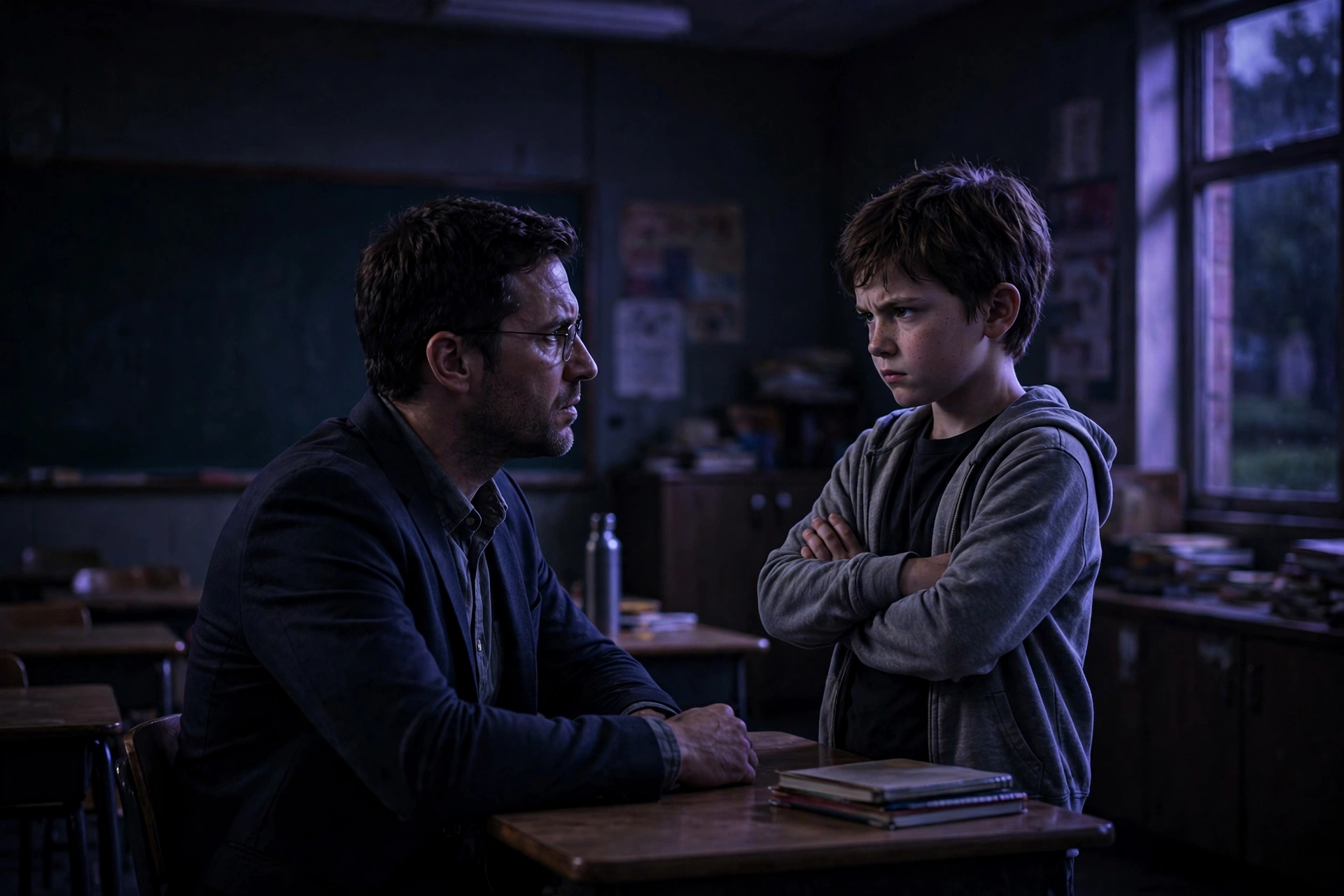
There’s no test — that’s the first thing to know. Believers “identify” indigo children with a checklist, not a measurement. The usual signs: the child questions every rule and wants to know why; shows adult-level empathy early; gets bored or frustrated by repetitive schoolwork; prefers creating things to following instructions; and says or shows they feel fundamentally different from other kids.
Some New Age writers add physical tells — sensitivity to loud noise, strong food preferences, vivid dreams — but even within believer circles these are debated. Here’s the honest framing: this kind of checklist can describe a gifted child, an ADHD child, a highly sensitive child, or just an intense, bright kid having a normal intense childhood. If the checklist fits and the child is thriving, enjoy the insight. If the child is struggling, the checklist is not a diagnosis — a professional evaluation is.
Are indigo children real? What skeptics say
Here’s the other side, and it deserves a fair hearing. The scientific consensus is blunt: there is no empirical evidence that indigo children exist as a distinct category. Research psychologist Russell Barkley has pointed out that the New Age movement has never produced a study validating the concept.
The sharpest criticism is the Forer effect — the tendency to accept vague personality descriptions as uniquely true of yourself. “Empathic, curious, strong-willed, feels different” could describe millions of children. Critics argue the label is a comforting alternative diagnosis: behaviors that might indicate ADHD, giftedness, or autism spectrum traits get reframed as spiritual giftedness instead.
That reframing has a real cost. If a child is struggling in school because of undiagnosed ADHD, calling them “indigo” can delay the evaluation and support that would actually help. The skeptical view isn’t that these kids are ordinary — many are genuinely bright, sensitive, or intense. It’s that the category explains nothing, and labels should never replace professional assessment.
A balanced take: treat “indigo” as what it is — a belief framework, not a diagnosis. It can help parents respond with more patience and respect. It cannot tell you what’s actually going on with your child.
Attributed characteristics: the complete list believers cite
When New Age sources enumerate indigo children traits, the list is remarkably consistent. Drawing on the standard descriptions: empathic, curious, and strong-willed; perceived as strange by friends and family; a clear sense of self-definition and purpose; strong innate subconscious spirituality from early childhood; a powerful feeling of entitlement — of deserving to be here; high intelligence; inherent intuitive ability; and resistance to rigid, control-based authority.
The word “attributed” does heavy lifting here. These characteristics are ascribed to indigo children by believers; none has ever been measured as a distinct cluster in a controlled study. Keep that distinction in mind and the list becomes useful: it’s a portrait of how a subculture sees certain children, not a diagnostic manual.
Indigo as an alternative to diagnosis
This is the sharpest criticism of the whole concept. As researcher Sarah W. Whedon argued, the indigo label functions for some parents as an alternative to diagnosis: behaviors that might stem from ADHD or other conditions get reinterpreted as signs of spiritual advancement instead. The label feels better than a disorder — and that’s exactly the danger.
A diagnosis opens doors: school accommodations, therapies, strategies that work. A spiritual label, however comforting, opens none of them. Critics aren’t saying these children have nothing going on; they’re saying “indigo” can quietly replace the process of finding out what it actually is. If a label ever stands between your child and professional help, the label has to go.
The relationship to attention deficit hyperactivity disorder (ADHD)
Read the indigo trait list next to an ADHD symptom list and the overlap jumps out: distractibility, impulsivity, boredom with repetitive tasks, emotional intensity, chronic conflict with authority. It’s one of the main reasons psychologists are skeptical — many children described as indigo would likely meet the criteria for ADHD if assessed.
The difference that matters: ADHD is a well-studied, diagnosable neurodevelopmental condition with effective treatments, from behavioral strategies to medication. “Indigo” explains nothing and treats nothing. When inattention, hyperactivity, or impulsivity are impairing a child’s school life or friendships, the responsible next step is an evaluation — not a more flattering label.
The relation to autism
A similar overlap exists with the autism spectrum: sensory sensitivities, feeling fundamentally different from peers, intense focused interests, and social friction are all described in both literatures. Some indigo narratives even echo autistic experiences — the child who perceives too much, feels out of place, and withdraws.
The same caution applies in stronger terms. Autism is real, common, and diagnosable, and early identification opens up support that genuinely changes outcomes. Reframing autistic traits as indigo giftedness doesn’t just miss the point — it can cost a child years of appropriate help. Intensity and difference deserve understanding; they also deserve accurate names.
Challenges indigo children are said to face
Whether or not you buy the label, the kids described as indigo run into real, recurring problems. School is the big one: rigid timetables, rote learning, and authority-based discipline grind against everything these kids are said to be. Clashes with teachers are almost a defining feature of the literature.
Then there’s the social cost. Being “seen as strange” by family and peers is listed as a trait, but it reads as a wound: loneliness, being labeled difficult, adults who respond to intensity with punishment instead of curiosity. Believers also describe emotional overwhelm — empathy so strong it becomes exhausting, big feelings with no off switch. These are genuine struggles. They deserve real support: patient parenting, flexible schooling where possible, and professional help when the struggle is serious — whatever name you give the child.
Indigo children vs crystal children — what’s the difference?
Within New Age literature, indigos aren’t the only “new kids.” Here’s how believers distinguish the main generations:
| Feature (as believers describe) | Indigo children | Crystal children |
|---|---|---|
| Said to arrive | From the 1970s onward | Later — after the indigos |
| Role | “Warriors” — break down old systems | “Healers” — loving, forgiving, gentle |
| Temperament | Strong-willed, rebellious, intense | Calm, affectionate, highly sensitive |
| Commonly linked with | ADHD-like behavior, clashes with authority | Delayed speech, deep eye contact, nature connection |
| Status | Spiritual label, no scientific basis | Spiritual label, no scientific basis |
Some New Age writers add a third wave — “rainbow children” — said to be even more joyful and fearless. All three are articles of belief, not findings. They work as metaphors for how kids differ; they fail as explanations for why a child struggles. For another spiritual-growth concept with deep roots, see our breakdown of kundalini awakening symptoms.
The commercialization of the indigo children idea
An idea this comforting was never going to stay non-commercial. Critics have long pointed out the marketplace that grew around indigo children: bestselling books, documentary films, paid workshops, and practitioners offering “indigo readings” for children. The concept sells because it reframes a worried parent’s problem — what’s wrong with my kid? — into a flattering answer: nothing; they’re advanced.
That doesn’t make every book or teacher cynical, but it should make parents careful consumers. A label that feels good and costs money deserves the same skepticism as any product. Free or not, no commercial offering can do what a proper developmental evaluation does.
Indigo children as a new religious movement
Academics don’t study indigo children as a fact about kids — they study the belief as a social phenomenon. Sarah W. Whedon’s 2009 article in the journal Nova Religio treated the indigo narrative as a response to an “apparent crisis of American childhood”: rising youth violence headlines, more ADHD diagnoses, and deep parental distrust of institutions. In that reading, “indigo” is a new religious movement’s answer to modern anxiety about children.
Other scholars place it in the broader New Age pattern of sacralizing the self — every person, even a child, carries a special spiritual identity. In this telling, indigos are “old souls” who chose to incarnate now to help raise the Earth’s consciousness, and New Age writers sometimes group them with “lightworkers,” adults said to share the same mission. Understanding this angle doesn’t require dismissing believers; it explains why the idea caught fire when it did, and why it persists regardless of evidence.
What believers claim vs what the evidence shows
| The claim | What the evidence shows |
|---|---|
| Indigo auras are visible to sensitives | No scientific method has ever measured an aura |
| The traits mark spiritual evolution | Traits match the Forer effect — vague enough to fit almost anyone |
| A new generation has arrived since the 1970s | No demographic evidence; sociologists read it as a cultural trend |
| Indigos need alternative schooling | What struggling kids need is assessment and support, whatever the label |
What should parents do with the indigo label?
If the indigo description fits your child, take the useful parts and leave the rest. The useful parts: treat strong-willed, sensitive kids with respect rather than punishment; give choices instead of commands; protect their emotional bandwidth; channel their intensity into creative challenges. Those are solid parenting strategies whatever you call them — and they echo in traditions from angel number guidance to mindfulness practice.
But draw a hard line at one thing: never use a spiritual label to skip a professional evaluation. If your child is seriously struggling — at school, with peers, with focus or emotions — see a pediatrician or child psychologist first. ADHD, giftedness, anxiety, and autism are real, treatable, and diagnosable. “Indigo” is none of those. A good professional will respect your beliefs while still doing their job; the two don’t have to fight.
And if the label helps your family lead with patience instead of frustration? That’s a genuine win. Just make sure the win doesn’t come at the cost of help your child might need.
People also ask
Who coined the term indigo children?
Nancy Ann Tappe, a 1970s parapsychologist, coined it after claiming she saw indigo-colored auras in certain children. The concept went mainstream with Lee Carroll and Jan Tober’s 1998 book The Indigo Children: The New Kids Have Arrived, and later the 2006 documentary The Indigo Evolution.
Can adults be indigo children?
Believers say yes — many adults who recognize the traits in themselves identify as “indigo adults,” since indigos have supposedly been arriving since the 1970s. There’s no test, measurement, or scientific criterion for the label; it’s a self-identification within a belief system.
What is the difference between indigo and crystal children?
In New Age belief, indigo children are the strong-willed “warriors” who challenge and dismantle old systems, while crystal children are described as gentler, more loving healers who arrived later. Both are spiritual labels with no scientific validation — useful as metaphors, not as diagnoses.
Is there scientific proof of indigo children?
No. Critics including research psychologist Russell Barkley note the New Age movement has produced no empirical evidence for the concept. The attributed traits closely match the Forer effect — vague statements that fit nearly anyone — and overlap heavily with giftedness, ADHD, and autism spectrum traits, which are real and diagnosable.
More New Age stories
- Twin Flame Signs: 12 Ways You Know You’ve Met Yours
- 909 Angel Number Twin Flame Meaning: Love Guide
- Kundalini Awakening Symptoms: Signs, Triggers & Stages
This article presents traditional beliefs and folklore for informational purposes only, not as proven fact. If you experience persistent distress, please consult a qualified professional.