Last updated: October 23, 2026 • By NegativeVibeFix
Does the Bilderberg Group secretly run the world? No documented evidence says it does — but the real story is still worth your time. The Bilderberg Group is a genuine annual conference that has gathered some of the planet’s most powerful politicians and business leaders every year since 1954 — no press, no public minutes, strict confidentiality. That secrecy fuels one of the world’s most durable conspiracy theories.
- 1954 — the first meeting, at the Hotel de Bilderberg in Oosterbeek, Netherlands.
- 120–150 — invited participants each year, from politics, industry, finance, media, and academia.
- 1976, 2020, 2021 — the only cancelled years: Lockheed scandal fallout, then the COVID-19 pandemic.
- 1975 — when Prince Bernhard’s chairmanship ended; current chairman is Henri de Castries.
- bilderbergmeetings.org — the official site, which now publishes each year’s attendee list and topics.
What is the Bilderberg Group? An annual off-the-record forum, founded in 1954, that brings roughly 120–150 invited leaders from Europe and North America together for three days of private, non-binding discussion.
Does the Bilderberg Group run the world?
No. The meetings produce no votes, no resolutions, and no binding decisions. Under the Chatham House Rule, participants can take ideas home — but nothing is attributed to a named speaker. A room where powerful people trade opinions is not the same as a room where orders are issued.

The question survives because the setting invites it: prime ministers, central bankers, and tech CEOs in a sealed hotel naturally invite suspicion. Believers cite attendees who later became prominent as proof of a kingmaker role — but the paper trail supports attendance, not anointing.
Who are the participants, and what happens at the meetings?
Each year’s 120–150 guests are picked by an international steering committee, currently co-chaired by Marie-Josée Kravis and Henri de Castries. The mix is deliberate: officials, industry chiefs, financiers, academics, and a few journalists. About a third are usually politicians. The venue rotates between Europe and North America each summer, and it lasts about three days.

Inside, it works like a seminar. A published agenda lists broad topics — recent years covered AI and its safety, the future of warfare, biological innovation, climate policy, and European economic strategy. Short expert remarks open each session, then the floor opens for debate. Afterward, a private report goes only to past and present participants, with speakers named by country alone. No press conferences, no communiqués, nothing signed. The secrecy is not disputed — what it hides is.
When was the most recent Bilderberg Group meeting?
The 71st Bilderberg Meeting ran June 12–15, 2025, in Stockholm, Sweden, and the 72nd followed April 9–12, 2026, in Washington, D.C. The rhythm never changes: one host country, one long weekend, every year. Earlier, the 2024 agenda had covered AI states and safety, biological innovation, and warfare futures. Each year’s roster of 120–150 names goes up on the official site beforehand, which is how little of the “total secrecy” image survives today.
| Year | Meeting | Location / note |
|---|---|---|
| 2026 | 72nd | Washington, D.C., USA |
| 2025 | 71st | Stockholm, Sweden |
| 2020–2021 | Cancelled | COVID-19 pandemic |
| 1976 | Cancelled | Lockheed scandal fallout |
| 1954 | 1st | Hotel de Bilderberg, Oosterbeek, Netherlands |
Where did the Bilderberg Group come from? A short history
It started in the early 1950s, at the height of the Cold War. Józef Retinger, a Polish political figure, feared Europe and America were drifting apart, and convinced Prince Bernhard of the Netherlands to back an informal conference. The first ran May 29–31, 1954, at the Hotel de Bilderberg in Oosterbeek — the hotel that named the group — with about 50 delegates from 11 Western European countries and the United States. The original agenda was preventing another world war; today, Wikipedia describes its purpose as bolstering consensus around free-market Western capitalism.

For decades the group barely acknowledged itself, and conspiracy literature filled the vacuum. Prince Bernhard chaired until 1975, stepping down after the Lockheed bribery scandal; the 1976 meeting was cancelled as fallout. The official website now publishes guest lists and agendas in advance — more open than the 1970s, still far more private than any public summit.
What do conspiracy theorists claim about the Bilderberg Group?
Believers say the conference is the steering committee of a shadow global government — the “New World Order” — where elites set the world’s direction. The idea sits in the same mythology as Illuminati symbolism. The usual claims: the group picks future presidents, orchestrates crises, and merges with Davos and the Trilateral Commission into one ruling network.

The honest response: these claims have never come with minutes, votes, or any paper trail. They have proximity — powerful people in one room — dressed up as causation, and the theory thrives across the political spectrum, which suggests suspicion more than evidence. It is the same secrecy dynamic behind the Area 51 legend: a sealed site, an information vacuum, and a story that rushes in to fill it.
What do the documented facts show?
The record is less exciting, and that is the point:
| What believers claim | What the documents show |
|---|---|
| Secret orders go out to governments. | No votes, resolutions, or statements are ever issued; talks are explicitly non-binding. |
| A fixed shadow cabinet attends. | Attendance changes yearly; only a small steering committee is ongoing. |
| Total darkness, no information. | Attendee lists and topic agendas are published on bilderbergmeetings.org. |
| Future leaders are anointed there. | Some attendees rose later, but there is no mechanism for “choosing” leaders. |
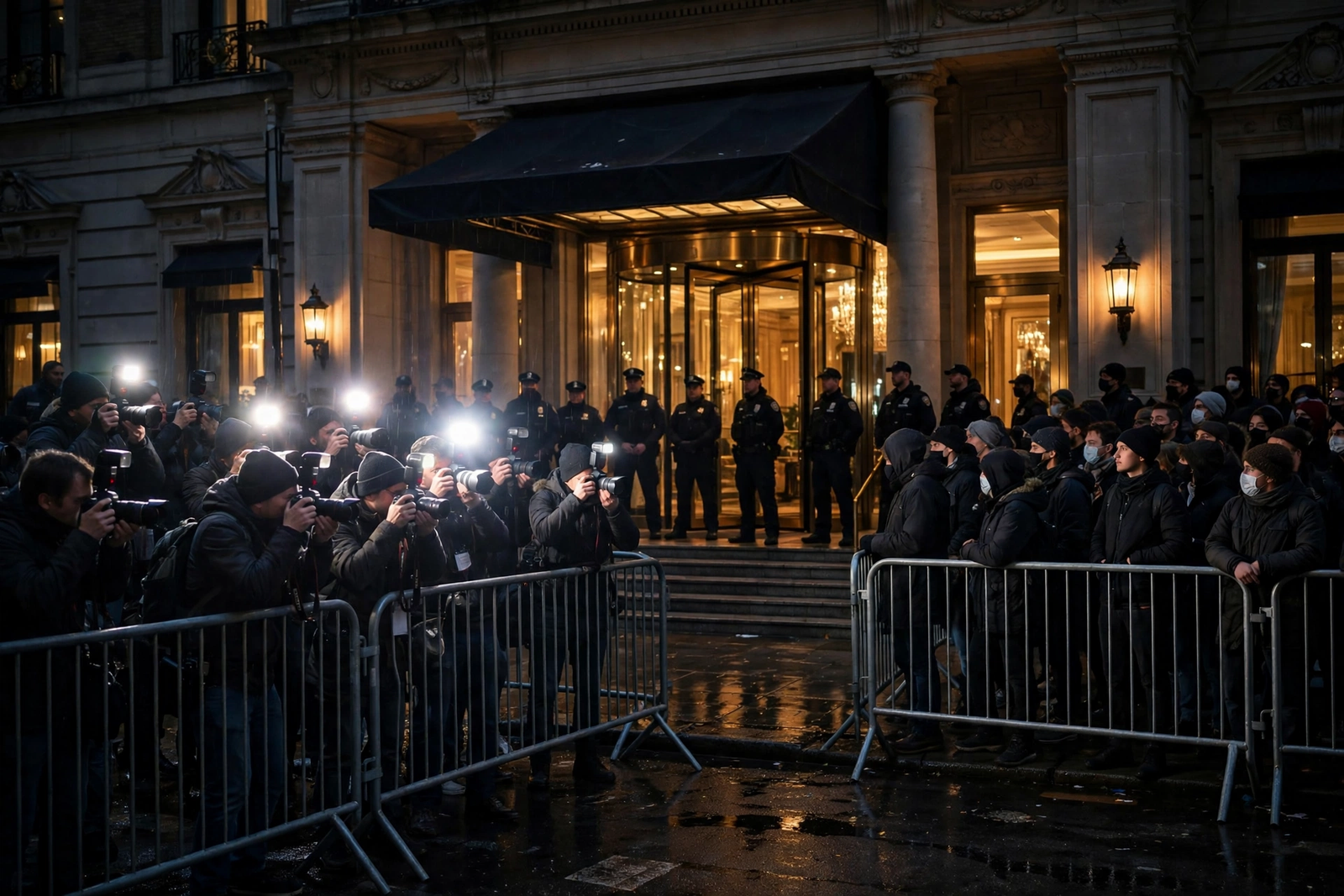
The fair summary: a private talking shop for people who already hold power, not a secret parliament. Its influence is the ordinary kind — ideas traded between elites.
Is there any real criticism of the Bilderberg Group meetings?
Yes — and it does not require believing the conspiracy. Journalists and academics argue that when ministers and CEOs meet off the record, the public can’t see how policy ideas form — an accountability problem for democracies.
There is also the revolving-door critique: executives brief politicians who later regulate their industries, under a rule shielding who said what. Demand transparency without inventing a shadow government — see the Britannica entry on the Bilderberg Meetings for the mainstream profile.
| Bilderberg Group | World Economic Forum (Davos) | |
|---|---|---|
| Format | Private, off-the-record | Public, televised |
| Output | No votes, statements, or reports | Published reports and sessions |
| Size | 120–150 invited guests | Thousands of attendees |
| Press | No access to sessions | Full media coverage |
People also ask
Is the Bilderberg Group the same as the Illuminati?
No — a documented conference founded in 1954 versus a Bavarian society dissolved in the 1780s. Conspiracy culture merges them; their histories are entirely different.
Why are journalists kept out of the meetings?
A few editors attend as participants, but there is no press access to sessions. The group says the Chatham House Rule encourages honesty; critics say it shields power from scrutiny. Both can be true at once.
How is it different from Davos?
Davos (the World Economic Forum) is public, televised, and publishes reports. Bilderberg is private, off-the-record, and publishes nothing from the sessions. Some attendees overlap — which is why believers connect them.
Frequently asked questions
Is the Bilderberg Group real?
Yes — a real annual private conference founded in 1954, with roughly 120–150 political leaders, executives, and academics from Europe and North America.
Does the Bilderberg Group run the world?
No documented evidence says so — meetings issue no votes or binding decisions.
What is the Chatham House Rule?
It lets participants use information from a meeting without revealing who said it — used by Bilderberg, think tanks, and diplomatic gatherings alike.
When was the first meeting?
May 29–31, 1954, at the Hotel de Bilderberg in Oosterbeek, Netherlands, backed by Prince Bernhard and Józef Retinger.
More Conspiracies stories
- Illuminati Symbols and Their Hidden Meanings: Real History
- Area 51 Secrets: What Is Really Inside?
- Philadelphia Experiment Story: What Really Happened (1943)
This article presents traditional beliefs and folklore for informational purposes only, not as proven fact. If you experience persistent distress, please consult a qualified professional.