
Behind glass in respected museums sit cursed objects in museums people swear are dangerous — a diamond linked to dead kings, a chair no one may sit in, a wine cabinet blamed for nightmares. The objects are real, the museums are real, and the tragedies mostly happened — but the “curse” connecting them is folklore, not fact.
Last updated: 23 October 2026
Quick answer: Museums display artifacts with real reputations for misfortune — the Hope Diamond at the Smithsonian, Busby’s “dead man’s chair” in Thirsk, the Dybbuk Box in Las Vegas. Each has a documented trail of suffering owners. Curse or coincidence is where history ends and legend begins.
Key stats:
- Hope Diamond: 45.52 carats, Smithsonian National Museum of Natural History, Washington, DC.
- Busby’s chair, cursed 1702, hangs on a Thirsk Museum wall, out of sitting reach.
- Ötzi the Iceman — 5,300 years old, found 1991 — South Tyrol Museum of Archaeology, Bolzano.
- Dybbuk Box: eBay 2001; bought by Zak Bagans 2017 for his Haunted Museum.
- Warren Occult Museum closed 2019; the real Annabelle is off public view.
What are cursed objects in museums? Artifacts whose owners suffered striking misfortunes — deaths, ruin, madness — later woven into a “curse” narrative the museum inherits with the object.
The 7 cursed objects at a glance
| Object | Where to see it | The legend | The documented fact |
|---|---|---|---|
| Hope Diamond | Smithsonian, Washington DC | Death to owners | Curse invented by 1900s press |
| Busby Stoop Chair | Thirsk Museum, England | Sitters die (1702 curse) | Stories grew over centuries |
| Woman from Lemb | National Museum of Scotland | Ruined three families | Prehistoric Cypriot figurine |
| Ötzi the Iceman | Bolzano, Italy | Seven linked deaths | 5,300 years old, found 1991 |
| Crystal Skull | British Museum, London | Doom to owners | Likely 19th-century made |
| Dybbuk Box | Haunted Museum, Las Vegas | Nightmares, bad luck | Viral 2001 eBay listing |
| Annabelle Doll | Warren collection (closed 2019) | Moves, attacks | 1970s Warren case |
1. The Hope Diamond — Smithsonian, Washington, DC
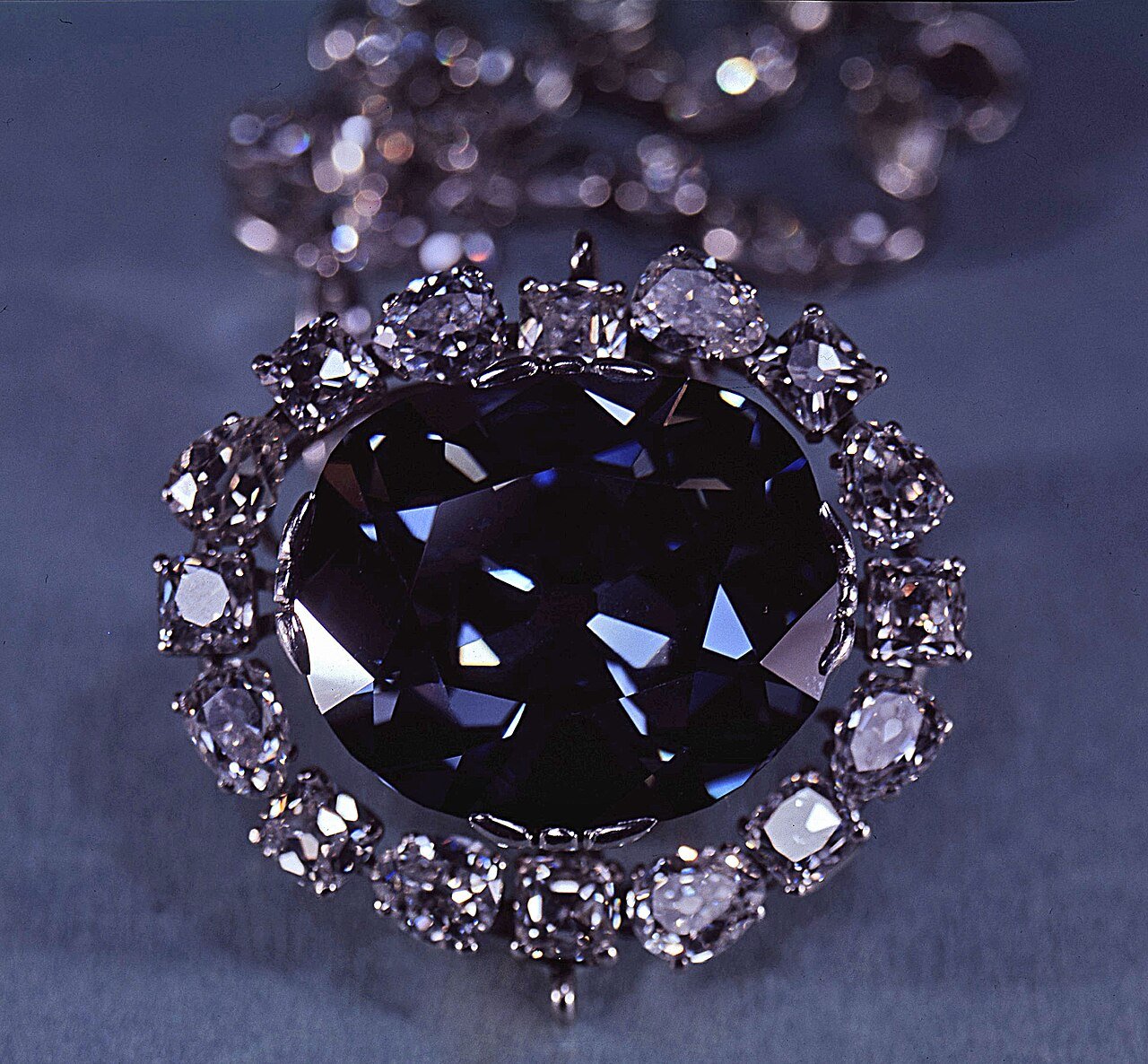
The most famous cursed gem on earth began as a large stone from India’s Kollur Mine, bought by French merchant Jean-Baptiste Tavernier in the 1600s. It passed through French royalty — including, by legend, Marie Antoinette — before reaching American heiress Evalyn Walsh McLean, whose family unraveled in tragedy. Now 45.52 carats of deep blue, it was donated to the Smithsonian in 1958. Historians note the “curse” was largely invented by early-1900s jewelers to romanticize the stone. (Hope Diamond history)
2. The Busby Stoop Chair — Thirsk Museum, England
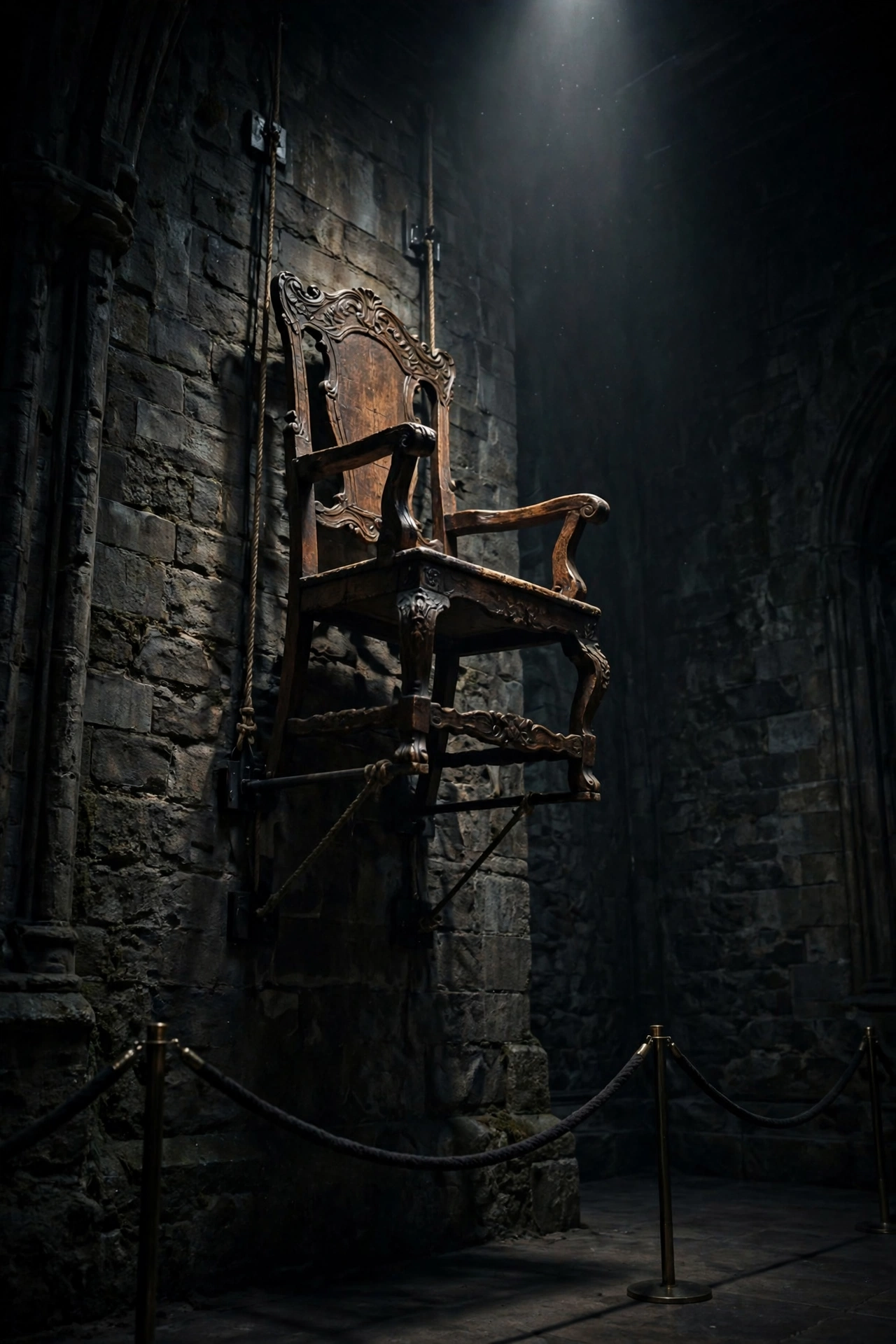
In 1702, Thomas Busby was hanged for murder in North Yorkshire. Legend says he cursed his favorite pub chair on the way to the gallows, dooming anyone who sat in it. Stories piled up of sitters who died soon after — including, in one tale, two airmen in the 1970s. The chair now hangs on the Thirsk Museum wall, mounted too high to sit in. Curse or coincidence, the museum isn’t taking chances.
3. The Woman from Lemb — National Museum of Scotland, Edinburgh
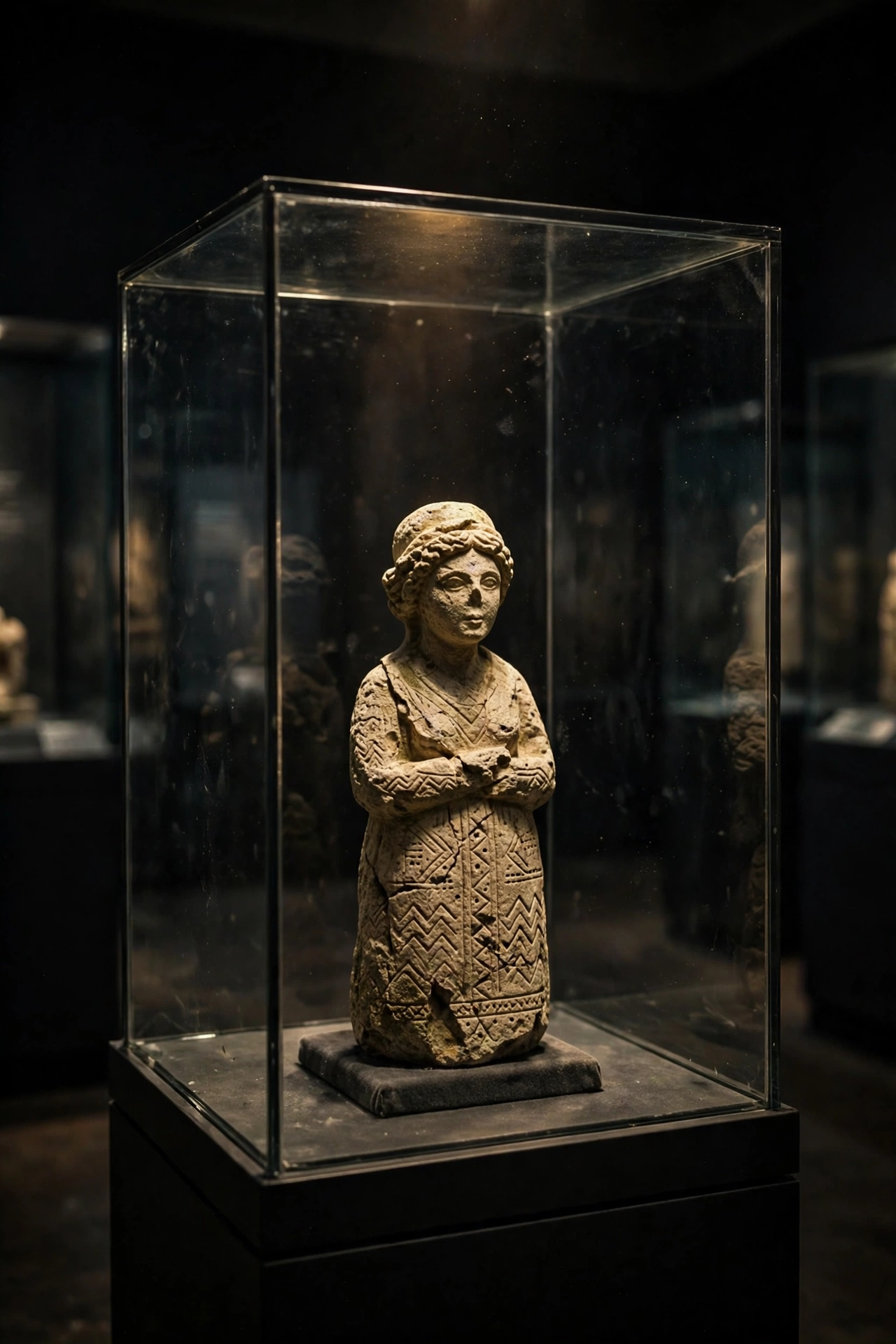
This prehistoric limestone figurine from Lemba, Cyprus, supposedly ruined three owning families before survivors gave it to the Royal Scottish Museum in Edinburgh (now the National Museum of Scotland). Like many “cursed” antiquities, its legend grew each time misfortune struck someone connected to it.
4. Ötzi the Iceman — South Tyrol Museum of Archaeology, Bolzano
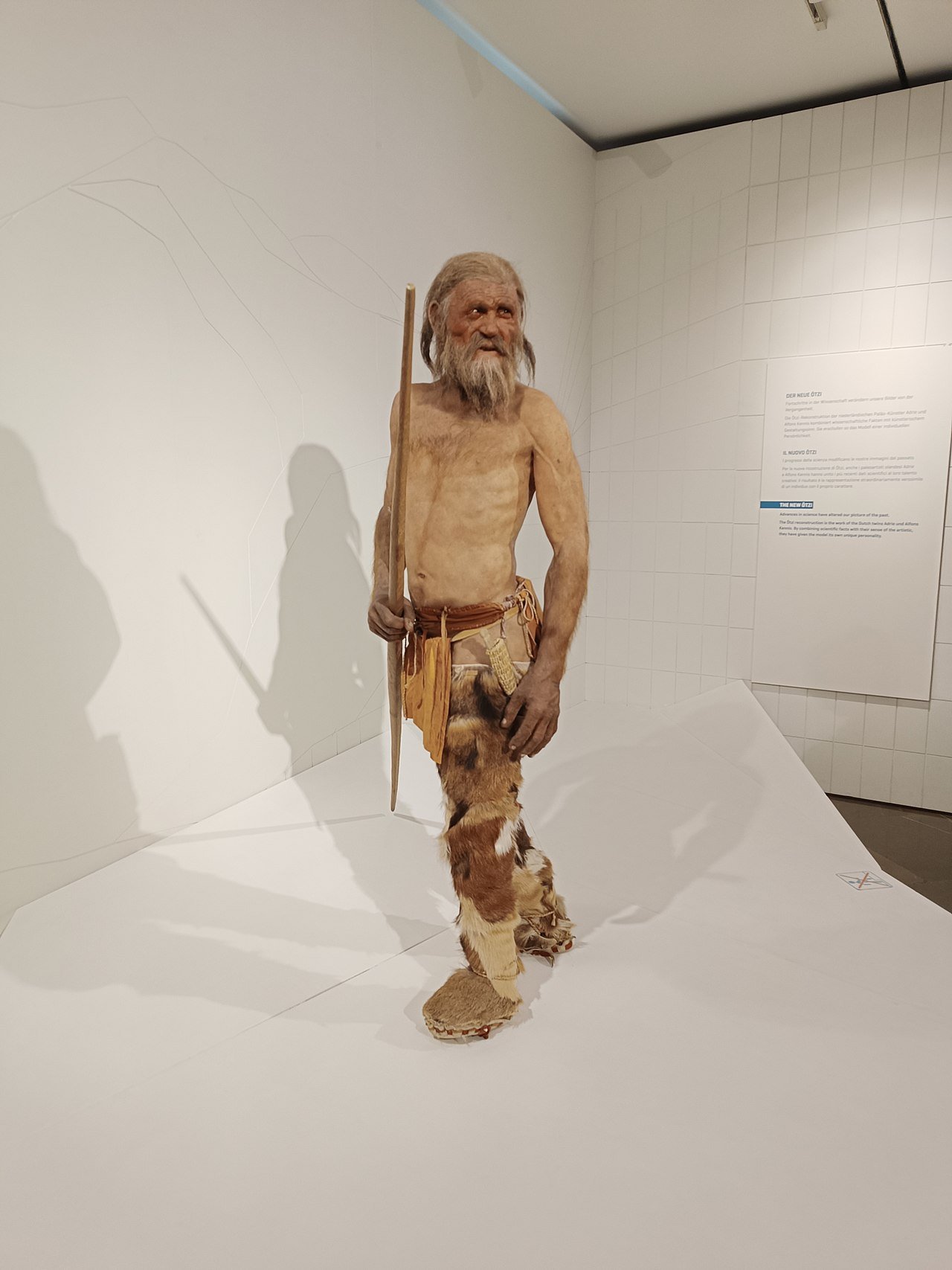
When hikers found a 5,300-year-old body in the Ötztal Alps in 1991, it was a sensation. Then people started dying: the examiner, the recovery mountaineer, a journalist who filmed the site — seven deaths, by some counts, within a few years. Talk of the “Curse of Ötzi” spread. Several were older men in risky Alpine work — but the pattern was eerie enough that Bolzano’s museum still fields questions about it.
5. The Crystal Skull — British Museum, London
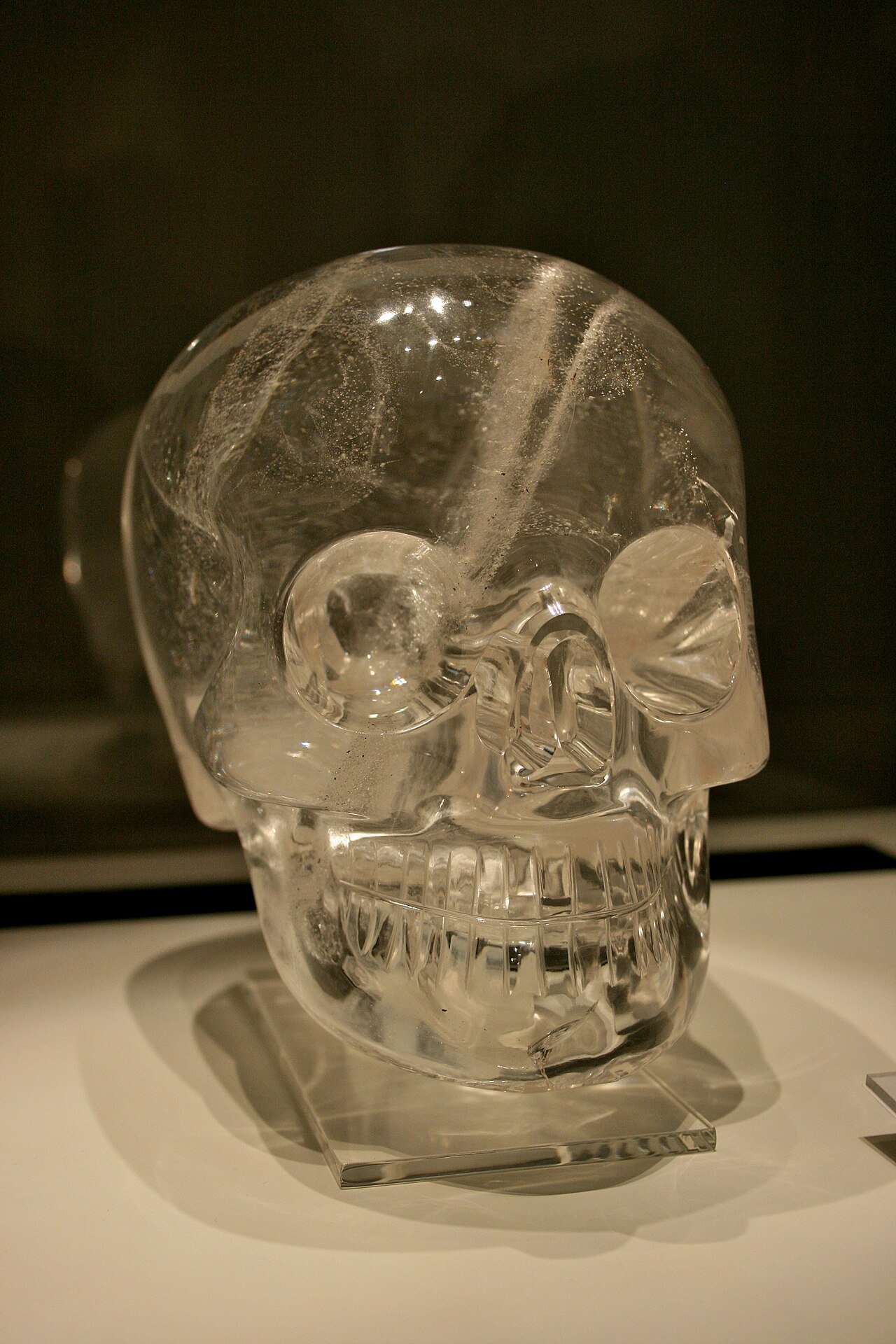
Life-size quartz skulls sit in museums in London, Paris, and Washington — each with tales of ruined owners. The most famous, the Mitchell-Hedges skull, was supposedly found in a Mayan ruin. Testing suggests the British Museum’s skull was likely 19th-century made, not ancient. The “curse” may be the most modern thing about it.
6. The Dybbuk Box — Zak Bagans’ Haunted Museum, Las Vegas
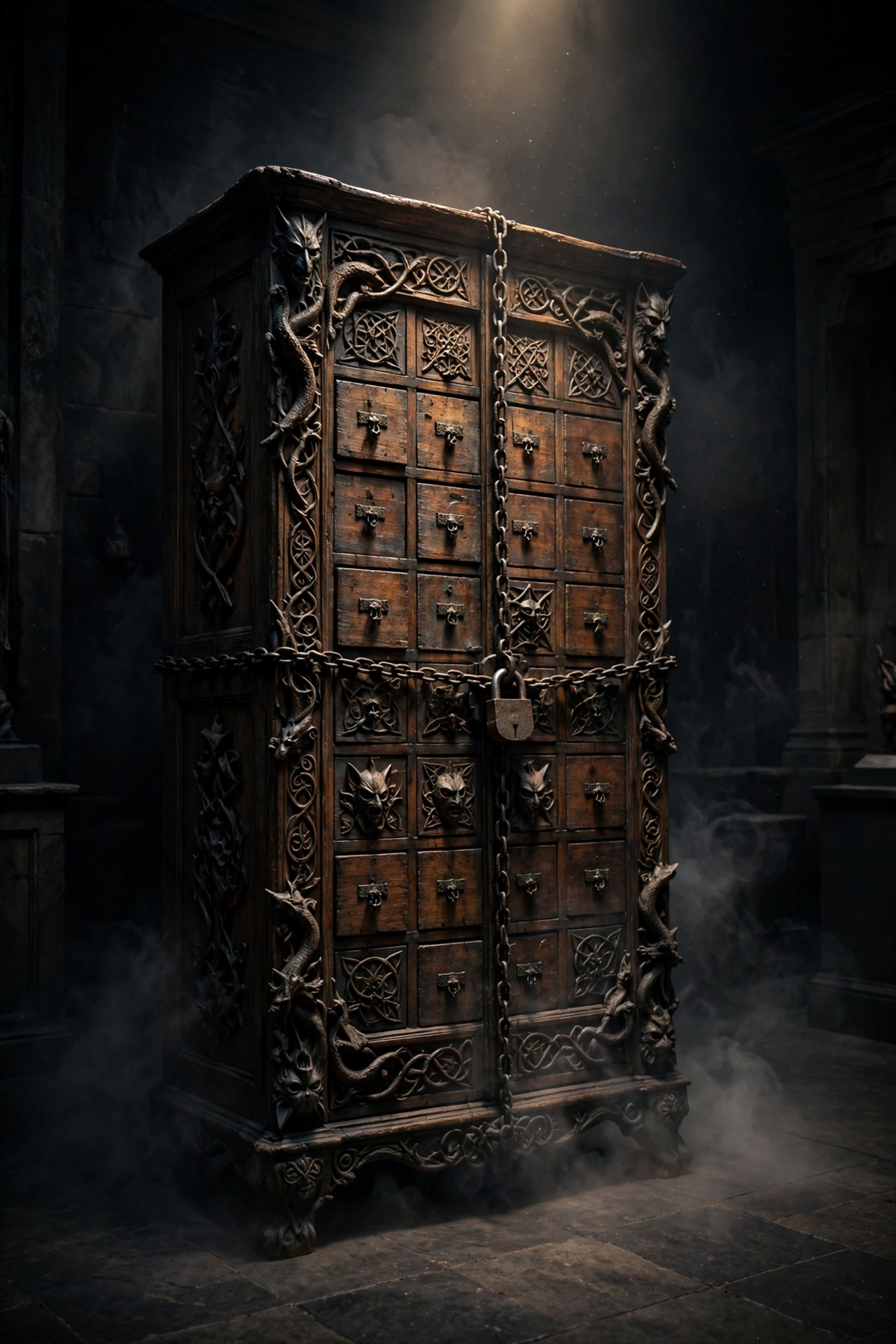
In 2001, a wine cabinet sold on eBay with a chilling listing: it had belonged to a Holocaust survivor, and owners reported nightmares and strange smells. The auction went viral, inspired the 2012 film The Possession, and in 2017 investigator Zak Bagans bought it for his Haunted Museum in Las Vegas. Skeptics call it the first great internet-age cursed object — a legend crowdsourced into existence.
7. The Annabelle Doll — Warren Occult Museum (closed), Connecticut
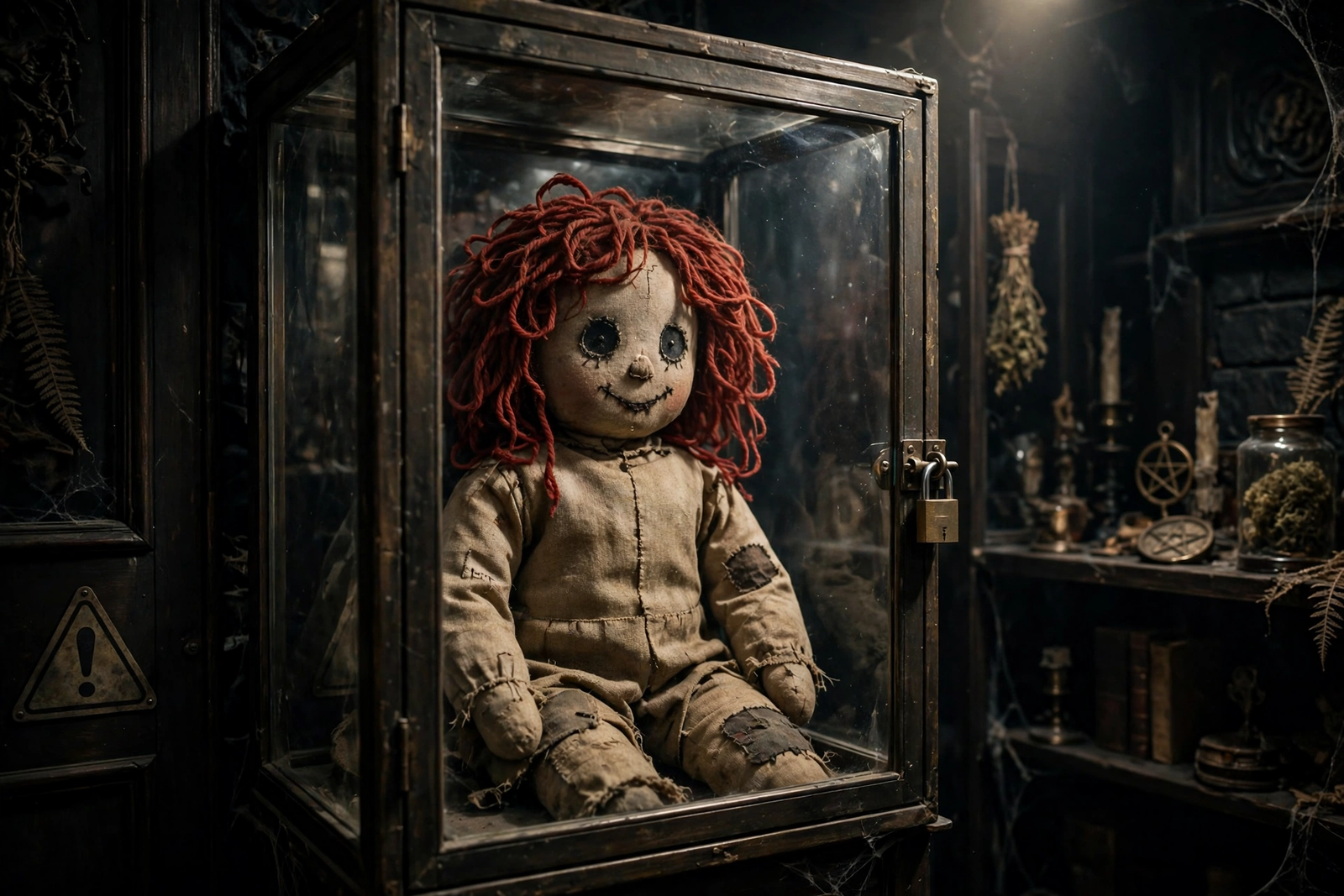
The real Annabelle looks nothing like the films’ porcelain horror — she’s a vintage Raggedy Ann doll. In the 1970s, Ed and Lorraine Warren took her from two nurses who said she moved on her own, locking her in a glass case in Monroe, Connecticut: “Positively do not open.” The museum closed in 2019. Full case: the Annabelle doll’s true story is covered in our Haunted section.
Honorable mentions
The Koh-i-Noor Diamond — Tower of London
Said to be safe only for women; legend holds every male owner lost his throne.
The Unlucky Mummy — British Museum, London
The mummy-board of the priestess of Amen-Ra, blamed for deaths and even the Titanic sinking (pure invention).
The Cursed Amethyst — Natural History Museum, London
Blamed for disasters since the 1800s; its donor warned of the curse in writing. Same pattern: real object, real misfortunes, a story that grew in the retelling.
The Great Bed of Ware — V&A, London
London’s Victoria and Albert Museum holds one of the strangest allegedly haunted beds in the world. The Great Bed of Ware is a carved oak four-poster made around 1590–1600, famously enormous. It spent centuries in the coaching inns of Ware, Hertfordshire, where countless travellers carved their names into its frame — the graffiti of ordinary people is still visible in the woodwork. One legend claims it was built for King Edward IV, though the museum’s own dating puts it a century later — a neat example of how these stories outgrow their facts. Another tale says carpenter Jonas Fosbrooke, furious at the rough treatment of his work, haunts the bed and attacks any commoner who sleeps in it. Google’s Arts & Culture project lists the bed among four haunted objects in museums around the world. (Google Arts & Culture: 4 Haunted Objects in Museums)
The Terracotta Army — Xi’an, China
In 1974, farmers digging a well near Xi’an struck fragments of baked clay — and uncovered an underground army. Emperor Qin Shi Huang, who died around 210 BCE, was buried with some 8,000 life-size soldiers, 130 chariots with 520 horses, and 150 cavalry horses, standing guard for more than 2,000 years. The villagers believed that disturbing the army would bring misfortune — and in a way, they were right: their ancient village was pulled down to make way for the enormous museum that now covers the site. Today the Terracotta Army is a world-famous wonder, but the old warning still clings to it: dig up the dead emperor’s guard, and pay the price.
Cursed objects on display: London’s 2025 exhibition
Museums don’t just inherit cursed objects — they now put the very idea of the curse on exhibit. From 2 May to 26 June 2025, the Peltz Gallery at Birkbeck, University of London, hosted “Cursed Objects in Museum Shops,” a free exhibition curated by Kasia Tomasiewicz and Dan Hancox of the Cursed Objects podcast. The twist: nothing in the show was haunted. Instead, the exhibition asked visitors to take museum souvenirs seriously — pens, bouncy balls, T-shirts, even an imitation hand-grenade “seed bomb” for planting flowers — objects “cursed” not by magic but by the odd cultural meanings stuck to them. Built with research from Birkbeck’s Centre for Museum Cultures, it argued that a gift-shop duck dressed as Charles Dickens can tell you as much about a culture as a sarcophagus. (Cursed Objects exhibition, Peltz Gallery)
The four haunted objects in Google’s museum story
Google’s Arts & Culture story on haunted museum pieces names four objects — two already covered above, two more worth knowing:
| Object | Museum | Made / discovered | The legend |
|---|---|---|---|
| Great Bed of Ware | V&A, London | Made c. 1590–1600 | The carpenter’s ghost attacks commoners who sleep in it |
| Hope Diamond | Smithsonian, Washington DC | Indian mine, Kollur | Stolen from a statue’s eye; misfortune to every owner |
| Terracotta Army | Xi’an, China | Discovered 1974 | Disturbing the emperor’s guard brings misfortune |
| Unlucky Mummy | British Museum, London | Coffin lid, c. 950–900 BCE | Early owners died; blamed for the Titanic sinking |
Cursed-object timeline
| Year | Event |
|---|---|
| c. 1590–1600 | The Great Bed of Ware is built; later legends claim a royal commission |
| 1702 | Thomas Busby is hanged; the curse of his pub chair begins |
| 1958 | The Hope Diamond is donated to the Smithsonian — the “curse” supposedly lifts |
| 1974 | Farmers uncover the Terracotta Army near Xi’an |
| 2001 | The Dybbuk Box sells on eBay; the internet’s first viral cursed object |
| 2017 | Zak Bagans buys the Dybbuk Box for his Las Vegas Haunted Museum |
| 2019 | The Warren Occult Museum closes; the real Annabelle goes off public view |
| 2025 | “Cursed Objects in Museum Shops” exhibition, Peltz Gallery, London (2 May–26 June) |
Why do museums keep displaying “cursed” objects?
Because the curse is part of the artifact’s story. A label saying “this chair is said to kill sitters” draws crowds the chair alone never would. Curators present the legend as folklore, document what’s verifiable, and let visitors decide. Our About page explains how we research these stories — legend and documented fact side by side.
Why do we believe objects can carry bad luck?
Psychologists point to human habits, and historical records show the same pattern repeating for centuries. Pattern-seeking: when tragedy follows an object twice, we stop counting the uneventful owners. Selective storytelling: retellings keep the deaths, drop the boring decades. Emotional contagion: knowing an object’s dark history makes people uneasy — read as its “energy.” No supernatural required.
People also ask
What is the most famous cursed object in a museum?
The Hope Diamond at the Smithsonian’s National Museum of Natural History. The 45.52-carat blue diamond is said to bring misfortune to its owners, from French royalty to heiress Evalyn Walsh McLean. Historians treat the curse as legend amplified by early-1900s jewelers and journalists.
Is the Annabelle doll in a museum?
The real Annabelle — a Raggedy Ann doll, not the film’s porcelain figure — was kept in the Warren Occult Museum in Monroe, Connecticut, in a locked glass case. The museum closed in 2019 after Lorraine Warren’s death and is no longer open to the public.
Where is the Busby Stoop Chair?
It hangs on the wall of the Thirsk Museum in North Yorkshire, England — mounted high so no visitor can sit in it. Legend says Thomas Busby cursed it before his 1702 execution, dooming anyone who dared sit down afterward.
Are cursed museum objects actually dangerous?
No verified case exists of a museum object harming anyone supernaturally. The “curses” are folklore: coincidence, selective storytelling, and our habit of linking unrelated tragedies. Museums display these as cultural artifacts — the legends are history, not a safety warning.
More Haunted stories
- Most Haunted Places in the World: 15 to Visit
- Sallie House Haunting Kansas (2026): Full Guide
- Elisa Lam Cecil Hotel Mystery: 7 Theories vs Evidence
This article presents traditional beliefs and folklore for informational purposes only, not as proven fact. If you experience persistent distress, please consult a qualified professional.