Last updated: October 20, 2026
On the night of February 1-2, 1959, nine experienced ski hikers camped on a Ural Mountain slope cut their way out of their own tent with knives and fled into -30C darkness wearing almost nothing. None survived. What happened at Dyatlov Pass? For 60 years it was history’s most famous unsolved mystery – until snow science cracked it. The documented facts, the strange injuries, the failed theories, and the breakthrough: here is the Dyatlov Pass incident explained.
- 9 dead, 1 survivor – Yuri Yudin turned back sick on January 28; it saved his life
- February 1-2, 1959 – the night of the incident, on Kholat Syakhl in the northern Urals
- -30 to -40C – the estimated temperatures the hikers fled into, underdressed
- 6 hypothermia, 3 trauma – causes of death: six froze; two had crushed chests, one a fractured skull
- February 26, 1959 – the tent was found, slashed open from the inside
- 2021 – Johan Gaume’s Swiss team modeled the slab avalanche using snow physics developed for Disney’s Frozen
What is the Dyatlov Pass incident? The unexplained 1959 deaths of nine Soviet ski hikers in the Ural Mountains, who abandoned their tent in the night and died of cold and injuries under circumstances the original investigation could not explain – a case that stayed mysterious until modern avalanche science offered an answer.
Who were the nine hikers?
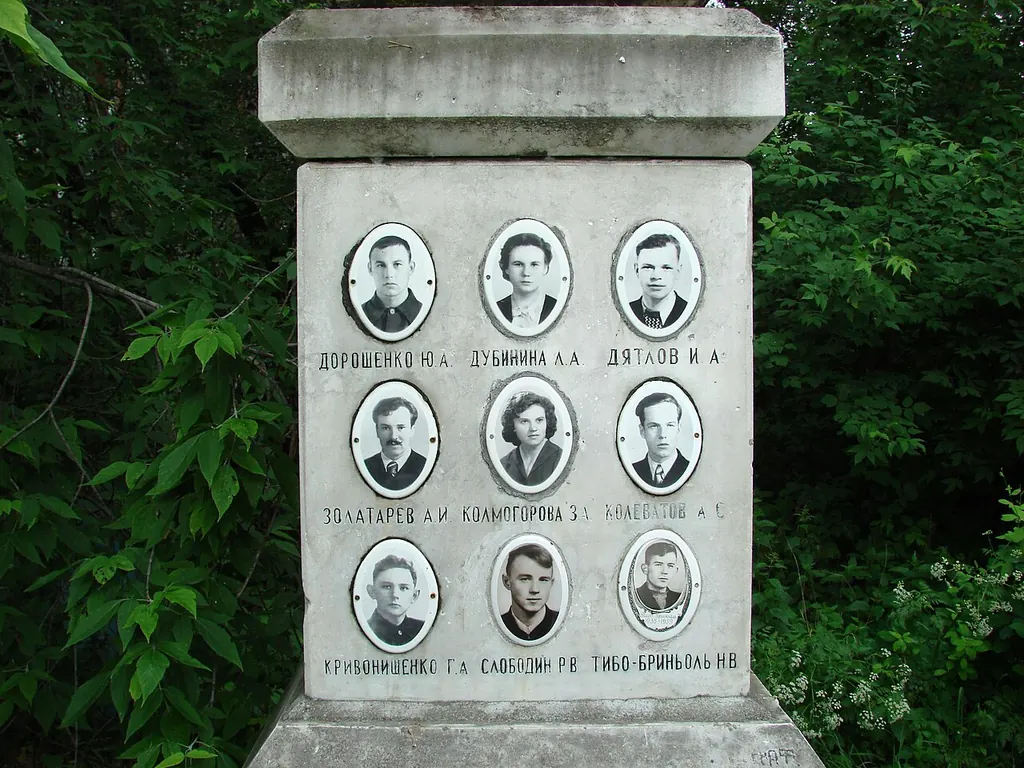
The group from the Ural Polytechnical Institute set out on January 23, 1959, led by 23-year-old Igor Dyatlov, aiming for Mount Otorten. They were experienced, well-equipped trekkers, not beginners: Zinaida Kolmogorova (22), Lyudmila Dubinina (21), Alexander Kolevatov (24), Rustem Slobodin (23), Yuri Doroshenko (21), Yuri Krivonischenko (23), Nikolay Thibeaux-Brignolle (23), and Semyon Zolotaryov (38). Yuri Yudin, the tenth, turned back with illness – the luckiest sickness in mountaineering history.
What was wrong with the tent and the footprints?
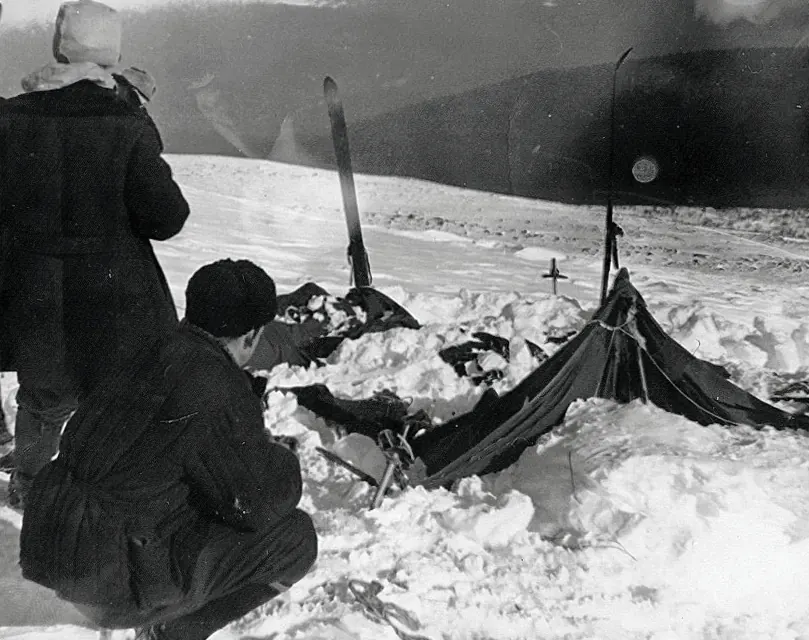
When searchers found the tent on February 26, the scene made no sense. The tent had been cut open from the inside – someone slashed their way out rather than using the entrance. Inside, boots, food, and warm clothing sat abandoned. Outside, barefoot and single-sock footprints led down the slope. Nine pairs of experienced hikers had fled a shelter into lethal cold without dressing – the detail that launched sixty years of theories. The first five bodies were found between February and March; the last four weren’t recovered until May, lying in a creek under melting snow.
What caused the strange injuries?
Six hikers died of hypothermia. The other injuries were the mystery’s engine:
- Zolotaryov and Dubinina had massive chest fractures – ribs crushed with the force of a car crash – yet no external wounds.
- Thibeaux-Brignolle had a major skull fracture.
- Dubinina was missing her tongue, eyes, and facial tissue. Forensic experts now explain this plainly: her body lay face-down in running water for three months, and soft tissue decomposes and is scavenged first.
- Trace radiation was found on some clothing – but two hikers had worked near the 1957 Kyshtym nuclear disaster zone, and thorium-coated camping lantern mantles were common then. Investigators never considered the levels significant.
The 1959 Soviet investigation concluded the group died from a “compelling natural force” – a verdict so vague it explained nothing, and the files were classified for decades.
What do scientists say happened? The avalanche breakthrough

In 2020, Russian prosecutors re-investigated and concluded a slab avalanche was the most likely cause; the official cause of death was announced in July 2020. Then in 2021, Johan Gaume’s team at the Swiss Federal Institute of Technology modeled the exact scenario – a delayed slab release striking the tent, calculated with the same snow-simulation physics developed for Disney’s Frozen.
The model fits the evidence: a slab hits the tent at night, the hikers slash their way out in panic and retreat to the tree line for shelter, the injured die of trauma, and the rest – wet, underdressed, in -30C wind – succumb to hypothermia one by one while trying to return. The crushed ribs without external wounds match avalanche compression exactly. For the full documented timeline, see the incident’s detailed record.
Dyatlov Pass: night-of-incident timeline
| Date | What happened (documented) |
|---|---|
| Jan 23, 1959 | Ten hikers set out from Ivdel toward Mount Otorten |
| Jan 28, 1959 | Yuri Yudin turns back with illness – the sole survivor |
| Feb 1-2, 1959 | The nine cut their way out of the tent and flee into -30C cold |
| Feb 26, 1959 | Searchers find the tent, slashed open from the inside |
| Feb-Mar 1959 | First five bodies recovered; cause: hypothermia |
| May 1959 | Final four bodies found in the ravine creek with trauma injuries |
| 2020-2021 | Russian prosecutors and a Swiss snow-physics study conclude: slab avalanche |
Theories vs. evidence: what holds up?

| Theory | What the evidence says |
|---|---|
| Slab avalanche | Strongest fit – backed by 2020 prosecutors and the 2021 Swiss snow-physics model; explains injuries and flight |
| Infrasound-induced panic | Possible contributor to panic, but doesn’t explain the trauma injuries |
| Military / weapons test | No declassified evidence ties any test to the site that night; radiation readings were insignificant |
| Yeti / creature attack | No tracks, no credible witnesses; the “mysterious photo” claims are disputed |
| UFO / ball lightning | Distant light reports exist but are unverified and explain nothing about the injuries |
| Staged / foul play | No evidence of other people at the camp; footprints showed only the hikers |
The honest summary: the avalanche explanation doesn’t answer every question – why the tent was pitched in a risky spot, for instance – but it is the only theory that fits the injuries, the tent, and the timeline without inventing new facts. Mysteries that stay mysterious usually do so because the original investigation failed, not because the evidence is supernatural. On a smaller scale, unexplained nighttime phenomena in ordinary homes follow the same pattern: eerie, but explainable.
People also ask
What really happened at Dyatlov Pass?
The best-supported answer: a slab avalanche struck the tent at night. The hikers cut their way out, fled to the tree line, and died of injuries and hypothermia in -30C cold. The 2021 Swiss snow-physics study made this the scientific consensus.
Why was Dyatlov Pass closed for 3 years?
Soviet authorities closed the area for three years after the investigation. The official reasoning was never fully explained, and the secrecy fed decades of cover-up theories – though modern researchers note such closures were routine for fatal mountain accidents.
Was there radiation found on the Dyatlov Pass victims?
Low levels were detected on some clothing, but two hikers had worked near a nuclear facility and thorium lantern mantles were common camping gear then. Investigators did not consider the readings significant.
Who survived the Dyatlov Pass incident?
Yuri Yudin, the tenth group member, turned back on January 28 due to illness. He survived, later helped identify the group’s belongings, and lived until 2013.
Frequently asked questions
Q: Why did they cut the tent from the inside instead of using the entrance?
A: Panic. If a snow slab collapses part of the tent at night, the entrance may be buried or blocked – slashing the fabric is the fastest way out. The cuts are consistent with an emergency exit, not an attack.
Q: Why were some hikers undressed or wearing each other’s clothes?
A: Two documented cold-weather phenomena explain it: paradoxical undressing (freezing victims feel burning hot and strip) and survivors taking clothes from those who died first. Both are well recorded in hypothermia cases.
Q: Is Dyatlov Pass still dangerous today?
A: The Urals remain serious winter mountaineering terrain – avalanche risk, extreme cold, remoteness. Modern expeditions visit with proper equipment and local guides. The danger is natural, not supernatural.
Q: Are there other unsolved mountain mysteries like this?
A: Few match Dyatlov’s profile, which is why it endures. Strange occurrences in buildings are far more commonly reported – and far more often explained.
Dyatlov Pass in popular media

The mystery outgrew the case files long ago. Donnie Eichar’s Dead Mountain (2013) reinvestigated the evidence on the ground and became the definitive English-language account; documentaries, podcasts, and TV episodes have followed, each generation finding a new theory to film. The 2013 Russian found-footage horror film Devil’s Pass turned the incident into fiction outright. If the conspiracy-tinged retellings feel more exciting than the avalanche report, that’s the point – “compelling natural force” never sold books. The Sverdlovsk hikers – students from the Ural Polytechnic Institute in what is now Yekaterinburg – deserved better than becoming content, but their story is now permanent folklore.
More Unsolved Mysteries stories
- Marble Rolling Sound on Roof at Night: Causes & Meaning
- Resistance to Mantras: Spiritual Attack Sign or Stress?
- Signs of Negative Entity Infestation in Commercial Building
This article presents traditional beliefs and folklore for informational purposes only, not as proven fact. If you experience persistent distress, please consult a qualified professional.
Published by NegativeVibeFix – folklore, mysteries, and the science behind them.