Last updated: October 20, 2026
Did the Monopoly Man wear a monocle? Was it the Berenstein Bears or the Berenstain Bears? And what did Darth Vader actually say to Luke? If your confident answers just got overturned, you’ve met the Mandela Effect — the strange phenomenon where huge groups of people share the exact same false memory. Here are 12 of the most famous examples, a quick test to try on yourself, and what scientists say is really going on.
- Term coined: 2009, by paranormal researcher Fiona Broome
- The namesake: many recalled Nelson Mandela dying in prison in the 1980s — he was released in 1990 and died in 2013
- Research: Dr. Wilma Bainbridge (University of Chicago) studies the “Visual Mandela Effect” — certain images are inherently misremembered
- Pop culture: the 2019 film The Mandela Effect and the 2024 documentary The Mandela Effect Phenomenon
- Core finding: memory is reconstructive, not a recording — every recall rebuilds the memory, and the rebuild can be wrong
What is the Mandela Effect?
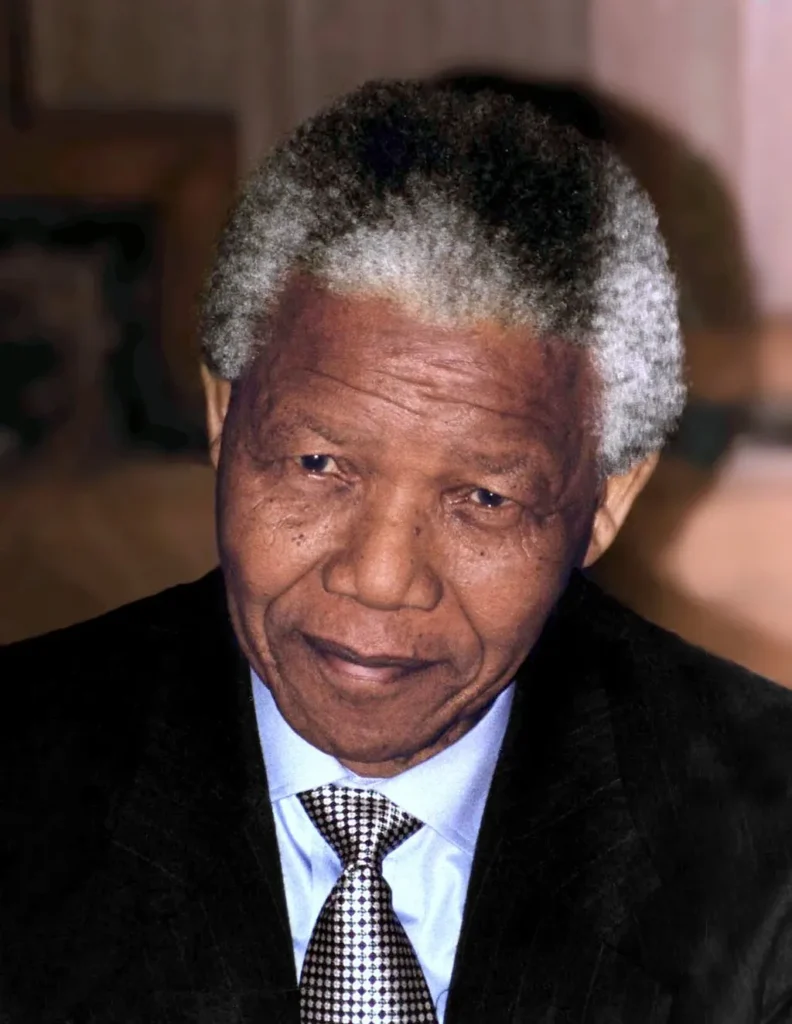
The term was coined in 2009 by Fiona Broome, who discovered that she — and large numbers of other people — distinctly remembered Nelson Mandela dying in a South African prison in the 1980s, complete with memories of the funeral coverage. In reality, Mandela was released in 1990, became South Africa’s president, and died in 2013. The shock wasn’t that one person misremembered — it was that thousands shared the identical wrong memory. That shared conviction is the whole phenomenon: not individual error, but collective error.
12 Mandela Effect examples

Run through these and notice which ones get you:
| # | What most people remember | What is actually true |
|---|---|---|
| 1 | The Berenstein Bears (-ein) | Berenstain Bears (-ain) — always was |
| 2 | “Luke, I am your father” | “No, I am your father” (The Empire Strikes Back) |
| 3 | The Monopoly Man wears a monocle | He never has — no monocle on the box, ever |
| 4 | “Mirror, mirror on the wall” | “Magic mirror on the wall” (Snow White, 1937) |
| 5 | Curious George has a tail | He’s always been tailless in the illustrations |
| 6 | Fruit of the Loom logo had a cornucopia | The company confirms it never did |
| 7 | Looney Toons (like “cartoons”) | Looney Tunes (like the music) |
| 8 | Sinbad starred in Shazaam (1990s) | The movie doesn’t exist — thousands “remember” it anyway |
| 9 | “We are the champions… of the world!“ | The studio recording ends without “of the world” |
| 10 | Mandela died in prison in the 1980s | Released 1990; died 2013 |
| 11 | Pikachu’s tail has a black tip | His tail has always been fully yellow |
| 12 | Sex IN the City | Sex AND the City |
3 bonus examples readers always ask about
Beyond the 12 above, three more come up in almost every Mandela Effect discussion:
- Shaggy’s Adam’s apple. Plenty of Scooby-Doo fans picture Shaggy with a visible Adam’s apple bobbing as he talks — but check any episode: his neck is smooth. The “apple” is a false memory, likely borrowed from generic cartoon-guy features.
- Mickey Mouse’s suspenders. Many people clearly remember Mickey in red suspenders — yet in his classic look he wears none (he has sported them only in a few early/one-off appearances). The suspenders live in our heads, not on the mouse.
- Curious George’s tail (example #5 above) deserves the repeat: it is probably the single most argued-about case, because George feels like he should have a tail — and never has.
Test yourself: 4 quick questions

Cover the answers, commit to yours, then check. Most people get at least two wrong:
| Question | Most people say | Correct answer |
|---|---|---|
| Does the Monopoly Man wear a monocle? | Yes | No — never has |
| How do you spell the Bears’ name? | Berenstein | Berenstain (-ain) |
| What does the Evil Queen say to her mirror? | “Mirror, mirror…” | “Magic mirror on the wall” |
| Does Curious George have a tail? | Yes | No — always tailless |
If you missed some, you’re in excellent company — that’s the effect working exactly as described. The confidence you felt before checking is the interesting part: the memories feel vivid, detailed, and certain. Psychologists note that repetition and confidence make false memories feel real — the more you’ve “seen” the wrong version in memes and lists, the truer it feels.
Why does the Mandela Effect happen?

Cognitive science offers several well-established mechanisms — no alternate universes required:
| Mechanism | What it means | Example |
|---|---|---|
| Confabulation | The brain fills memory gaps with plausible details, without intending to deceive | Adding a monocle to a “rich old-timey gentleman” |
| Schema-based reconstruction | Memory rebuilds using expectations; “-stein” is a far more common surname ending than “-stain” | Berenstein feels “right” because the pattern is familiar |
| Misinformation effect | Post-event information rewrites the original memory | Every meme saying “Luke, I am your father” strengthens the wrong line |
| Source-monitoring errors | Forgetting where you learned something | Remembering a parody quote as the film quote |
| Priming | Earlier cues shape what you “remember” | Costume-shop monocles sold with Monopoly outfits |
Dr. Wilma Bainbridge’s research at the University of Chicago adds a striking finding: the Visual Mandela Effect — certain images are inherently prone to being misremembered the same way by different people, because of how the brain processes visual schemas. The errors aren’t random; they’re systematic, which is exactly why thousands of strangers invent the same wrong detail. Your brain can also manufacture a double — see what it means when you see your doppelganger.
Is it proof of alternate realities?

It’s the most exciting theory — and the least supported. The idea: false memories are bleed-through from parallel timelines where the other version was true, or “patches” in a simulated reality. It’s inspired the 2019 film and endless forum threads. But every flagship example has a documented psychological explanation, and the errors follow predictable cognitive patterns rather than random timeline glitches. The phenomenon is real and fascinating — it just reveals how memory works, not how universes work. Memory isn’t a video recording; it’s a reconstruction, rebuilt fresh every time you recall it, using expectations, culture, and suggestion as building materials. For more on how the mind plays tricks in the dark, see why you feel watched while sleeping.
What’s the difference between the Mandela Effect and déjà vu?
Déjà vu is the false feeling that a new experience already happened. The Mandela Effect is a false memory of a specific fact or event, shared by many people. Different glitches, same lesson: subjective certainty is not evidence.
Why do Mandela Effects spread so fast online?
Lists like this one are the engine: each share re-exposes millions to the wrong version, and the misinformation effect does the rest. Social platforms reward the most shareable examples, so the canon keeps reinforcing itself — the phenomenon literally manufactures its own evidence.
Can the Mandela Effect affect personal memories too?
Yes — eyewitness testimony research shows individual memories are just as reconstructive. Family members routinely “remember” childhood events differently, and confident witnesses are frequently wrong. The effect scales from trivia to testimony.
What’s the newest Mandela Effect people talk about?
The canon keeps growing as new examples go viral — recent favorites include logo details and movie quotes that spread through short-form video. If you spot one, check the primary source before sharing: the fastest way to kill a false memory is one look at the original.
Frequently Asked Questions
Q: What is the Mandela Effect in simple terms?
A: Large groups of people sharing the same false memory — like remembering the Berenstain Bears as “Berenstein” when it was always “Berenstain.”
Q: What causes it?
A: Confabulation, the misinformation effect, source-monitoring errors, priming, and schema-based memory reconstruction — all well-studied psychological mechanisms.
Q: Is there any scientific proof of alternate realities behind it?
A: No. It’s a popular speculative theory, but researchers explain every major example through normal memory processes.
Q: Why am I so sure about the wrong version?
A: Confidence and repetition make false memories feel vivid. The more you’ve encountered the wrong version, the truer it feels — that’s the misinformation effect at work.
More mind mysteries stories
- Feeling Watched While Sleeping? Symptoms, Causes & Fixes
- Why Do I Feel Extreme Goosebumps in Specific Corner of Room?
- Why Do I Wake Up at 3:15 AM Every Night? Spiritual Meaning & Causes
Written by the NegativeVibeFix team. This article presents traditional beliefs and folklore for informational purposes only, not as proven fact. If you experience persistent distress, please consult a qualified professional.