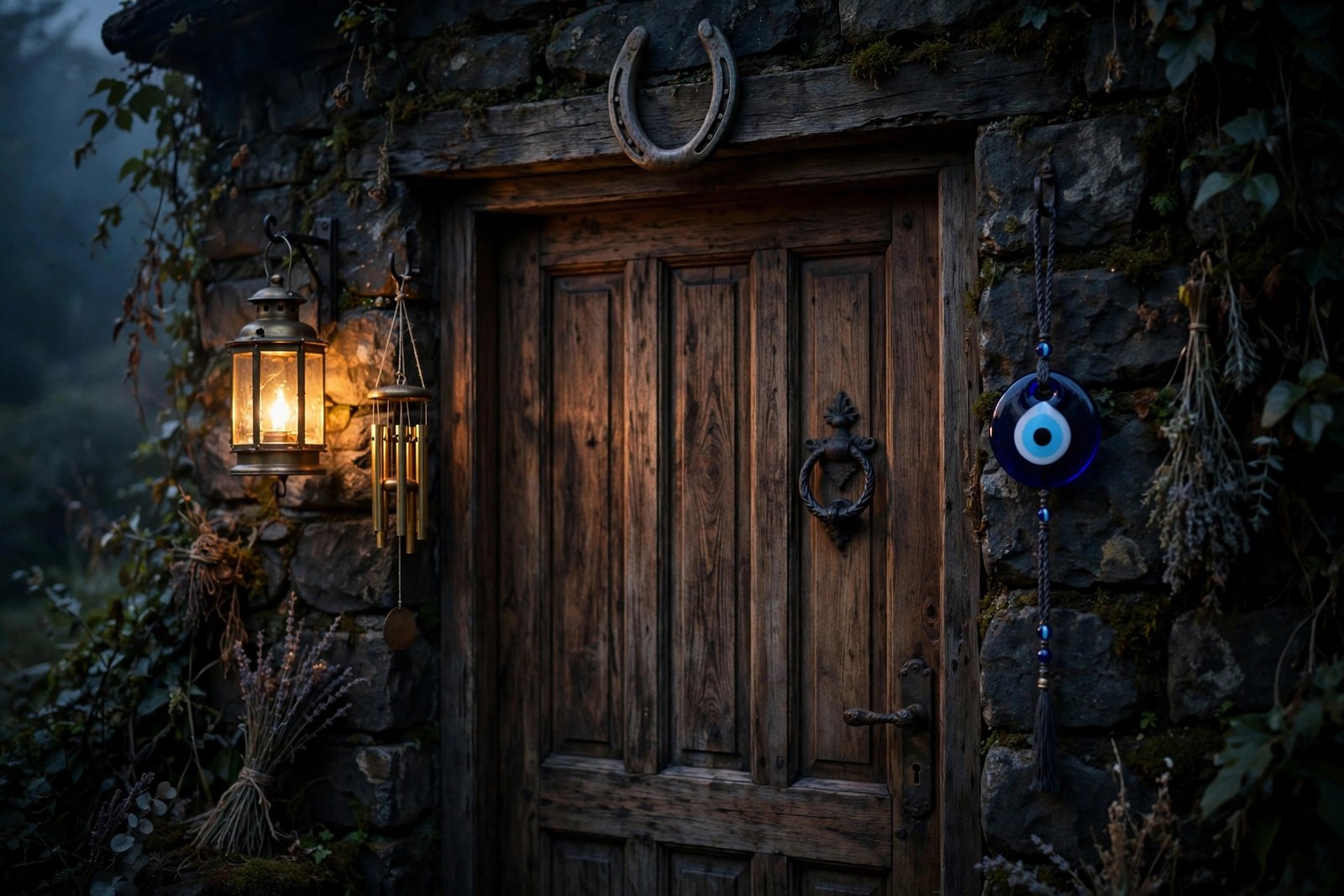
Your front door is the mouth of your home, or so feng shui practitioners say. Guests, packages, weather — and, according to folk tradition, stray energies — all pass through it. No surprise, then, that spiritual protection charms for front porch entryways appear in nearly every culture, from Turkish nazar beads to Texas horseshoes.
Below are seven widely used porch charms: what each tradition claims, where to place it, and one practical tip. None are proven to stop anything — they’re symbols of comfort. Real porch safety comes down to lighting, locks, and visibility, covered at the end.
Definition: A porch protection charm is an apotropaic symbol — an object meant to turn away harm — hung at the home’s entrance. From the Turkish nazar bead to the Texas horseshoe, folk traditions hold that a charm above or beside the door deflects jealous stares and stray energies before they cross the threshold.
The 7 best spiritual protection charms for front porch display
The seven charms below are the most common across the widest range of cultures. Each has its own tradition, placement, and upkeep — here’s the rundown.
1. Evil eye (nazar) amulet
The blue-and-white “eye” bead is one of the oldest apotropaic symbols — “apotropaic” means “meant to turn away evil.” Mediterranean, Middle Eastern, and South Asian traditions hold that it deflects jealous stares before they reach you (Britannica’s overview). Hang it outside the door or just above the frame at eye level. Practical tip: sun and heat crack cheap glass — get a metal-framed one, or keep a spare.
2. Horseshoe
European and American folk tradition credits iron with repelling ill intent, and the horseshoe became the classic door guardian. Hang it open-end-up, like a cup, so the “luck” stays in. Center it above the door frame. Practical tip: real used horseshoes cost a few dollars at farm supply stores or flea markets — and look better than shiny replicas.
3. Hamsa hand and protective door symbols
The hamsa — an open hand — is a Middle Eastern and North African symbol against the evil eye. Other traditions have their own door guardians: the Celtic triquetra knot, the Hindu Om syllable. Mount a plaque or decal on the door, or hang it just inside the entry. Practical tip: prefer symbols from your own heritage; if you borrow one, learn what it means first.
4. Wind chimes and bells
Feng shui and some European folk traditions hold that moving sound breaks up “stuck” energy and startles away ill intent — a small bell on the door does the same job quietly. Hang chimes from the porch ceiling where the breeze catches them. Practical tip: metal chimes carry far; with close neighbors, pick small bamboo chimes or one soft bell.
5. Marigold or herb garland (toran)
In India, a toran — marigolds, mango leaves, or both — marks the doorway as auspicious. European folk magic has its own version: rosemary, lavender, or bay wreaths. Drape it across the top of the door frame. Practical tip: fresh garlands last five to seven days, then wilt fast — replace on schedule, since a dried-out toran sends the opposite message.
6. Small bowl of salt by the door
Folk practices from Europe to Asia set salt at the threshold to “soak up” negativity — cheap, invisible, easy to refresh. Place a small dish just inside the door or on a porch shelf, out of foot traffic (see our guide to cleansing a room with salt). Practical tip: swap it weekly; with pets, use a covered dish or high shelf — some animals will happily eat salt.
7. Protective plants flanking the entrance
Rosemary, basil, and tulsi (holy basil) all carry threshold-guardian reputations; even the snake plant gets credited with filtering bad vibes. Set matching pots on both sides of the door. Practical tip: choose plants that survive your climate and light — a thriving rosemary says “protected,” a dead one says “abandoned.”
Does placement direction really matter in these traditions?
Short answer: yes, per the traditions themselves. The horseshoe goes open-end-up to “hold luck in” — though some hang it open-end-down to “pour blessings” on entrants; pick one and stay consistent. Evil eye amulets face outward. Feng shui assigns chimes to a compass side, but most people just hang them where the wind hits. Follow tradition loosely — a charm hidden behind a pillar isn’t doing its symbolic job.
| Charm | Tradition | Placement |
|---|---|---|
| Evil eye amulet | Mediterranean, Middle Eastern, South Asian | above the door at eye level |
| Horseshoe | European and American folk | open-end-up, centered above the frame |
| Hamsa hand | Middle Eastern and North African | plaque or decal on the door |
| Wind chimes / bells | Feng shui and European folk | hanging near the door |
| Marigold garland | South Asian | strung across the door frame |
| Bowl of salt | various folk traditions | set beside the entrance |
Can you mix and match spiritual protection charms for front porch decor?
Most folk traditions don’t forbid combining charms — plenty of porches carry a horseshoe, a wind chime, and a potted rosemary. The unwritten rule is restraint: two or three pieces look intentional; seven crowded together look like a gift shop. If you borrow from multiple cultures, know what each piece means. Renters: adhesive hooks, over-door hangers, and freestanding pots need zero drilling.
How do you “activate” a protection charm, according to folk custom?
There’s no single ceremony, but most traditions share a pattern: clean the charm, set an intention, then place it. In plain terms: wipe off the dust, hold it a moment and think about what you want it to stand for — safety, calm, welcome — then hang it. Some pass it through incense smoke or leave it in sunlight first. Skip buried offerings, bodily fluids, or rituals you don’t understand. The “activation” is you deciding the object matters — that’s what turns decor into a charm.
When should you replace a porch protection charm?
Folk custom says a charm that breaks has “done its job” — the classic example is a cracked evil eye bead, read as absorbing a blow meant for the household. Replace broken pieces promptly. Refresh salt weekly, swap garlands when they wilt. Everything else lasts until it looks tired — sun-faded, rusted, dusty beyond cleaning. If the whole house feels off, check the broader signs your home feels energetically heavy before blaming one tired horseshoe.
What actually keeps a porch safe, beyond the charms?
Let’s be blunt: no charm has ever stopped a break-in. What actually protects a porch is boring. Start with lighting — a bright motion-activated light over the door removes the darkness porch crime needs. Add visibility: a video doorbell or clearly visible camera makes your house a harder target. Then the basics: a deadbolt that extends fully, reinforced strike plates, trimmed bushes. Two layers: hardware keeps people out; charms keep you feeling settled. Don’t confuse which is which.
Charms vs symbols vs rituals: what’s the difference?
People use these words interchangeably, but they point at different things. A charm is a physical object you place — a horseshoe, a bead, a bowl of salt. A symbol is the meaning a shape carries — the hamsa hand, the Om syllable — which can live on a charm or a decal. A ritual is an action — hanging the toran each Diwali, refreshing the salt every Sunday. Most porch protection combines all three: a symbolic shape, made into a charm, placed through a small ritual. Prefer stones? Black tourmaline is the stone most often used the same way.
✦ Key Takeaways
- The seven most common porch charms: evil eye amulet, horseshoe, hamsa hand, wind chimes or bells, marigold garland, bowl of salt, and protective plants.
- Hang the evil eye amulet outside the door or just above the frame at eye level; choose metal-framed glass since sun and heat crack cheap glass.
- Hang a horseshoe open-end-up like a cup above the door frame so the “luck” stays in; real used horseshoes from farm supply stores look better than shiny replicas.
- Folk tradition holds that wind chimes and bells break up stuck energy with moving sound — and they also announce visitors.
- Charms are symbols of comfort, not security: pair them with good lighting, solid locks, and a visible doorbell camera.
People Also Ask
What should I hang on my front door for protection?
Folklore’s common answers: an evil eye amulet, a horseshoe hung open-end-up, or a hamsa plaque — all facing outward toward visitors. Wind chimes or a marigold garland are softer options. Pick one or two that suit your style, keep them visible, and remember they’re symbols of comfort, not security hardware.
Where do you put an evil eye on a front door?
Tradition places the evil eye where incoming gazes land first: on the outside of the door, or just above the frame at eye level. Some homes hang one on the gate too. Don’t tuck it somewhere hidden — folk logic says it must “see” visitors first, so visibility is the whole point.
Is it good luck to hang a horseshoe over your door?
Per European and American folk tradition, yes — iron was long believed to repel ill intent, and the horseshoe is its classic door guardian. Hang it open-end-up, like a cup, so luck “stays in.” Believer or not, it’s one of the most widely recognized welcome symbols in the US.
Do protection charms really work?
No scientific evidence shows charms block harm — researchers treat apotropaic objects as cultural and psychological phenomena. What they genuinely offer: a sense of agency, a calmer threshold, a daily reminder your home matters. Treat them as meaningful symbols, and pair them with real security — good locks, lighting, a doorbell camera.
FAQs
Can I use protection charms if I rent and can’t drill into the door?
Absolutely. Adhesive hooks hold an evil eye amulet or small hamsa with no damage, over-the-door hangers work for wreaths and garlands, and potted plants plus an indoor salt bowl need no mounting. Wind chimes can hang from a tension rod or plant hook. When you move, everything comes down cleanly — folk custom is fine with taking your charms along.
How do I cleanse a protection charm before hanging it?
Most traditions keep it simple: wipe the charm clean, then leave it in sunlight or moonlight for a few hours. Some pass it through incense smoke or salt water (skip the rinse for iron and wood). The idea is the same everywhere — a fresh start before it takes up its post at your door.
Is it disrespectful to use protection charms from another culture?
It can be, if the symbol is sacred and you’re using it as pure decor. The respectful approach: learn what it means, buy from artisans of that culture, and don’t turn religious objects into garden ornaments. When in doubt, pick from your own background — every culture has threshold guardians.
This article presents traditional beliefs and folklore for informational purposes only, not as proven fact. If you experience persistent distress, please consult a qualified professional.