The NASA SLS rocket hole in upper atmosphere is real: two holes formed in Earth’s upper atmosphere when Artemis II launched on 1 April 2026. Researchers in Taiwan reported that each hole stretched about 3,100 miles (5,000 km) across North America, and that the disturbances may have thrown GPS readings off by several metres. The holes were not physical tears in the sky. They were regions of the ionosphere where free electrons thinned out after rocket exhaust reacted with charged particles. The effect was temporary, and no GPS outage was recorded.
Last updated: 6 November 2026
Quick answer: NASA’s Artemis II launch on 1 April 2026 left two holes in the ionosphere, each about 3,100 miles wide. The first came from the SLS core stage; the second from two upper-stage burns at 115 miles up. Ground GPS receivers picked up shifts equal to several metres of positioning error. The holes were temporary dips in electron density, not tears in the sky, and no outage was recorded.
What Happened on 1 April 2026?
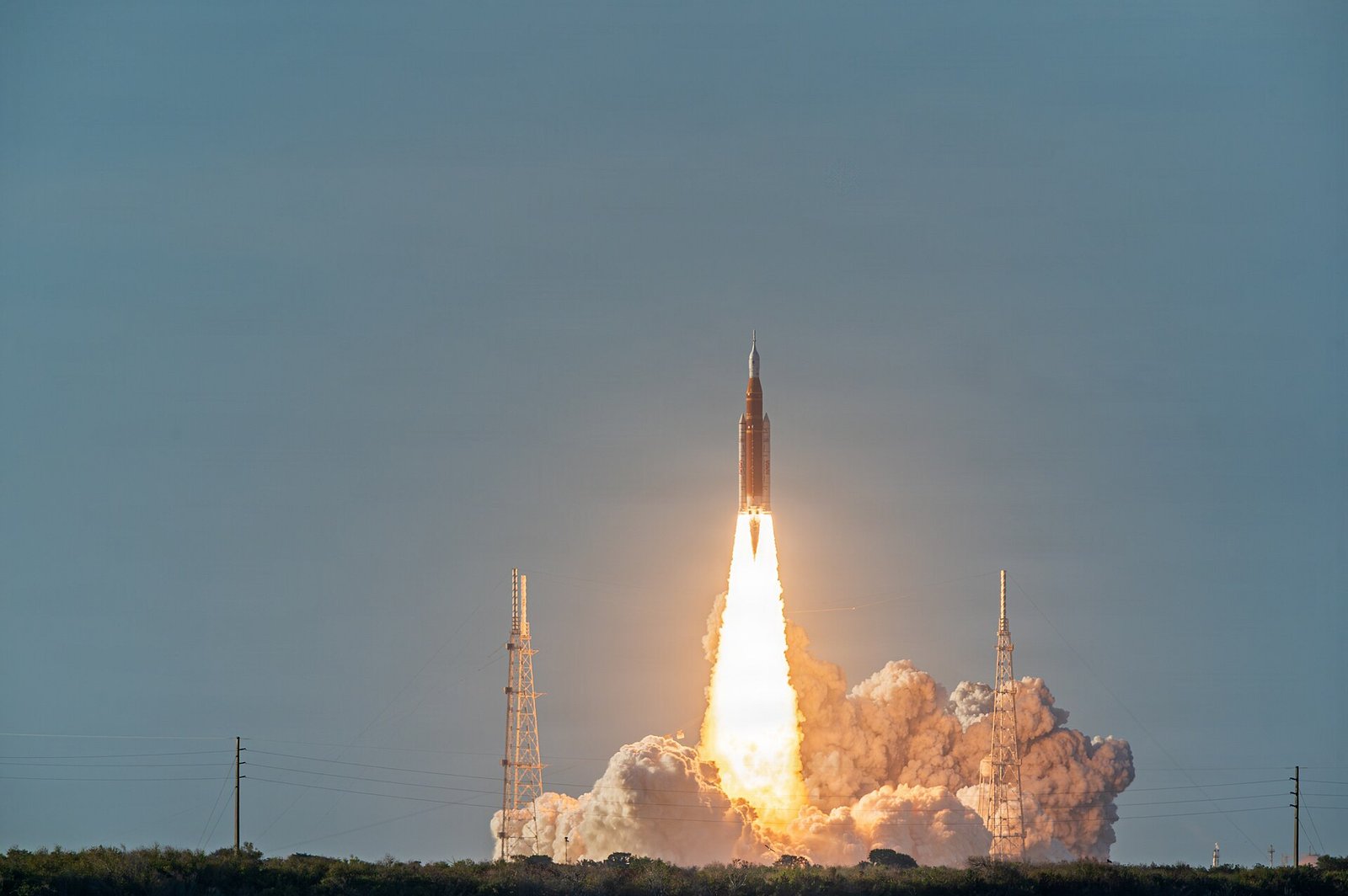
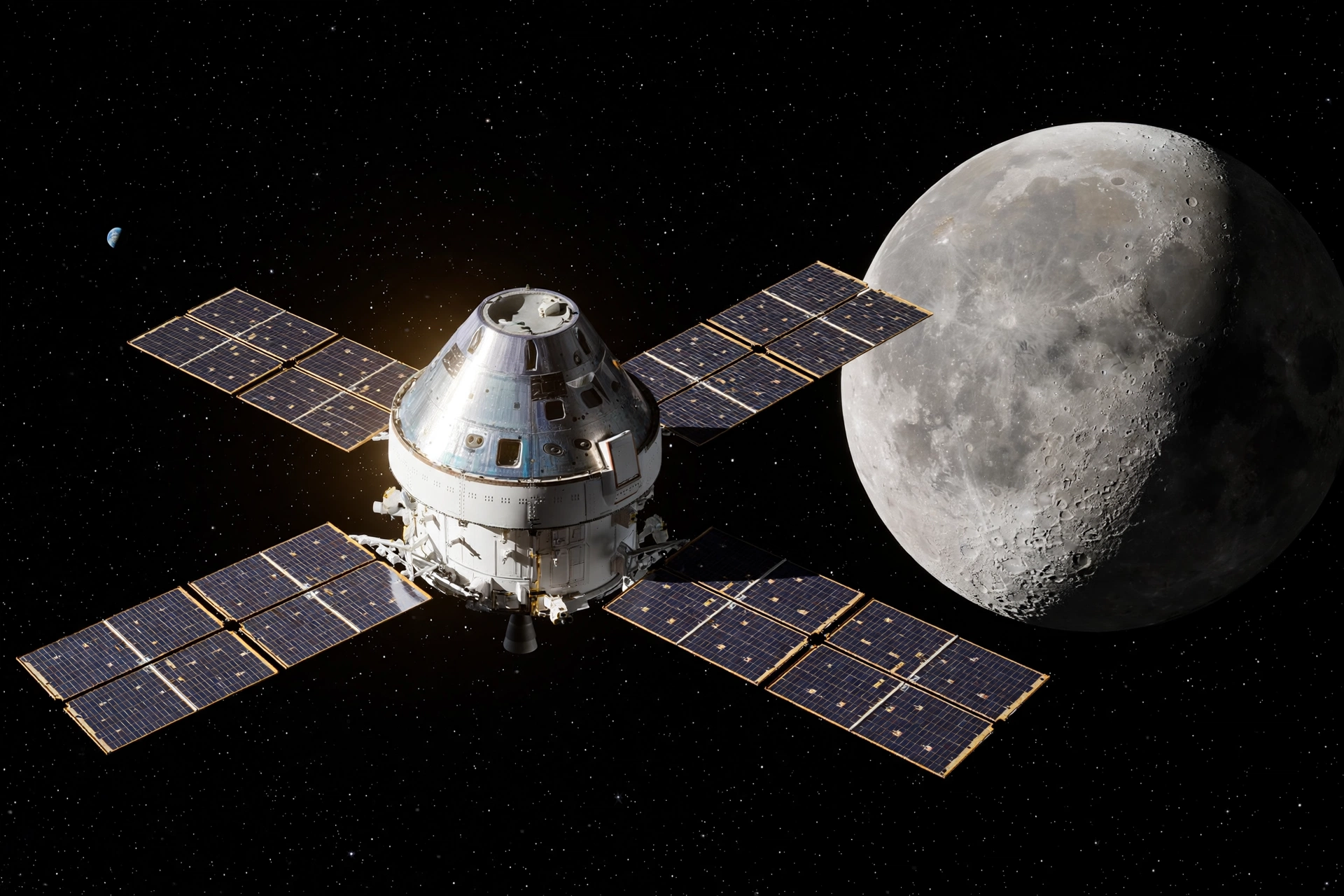
Artemis II lifted off from Launch Complex 39B at Kennedy Space Center in Florida at 6:35 p.m. ET on 1 April 2026. The Space Launch System, or SLS, carried the Orion spacecraft and four astronauts: commander Reid Wiseman, pilot Victor Glover, and mission specialists Christina Koch and Jeremy Hansen of the Canadian Space Agency. It was the first crewed flight past the Moon since the Apollo era, a roughly 10-day trip around the Moon and back. The crew splashed down on 10 April 2026.
The launch went as planned. The surprise came months later, in the data. In early November 2026, Space.com reported an analysis by researchers at National Cheng Kung University in Taiwan, co-authored by earth science professor Charles Lin. The team had used high-precision ground-based GPS receivers to track how the launch changed the ionosphere’s electron density. They found two large disturbances, each stretching about 3,100 miles across the American continent. Search interest jumped the same week in the United States, Germany, and Mexico, with Google Trends showing the topic up more than 1,000% in the US.
Key Stats: NASA SLS Rocket Hole in Upper Atmosphere at a Glance
- 1 April 2026 is the date Artemis II launched from Kennedy Space Center, Florida.
- 2 ionospheric holes were reported by researchers at National Cheng Kung University in Taiwan.
- 3,100 miles (5,000 km) is the reported horizontal extent of each disturbance across North America.
- 115 miles (185 km) is the altitude of the two upper-stage engine burns that caused the second, stronger disturbance.
- Several metres is the estimated GPS positioning error found in ground-receiver measurements.
- 10 times stronger than the disturbances recorded after SpaceX Starship test flights, according to the reported comparison.
What Is NASA’s Space Launch System (SLS)?
The Space Launch System is NASA’s super heavy-lift rocket, built to send the Orion spacecraft and astronauts beyond low Earth orbit. In its Block 1 crew configuration, the rocket stands 322 feet (98 m) tall — taller than the Statue of Liberty — and produces 8.8 million pounds of thrust at liftoff, about 15% more than the Saturn V. NASA calls it the only rocket that can send Orion, astronauts, and cargo directly to the Moon in a single launch.
The power comes from two parts. A 212-foot (65 m) core stage, built by Boeing, burns liquid hydrogen and oxygen through four RS-25 engines, the same engine type that powered the space shuttle. Two five-segment solid rocket boosters, each 177 feet tall and built by Northrop Grumman, supply more than 75% of the thrust at liftoff, each producing up to 3.6 million pounds. The Orion crew capsule sits on top. SLS first flew on 16 November 2022, when the uncrewed Artemis I mission sent Orion around the Moon. Artemis II was its second flight, and its first with a crew.
What Is an Ionospheric Hole?
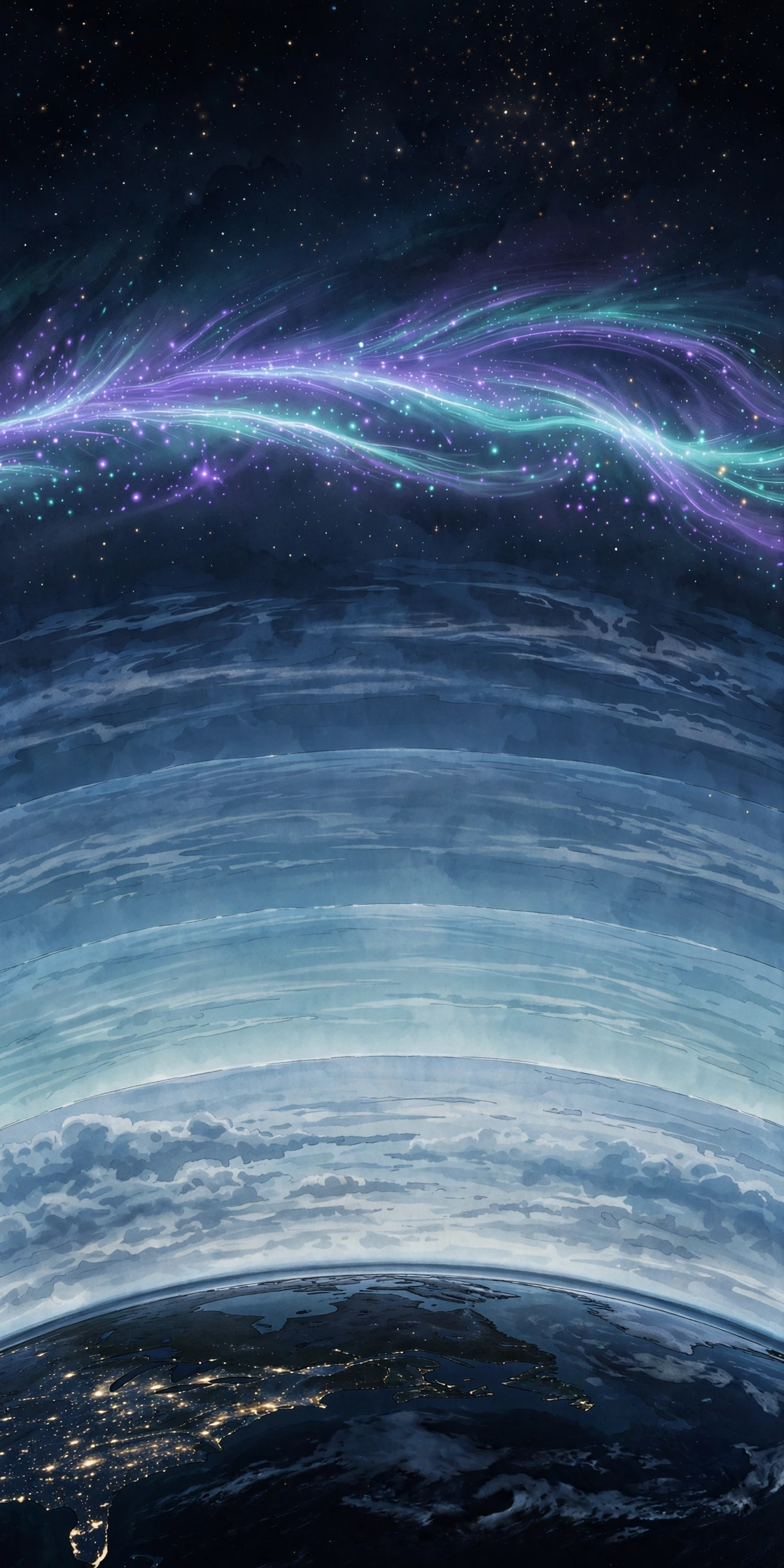
The ionosphere is an electrically charged region of the upper atmosphere, more than 50 km above the surface. It overlaps parts of the mesosphere and thermosphere. Sunlight, mainly ultraviolet and X-ray radiation, strips electrons from atoms and molecules there, leaving a shifting population of free electrons and ions. That charged layer matters because GPS signals and radio waves must pass through it on their way from satellites to receivers on the ground. When electron density changes, the signals slow down or bend, and a receiver’s position fix can shift.
An ionospheric hole is a patch of that layer where the concentration of free electrons falls well below the level around it. Rocket exhaust can cause it. Water vapour and hydrogen-rich exhaust products react with oxygen ions high up, and those chemical reactions cut the number of free electrons in the affected region. The patch can spread and change shape, then recover as sunlight, atmospheric chemistry, and the movement of charged particles restore the balance. It is not a physical opening. Nothing tears, and no one on the ground can see it.
How Did the SLS Create Two Holes?
The analysis tied each disturbance to a different part of the flight. The SLS is a heavy rocket, and its exhaust keeps interacting with the atmosphere long after the pad is out of sight.
| Disturbance | What caused it | Reported detail |
|---|---|---|
| First hole | SLS core stage | Formed as the 212-foot (65 m) core stage climbed through the atmosphere |
| Second hole | Two upper-stage engine burns | Fired at about 115 miles (185 km), more than an hour after liftoff, directly inside the ionosphere |
| Both holes | Exhaust reacting with charged particles | Each stretched about 3,100 miles (5,000 km) across North America |
The second disturbance was reported as the stronger of the two. That detail is the one scientists keep coming back to. A core stage passes through the atmosphere once, on the way up. An upper stage can fire its engines while it is already inside the ionosphere, putting exhaust straight into the charged layer. As Artemis and other heavy-lift programmes fly more often, that kind of burn may stop being a rare event and start being a routine one.
How Big Was the NASA SLS Rocket Hole in the Upper Atmosphere?
Each hole was described as extending about 3,100 miles, or 5,000 km, across the continent — roughly the width of the continental United States, and far larger than the disturbances measured after earlier launches. The reported comparison puts the Artemis II effect at up to ten times stronger than the disturbances seen after SpaceX Starship test flights.
The number needs care. It describes the horizontal extent of a thin layer effect high above the ground, measured through GPS signal data. It does not mean a 3,100-mile-wide gap opened in the visible sky. The ionosphere is a dynamic place, and a disturbance can spread far from the rocket’s path as charged particles drift. The headline figure is real, but it is a measurement of electron density, not a photograph of a tear.
Could the NASA SLS Rocket Hole in the Upper Atmosphere Affect GPS?
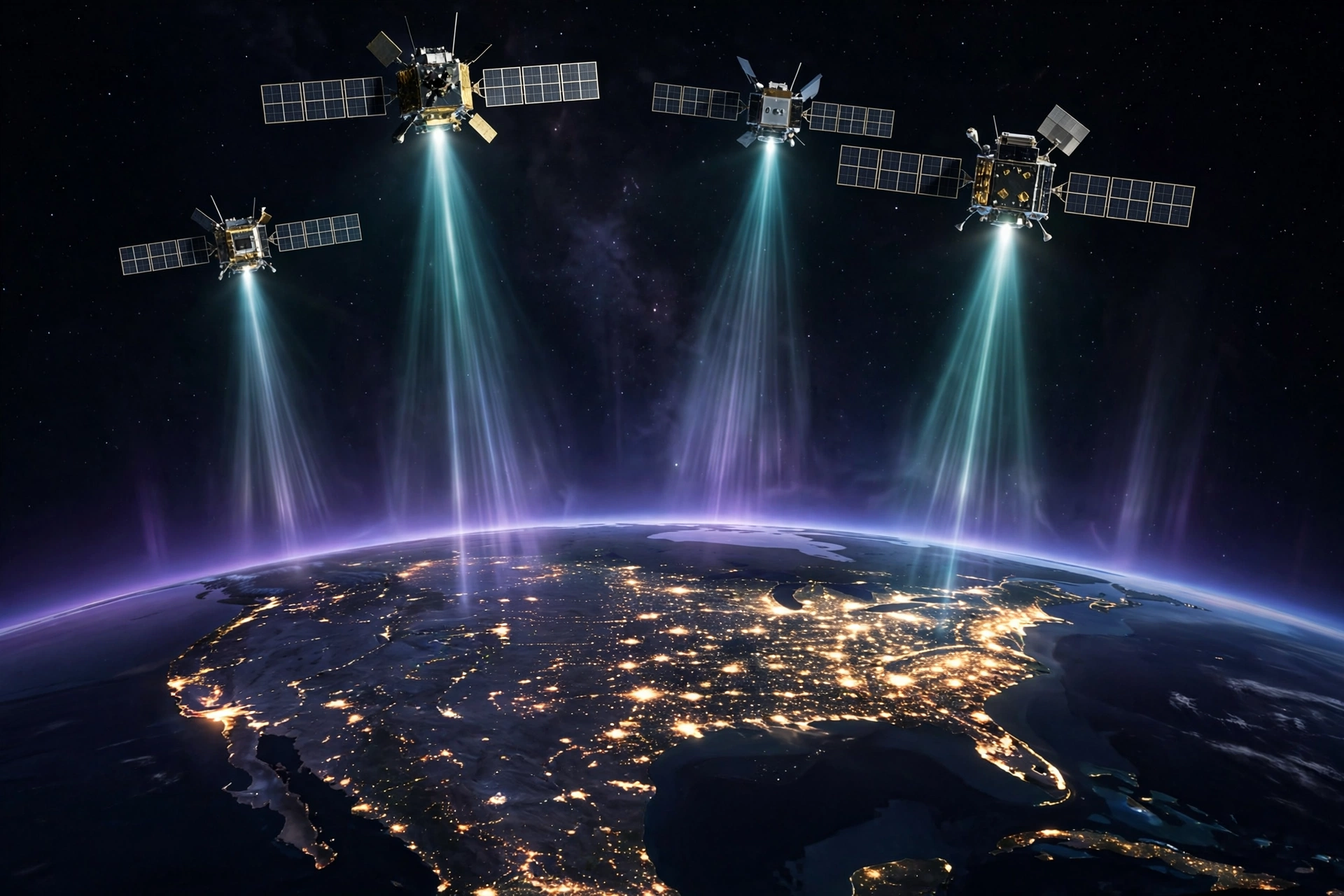
This is the question that turned a science paper into a news story. A GPS receiver works out its position by timing signals from several satellites. Those signals travel through the ionosphere before they reach the ground. When electron density shifts, the signals take a slightly different time to arrive, and the receiver’s maths can place it a few metres from where it really is.
The Artemis II analysis pointed to positioning errors of several metres under certain conditions. That sounds small, and for most people it is. A driver following turn-by-turn directions would never notice a few metres. But a few metres is a lot for systems that need centimetre accuracy: surveying gear, tectonic monitoring, precision farming, drones flying close inspection routes, and self-driving cars. Charles Lin told Space.com that an error of a couple of metres could affect an autonomous car’s lane choice and a drone’s position.
Three limits keep the finding in proportion. First, the errors are estimates drawn from receiver measurements, not a log of navigation failures. Second, no GPS outage was recorded anywhere during the event. Third, professional systems rarely rely on GPS alone. They pair it with correction services, inertial sensors, cameras, radar, and other tools that cut the effect of ionospheric errors. Signals have been disrupted in stranger ways before — see the Max Headroom broadcast signal intrusion, where a TV signal was hijacked outright — but this case is a measurement subtlety, not a blackout.
Rocket Holes vs Solar Storms: How Do They Compare?
Rockets are not the only thing that disturbs the ionosphere. The Sun does it far more often, and on a bigger scale. The comparison below is the part most early coverage skipped, and it puts the NASA SLS rocket hole in upper atmosphere finding in its place.
| Rocket-induced hole | Solar storm | |
|---|---|---|
| Cause | Rocket exhaust reacting with charged particles | Charged particles and radiation from the Sun |
| Area affected | Bounded region, here across North America | Whole hemispheres at once |
| Duration | Temporary, fades as the layer recovers | Hours to days |
| GPS effect | Errors of several metres in measurements | Can degrade signals across wide areas for hours |
| How often | Tied to individual heavy launches | Regular, follows the solar cycle |
The Sun is still the bigger threat to navigation by a wide margin. What makes the rocket case worth watching is that it is human-caused, local, and tied to a launch rate that is climbing. GPS infrastructure kept working through the Artemis II event, and nothing in the reported findings says a single launch can take it down.
How Long Does an Ionospheric Hole Last?
Ionospheric holes are temporary. How long one lasts depends on its altitude, how much exhaust was released, the sunlight hitting the region, the local chemistry, and how fast charged particles drift back in. Earlier observations give a rough guide. A peer-reviewed 2024 study in the Journal of Geophysical Research: Space Physics looked at two earlier rocket launches in China and found ionospheric holes forming roughly 10 to 11 minutes after liftoff, then evolving over time.
The exact lifetime of the NASA SLS rocket hole in upper atmosphere disturbances has not been published in the coverage so far. That is one of the open questions. The holes developed, spread across a continent, and faded — but the published reports do not pin down how many hours each one stayed detectable. Until the full study is out, any lifetime figure for this specific event would be a guess.
Is This the First Time a Rocket Did This?
No. Scientists have watched rocket exhaust change electron density for years, across many kinds of launches. The 2024 study of two Chinese launches mapped how the holes grew at different altitudes. What sets Artemis II apart is the reported scale, and the fact that it happened during a crewed lunar mission with NASA’s largest rocket.
Two common mix-ups are worth clearing up. First, an ionospheric hole is not damage to the ozone layer. The ozone layer sits in the stratosphere and is made of ozone molecules; the ionosphere is a different region defined by charged particles. The Artemis II findings say nothing about ozone. Second, the event is not a mystery in the same way as an unsolved disappearance. For a sky event that really has stayed unexplained for over a century, see the Tunguska Event: The 1908 Siberian Explosion Mystery. The NASA SLS rocket hole in upper atmosphere has a known cause, a measured size, and a research team still working through the details.
What This Means for Future Artemis Missions
NASA’s Artemis programme is built around a sustained human presence around the Moon, which means more heavy launches, more often. Each one is another chance to measure how exhaust interacts with the upper atmosphere. Better measurements feed better atmospheric models, better GPS corrections, and better launch-impact assessments. The finding does not mean the SLS is unsafe, or that future launches are a threat to navigation. It means there is an environmental side-effect worth measuring properly.
Researchers still have a list of open questions: how long did each disturbance stay detectable, how did electron density change at different altitudes, how much positioning error showed up in different regions, how much of the effect came from the two upper-stage burns, and whether similar effects should be expected from every future heavy launch. The answers will come from more data, not from headlines. For now, the honest summary is short: a big rocket left two big, temporary marks on the upper atmosphere, GPS wobbled by a few metres in the measurements, and nobody’s navigation actually failed.
People Also Ask About the NASA SLS Rocket Hole in the Upper Atmosphere
Did NASA’s SLS rocket really punch a hole in the sky?
No, not a literal hole. The NASA SLS rocket hole in upper atmosphere reports describe two regions of the ionosphere where free-electron density dropped after the Artemis II launch on 1 April 2026. The sky did not tear open. The disturbance was a temporary thinning of charged particles, measured by ground GPS receivers, and it faded as the atmosphere recovered.
Did the Artemis II launch break GPS?
No. No GPS outage was recorded after the Artemis II launch. Ground receivers measured shifts equal to positioning errors of several metres, but that is an estimate from the data, not a log of failed navigation. Everyday phone directions would not have shown a difference. The risk, if any, sits with precision users such as surveyors, drones, and self-driving cars.
How big were the holes in the upper atmosphere?
Each of the two reported disturbances stretched about 3,100 miles (5,000 km) across North America, according to researchers at National Cheng Kung University in Taiwan. That is the reported horizontal extent of a thin layer effect high above the ground, not a visible 3,100-mile gap in the sky.
Will future Artemis launches do the same thing?
Possibly. The second disturbance came from two upper-stage engine burns that fired directly inside the ionosphere, and that kind of burn may become more common as heavy launches increase. Researchers want more data on how long each disturbance lasts, how electron density changes with altitude, and how much error different regions see before drawing firm conclusions.
For outside reference, see NASA for the Artemis II mission itself, and New York Post: Artemis II mission tore GPS-disrupting holes in atmosphere for the study coverage and the GPS findings.
More Unsolved Mysteries
- Natalee Holloway Case: 8 Key Facts Explained
- Max Headroom Broadcast Signal Intrusion (2026): 1987 Mystery
- Dyatlov Pass Incident Explained: 1959 Mystery
This article presents traditional beliefs and folklore for informational purposes only, not as proven fact. If you experience persistent distress, please consult a qualified professional.