Last updated: 4 November 2026
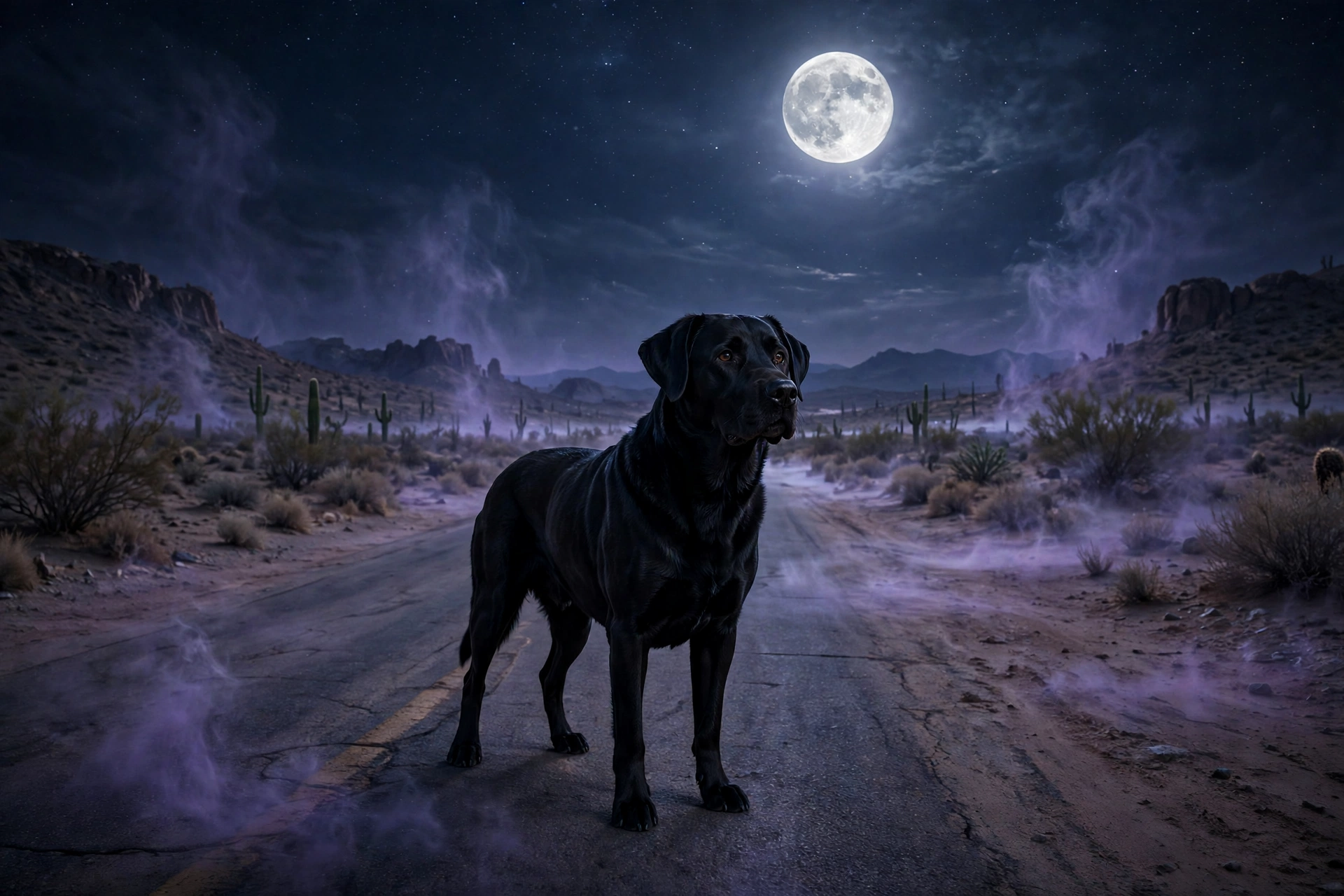
A black dog stands on a dark road, watches you, and does not move the way a normal dog moves. That image is why people search for a skinwalker dog. The short answer is plain: in Navajo (Diné) belief, a skinwalker dog is not a separate kind of animal. It is a skinwalker — a human witch in the tradition — said to have taken the shape of a dog. The phrase itself is new, mostly an internet label. The belief behind it is old, and the two should not be mixed up.
Quick answer: A skinwalker dog is a dog-shaped skinwalker from Navajo belief, not a proven creature and not a new species. In the tradition, skinwalkers are humans who take animal forms, and a dog is one form they may wear. Most sightings also have plain explanations, such as a coyote, a stray dog, or poor light.
What Is a Skinwalker Dog?
In Diné tradition, the being is called yee naaldlooshii, often translated as “with it, he goes on all fours.” It is described as a person, usually a medicine person who turned to harmful witchcraft, who gains the power to wear the skin of an animal and move as that animal moves. Coyotes, wolves, foxes, owls, and bears all appear in these accounts. A dog appears too, but it is one shape in a longer list, not the main one.
That point matters because the internet has flipped the order. Online, “skinwalker dog” sounds like a fixed type, like a breed with its own habits. In the older belief, there is no fixed type. The power sits with the person, and the animal form is a disguise. For the full background, see our guide What Is a Skinwalker? Complete Navajo Legend Guide, which sets out the tradition in more depth.
Key Stats: Skinwalker Dog at a Glance
- “With it, he goes on all fours” is the usual translation of yee naaldlooshii, the Diné name at the root of the skinwalker tradition.
- About 512 acres is the size of Skinwalker Ranch in Utah, the property whose name borrowed the Navajo term, though the ranch sits on historically Ute land.
- 1994 is the year Terry and Gwen Sherman bought that ranch property, after which its strange stories spread widely.
- +500% in Mexico and +300% in India were the Google Trends rises for skinwalker dog searches in the week to 4 November 2026.
- 0 verified specimens exist: no skinwalker dog has ever been caught, photographed under controlled conditions, or confirmed by science.
- 93 informants were interviewed for Clyde Kluckhohn’s 1944 book Navaho Witchcraft, published by Harvard’s Peabody Museum — the main English-language source for the tradition.
Those numbers keep the story in proportion. The search spike is real, the ranch is a real place, and the creature itself remains unproven. A rising search line proves curiosity, not a new animal loose in the desert.
Why Do People Picture a Dog?
Dogs sit closer to us than any wild animal. A wolf at the edge of town feels distant. A dog at your gate feels personal, because dogs are supposed to be safe, loyal, and known. When a familiar shape acts in an unfamiliar way, the effect is stronger than a strange animal doing a strange thing. That is why the dog form works so well in scary stories, and why it spreads so fast in short videos.
There is also a practical reason. In the tradition, a skinwalker is said to use a form to spy, to lure, or to frighten. A dog can walk into a yard, sit near a house, and watch without raising the same alarm as a wolf or a bear. Storytellers took that idea and ran with it: the dog that knows your name, the dog that stands on two legs, the dog whose eyes look human. Each detail makes the familiar feel wrong, and that wrongness is the whole point of the tale.
What Do Skinwalker Dog Sightings Usually Describe?
Reports online repeat the same handful of details, and it helps to list them plainly, as reports rather than facts:
- A stiff or wrong walk. The dog moves too rigidly, too smoothly, or rises onto its hind legs for a moment.
- Eyes that feel human. Witnesses say the eyes show intent, malice, or a gaze that feels like a person looking back.
- Voice mimicry. The being is said to call a name, laugh, or speak in a familiar voice from the dark.
- Unnatural size or silence. The animal looks too large for a dog, and other animals nearby go quiet.
- It follows, but never quite attacks. The dog trails a car or a walker, then vanishes when approached or when light hits it.
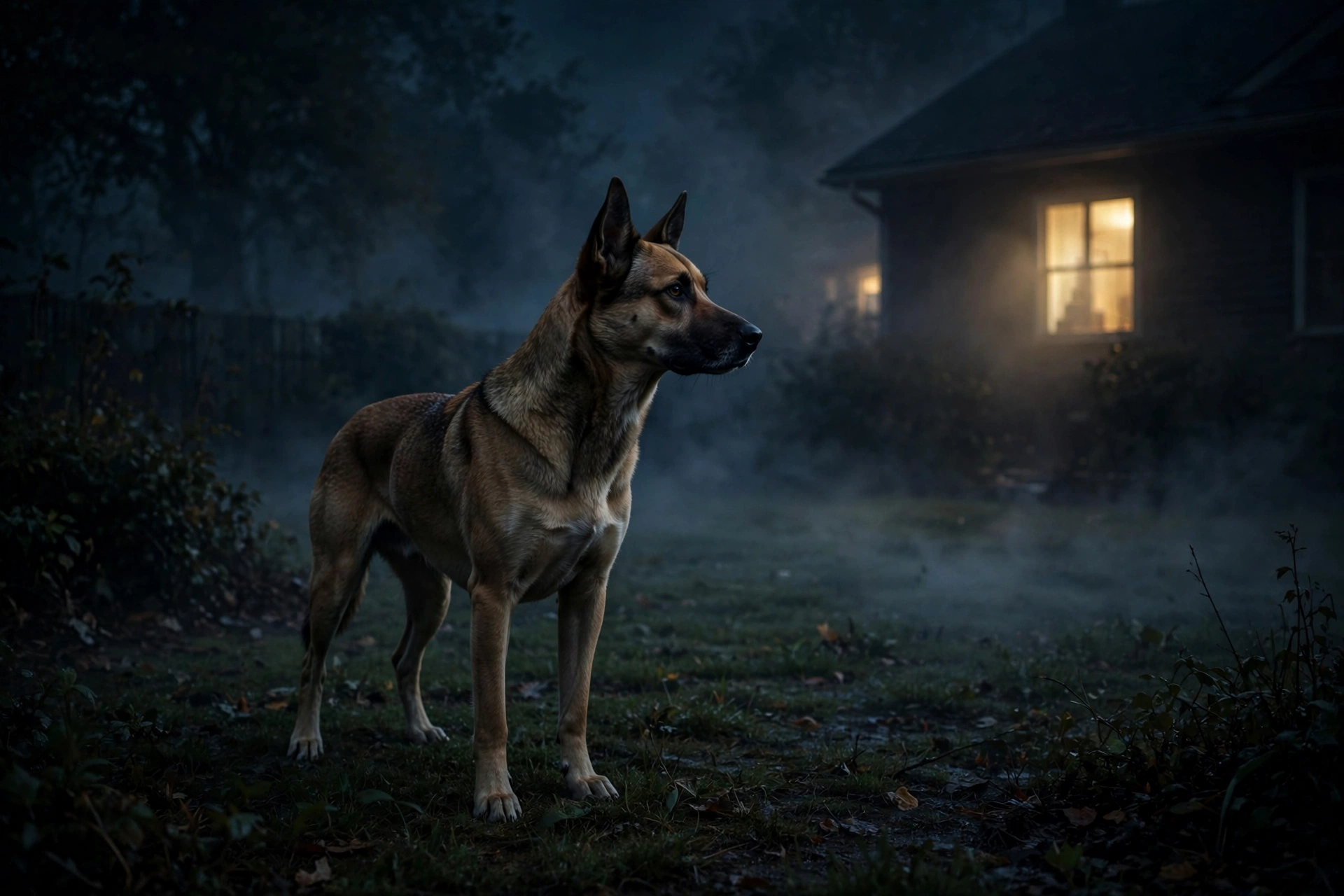
Notice what is missing from most reports: a clear photo, a second witness with the same details, or any physical trace. Fear, darkness, and a moving car all make exact recall hard. That does not mean every witness lied. It means the reports are hard to test, and hard-to-test stories tend to grow sharper with each retelling.
Skinwalker Dog vs Werewolf vs Coyote: What Sets Them Apart?
Three creatures get mixed up in these stories, so a side-by-side view helps. Only one of the three is an ordinary animal you can meet on a real road.
| Creature | Origin | How it changes | Usual form |
|---|---|---|---|
| Skinwalker dog | Navajo belief: a human witch in dog form | Deliberate, through forbidden acts in the tradition | Dog, but also coyote, wolf, owl, bear |
| Werewolf | European folklore | Often a curse or bite, tied to the full moon | Wolf or wolf-human mix |
| Coyote | Real animal of North America | Does not change shape | Coyote, sometimes mistaken for a large dog at night |
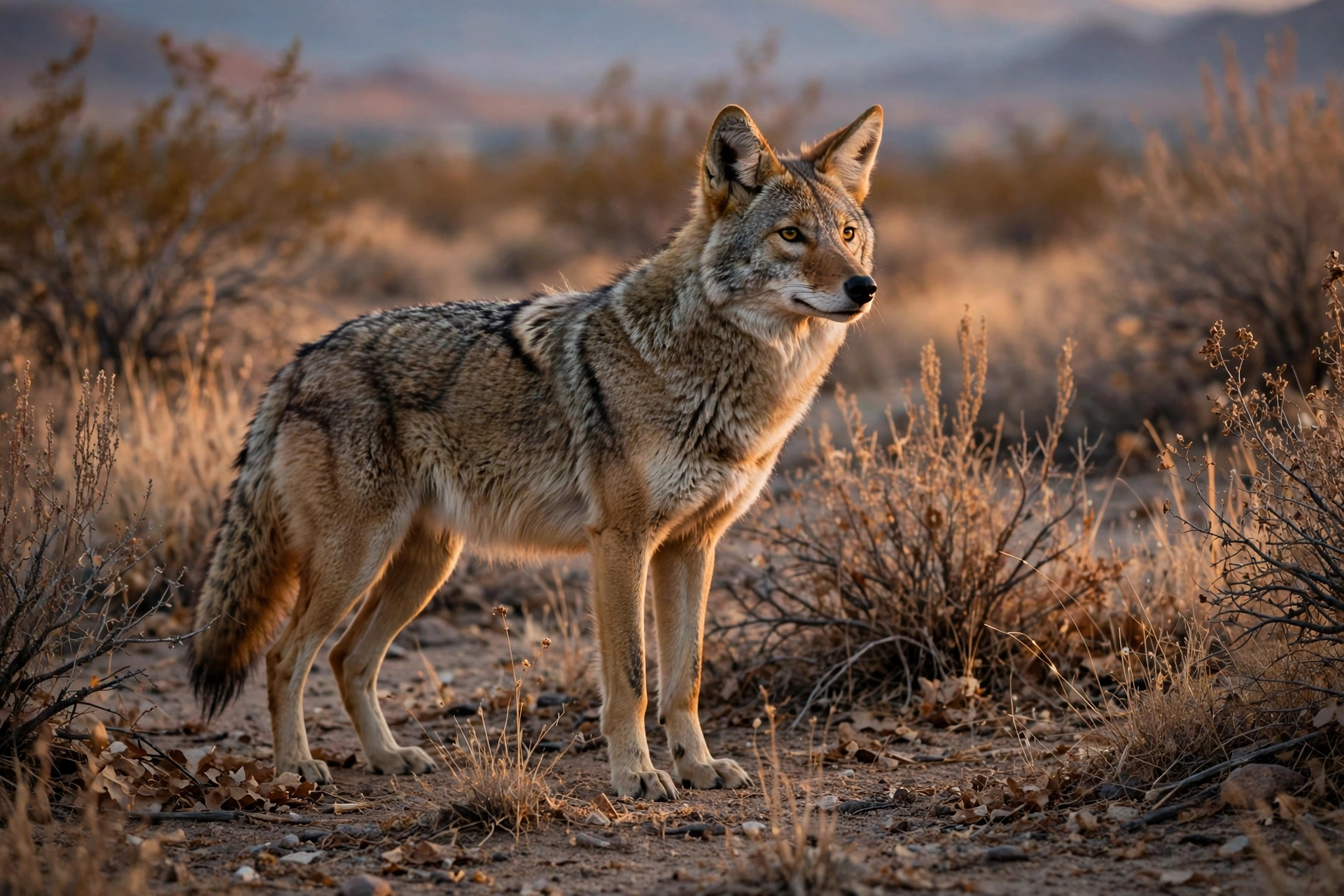
The table also explains the most common mix-up. A coyote seen head-on in headlights, or a large stray dog with mange, can look longer, thinner, and stranger than expected. Add speed, fear, and a dark road, and a normal canid starts to match the story template before the witness has time to check.
What the Internet Gets Wrong About the Skinwalker Dog
Short videos have added details that do not come from the tradition at all. Extra legs, a dog with no face, or a pet that is secretly a skinwalker all the time are internet inventions, not Diné belief. So is the idea that saying the word out loud summons one, or that every black dog on a night road must be treated as a threat. These additions spread because they are vivid and easy to film as a caption, not because elders or old accounts support them. The same pattern drives other viral scares, like the worldwide blackout rumour.
A second error is place. Skinwalker Ranch, the Utah property behind many videos, is a real ranch of about 512 acres, and its name comes from the Navajo term. But the ranch sits in Ute territory, far from the Navajo Nation, and its fame comes from modern books, a TV series, and claims about UFOs and strange events, not from a dog-shaped creature documented there. For that story on its own terms, see Skinwalker Ranch Explained: What Really Happened. Keep the ranch, the tradition, and the dog meme as three separate threads, and each one makes more sense.
Why a Video Makes a Normal Dog Look Wrong
Most skinwalker dog clips are filmed at night, from far away, on a shaking phone. Low light strips colour and depth, zoom blurs edges, and a dog moving in and out of a headlight beam looks like it is changing shape. Watching the same few seconds on repeat makes it worse: each replay trains your eye to spot one odd frame and ignore the twenty normal ones around it.
That is why video rarely settles these clips, even when the person filming is honest. A camera at night does not record what the eye saw. It records a darker, flatter, jumpier version of it, and fear fills in the rest. If a clip is your only evidence, treat it as a starting question, not as proof.
Is It Your Own Dog Acting Strangely?
A newer wave of posts is more personal: my own dog moved wrong, paused too long, or stared too hard, so is it still my dog? The tradition itself gives no support for that fear, since a skinwalker is described as a human in disguise, not as a pet that changes. The practical checks are the same ones any vet would suggest: food, water, sleep, and whether the dog still answers to its name and its favourite game.
If the odd behaviour lasts more than a day or two, or comes with limping, loss of appetite, or sudden fear, book a vet visit instead of watching the dog for signs. Stress, pain, a new scent in the yard, or a distant animal can all make a familiar dog act like a stranger for an evening. Do not let a scary label turn into suspicion of an animal that depends on you.
Plain Explanations for a Strange Dog at Night
Before reaching for a supernatural reading, run through the ordinary list. It covers most reports without needing anything new to exist.
- A coyote or wolf hybrid. Coyotes are common across the American Southwest, hunt at night, and look dog-like until you see them well. A wolf-dog hybrid can be much larger than a pet dog.
- A sick or injured stray. Mange strips fur and changes a dog’s shape. Injury changes its gait. Hunger makes it bold around houses and cars.
- Light and distance. Headlights flatten depth, bleach colour, and turn eyes bright. A dog 100 metres away can look twice its size and oddly still.
- Sound tricks. Coyote calls carry far and sound like several animals at once. A dog barking in an empty yard can sound like a voice if you are already afraid.
- Pattern-spotting. Once you have watched skinwalker videos, your brain starts to match ordinary dogs to the template. That habit is normal, and it is worth knowing about.
| Report detail | Plain check first |
|---|---|
| Stiff or wrong walk | Injury, age, cold, or a sore paw |
| Eyes that feel human | Headlight glare and a direct stare, which dogs do when alert |
| Delayed reaction to its name | Distraction by a scent, sound, or another animal |
| Voice-like sound at night | Coyote calls and dog whines carried by still night air |
| Other animals gone quiet | A real predator, such as a coyote, passing through |
None of this proves what any one person saw. It only shows that a strange sighting does not need a new creature to explain it. The ordinary list is long, and it is full of animals that really do walk those roads at night.
What to Do If You See a Strange Dog at Night
Stay practical, whatever you believe about the story. Do not approach, chase, or try to feed an unknown animal. Keep your distance, keep your car doors locked if you are driving, and use a torch rather than walking closer for a better look. If the animal looks lost or hurt, note the place and time, and contact local animal control or a shelter in daylight rather than handling it yourself. If you hear your name called from outside at night, do not go out to check. Stay inside, switch lights on, and wait. That rule holds even without any supernatural reading: dark ground hides real hazards, from wildlife to uneven ground.
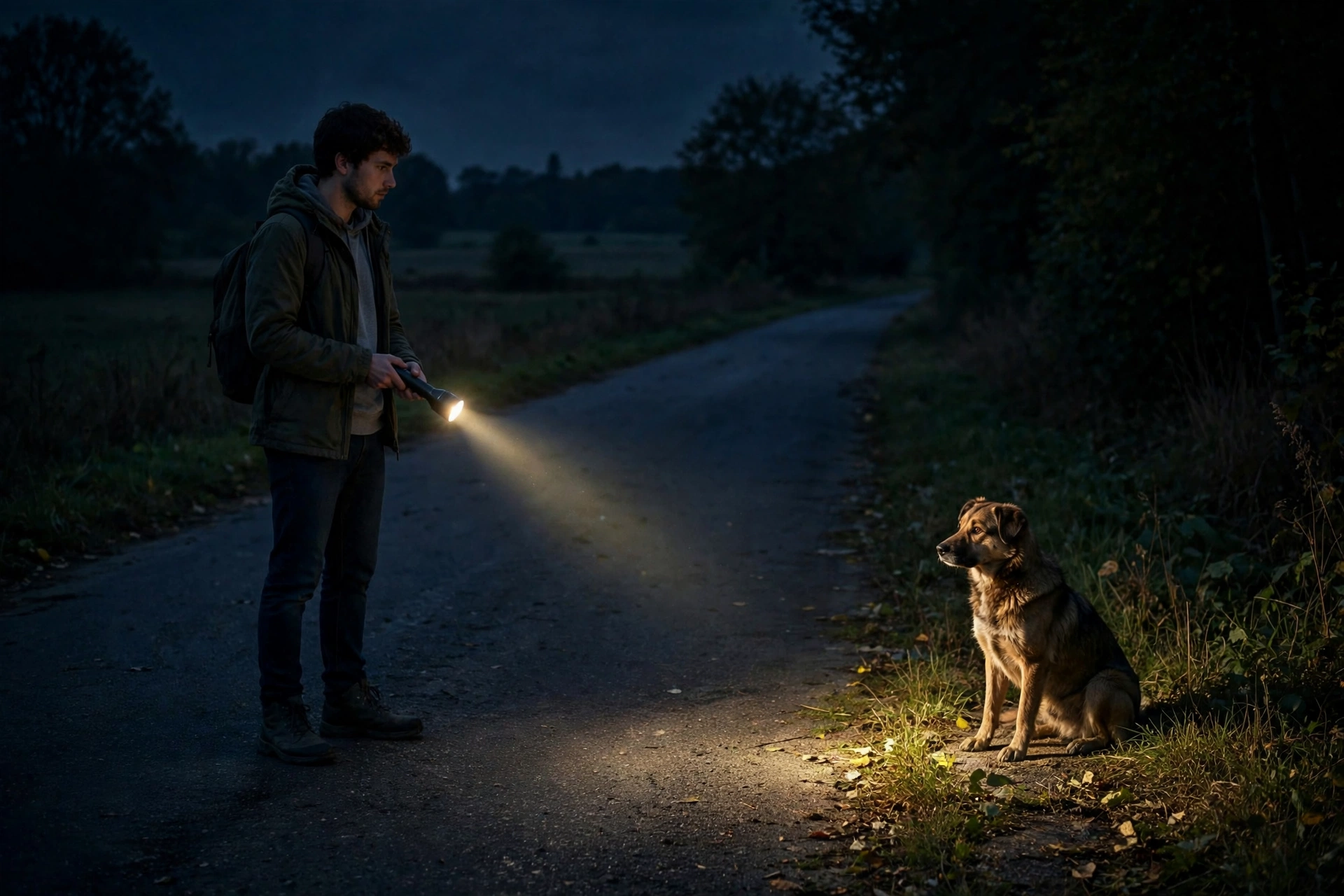
If the sighting left you shaken, talk about it with someone you trust, and check the simple facts first: was there a coyote warning in your area, a lost-dog post nearby, or a neighbour’s dog out loose? Most of these checks close the case in a day. If fear keeps returning, or sleep stays broken for weeks, speak to a doctor or counsellor. A scary night can stick in the mind long after the animal has gone, and that part deserves care on its own.
A Note on Respect for the Tradition
Many Navajo people avoid talking about skinwalkers in detail, because the subject is treated as dangerous and taboo in the culture. That is a good reason to keep the tone careful: report the belief, name it as belief, and do not turn it into a joke, a costume, or a challenge to summon one. The stories belong to a living culture first, and to the internet second. For a wider look at how folklore travels online, see What Is a Banshee? Irish Mythology Origins Explained, and for the ranch story in full, the Skinwalker Ranch guide linked above.
For an outside reference on the ranch itself, see Wikipedia: Skinwalker Ranch, which records the property’s size, location, and ownership history. For how the legends were studied, see the Indiana University study of Navajo skinwalker legends (Contemporary Legend, 1992, Northern Arizona University), which compares Navajo and Anglo-American tellings of the same tales.
People Also Ask About the Skinwalker Dog
Is a skinwalker dog real?
There is no verified proof of a skinwalker dog as a real animal. In Navajo belief, a skinwalker is a human witch said to take animal form, and the dog form is one shape among many. Every sighting report stays within belief, story, and personal experience, not tested evidence.
Can your own dog be a skinwalker?
In the traditional belief, no. A skinwalker is described as a human who chose a dark path and learned to wear animal skins, not as a pet that turns into something else. A dog that stares, freezes, or acts oddly at night is far more likely to be sick, scared, lost, or reacting to something it can hear or smell.
How is a skinwalker dog different from a werewolf?
A werewolf in European tales is usually a person cursed or changed by the moon, often against their will. A skinwalker in Navajo belief is a human who deliberately breaks deep taboos to gain shape-changing power, and can take many animal forms, not only a wolf. The two come from different cultures, different causes, and different rules.
Why is skinwalker dog trending now?
Google Trends showed the phrase rising fast in the week to 4 November 2026, with skinwalker dog up about 500 percent in Mexico and what is skinwalker dog up about 300 percent in India. That is a spike in search interest, not a new sighting, and it likely rides on short videos and posts that repeat the same dog-shaped stories.
More Folklore Stories
- What Is a Skinwalker? Complete Navajo Legend Guide
- Skinwalker Ranch Explained: What Really Happened
- What Is a Banshee? Irish Mythology Origins Explained
This article presents traditional beliefs and folklore for informational purposes only, not as proven fact. If you experience persistent distress, please consult a qualified professional.
1 thought on “Skinwalker Dog: 5 Signs, Myths & the Real Truth”