On the morning of 1 December 1948, a well-dressed man was found dead on Somerton Beach in Adelaide, Australia — and despite one of the longest investigations in Australian history, no one ever officially identified him. This is the Somerton Man Taman Shud mystery: a dead man with no ID, no labels in his clothes, and a scrap of Persian poetry in his pocket. Here’s what the evidence actually shows, seventy-eight years on.
Last updated: October 24, 2026
- Date found: 1 December 1948, Somerton Beach, Adelaide, South Australia
- Age and build: about 40–45 years old, roughly 180 cm tall, fit and athletic
- Cause of death: never determined; the 1949 inquest was adjourned without a finding
- Poisons tested: cyanides, alkaloids, barbiturates, and carbolic acid — all negative
- Identification claim: 2022 — researchers reported he was Carl Webb, born 1905 in Melbourne
- Case status: remains an open police case in South Australia
At the 1949 coroner’s inquest — opened on 17 June 1949 before Thomas Erskine Cleland — the doctors agreed the death was probably caused by an uncommon poison — yet tests for cyanides, alkaloids, barbiturates, and carbolic acid all came back negative. The inquest was adjourned without a finding on the cause of death, and the case remains officially open.
What is the Taman Shud case? It is Australia’s most famous cold case: the 1948 death of an unidentified man on Somerton Beach, named after the Persian phrase “Tamam Shud” found in his pocket.
What happened on Somerton Beach in 1948?
The discovery of the body
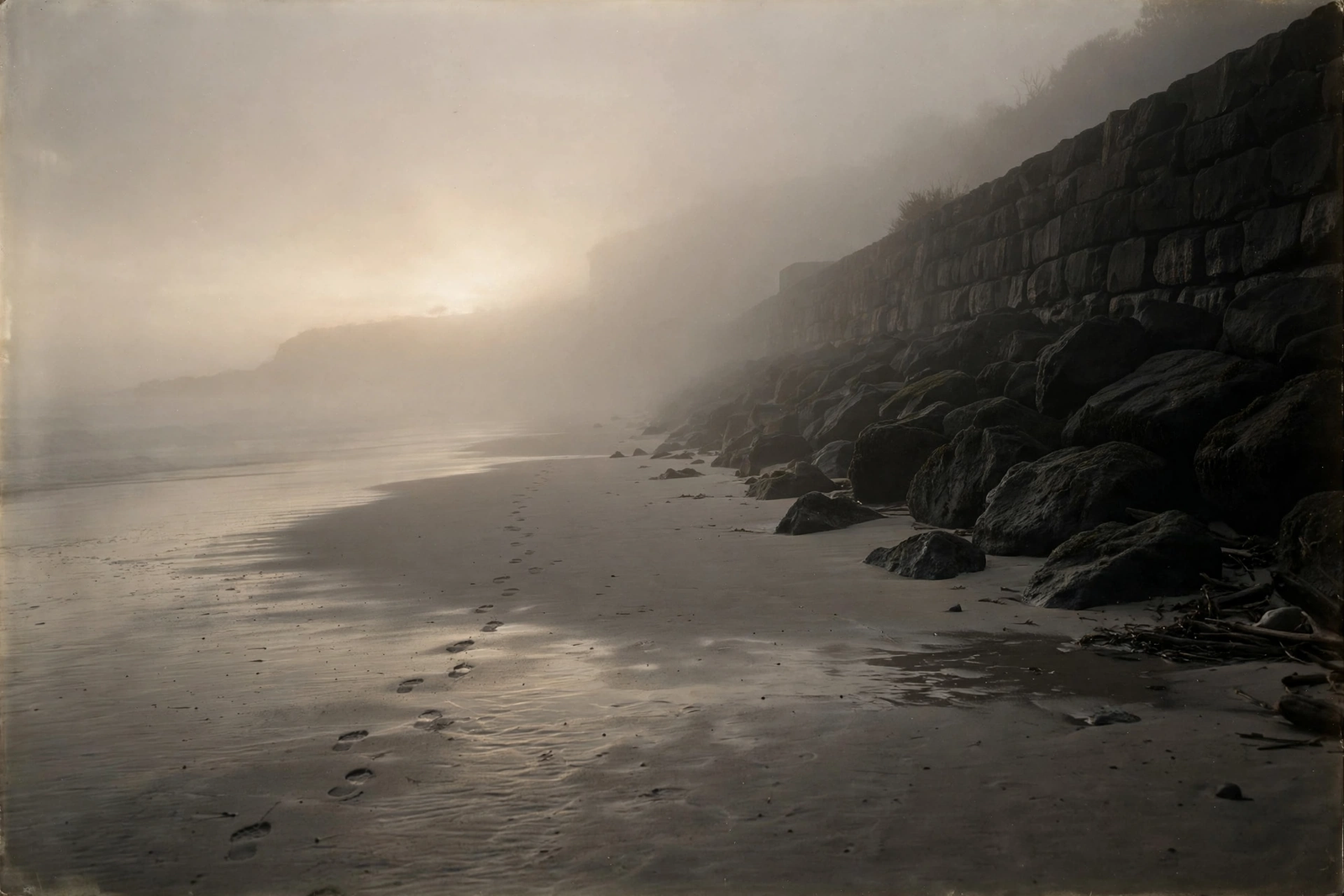
He was found propped against the seawall at Somerton Beach early on the morning of 1 December 1948, dressed neatly in a suit, shirt, and tie. No violence was visible, and there was no ID anywhere on him. Witnesses had seen a man matching his description on the beach the evening before, some describing him as motionless and possibly unconscious.
Several small details puzzled the police from the start. His shoes were clean and his clothing was dry, odd for someone supposedly on a beach. Every identifying label had been cut out of his clothing. A plaster cast of his head was made before burial; dozens of people with missing relatives came to look, and no one could identify him.
What did the police find on the Somerton Man?
The contents of his pockets read like a list from a puzzle book:
- An unused train ticket from Adelaide to Henley Beach for 30 November
- A bus ticket from the city to Glenelg
- A half-empty packet of cigarettes, matches, a comb, and chewing gum
- A small scrap of paper printed with the words “Tamam Shud”
The discovery of the suitcase
Weeks later, police traced an unclaimed brown suitcase left at Adelaide Railway Station on 30 November back to him. Inside: more label-less clothes, a stencil kit, a screwdriver, a knife, and laundry marks — tools consistent with an instrument maker or electrical engineer. Nothing carried his name.

What does “Tamam Shud” mean — and where did the scrap come from?
The connection to the Rubaiyat of Omar Khayyam
“Tamam Shud” is Persian for “it is ended” or “it is finished” — the closing phrase printed at the end of The Rubaiyat of Omar Khayyam, a book of verses by the 11th-century Persian scholar Omar Khayyam, translated into English by Edward FitzGerald in the 19th century. The scrap was found tucked in the Somerton Man’s trouser fob pocket by Professor John Burton Cleland, and it had been torn from the last page of a copy of that book.
The case got stranger: in July 1949, a man handed police a Rubaiyat copy he said he’d found in his car on 30 November 1948. The missing page matched the scrap. Inside the back cover was a handwritten letter sequence — lines like “WRGOABABD” — that no cryptographer has decoded, plus a local phone number traced to a young nurse nicknamed “Jestyn.”
Jestyn: the Jessica Thomson link
Jestyn was questioned by police and denied knowing the dead man, though one report says she fainted when shown the plaster cast. Contemporary newspaper records, including The Advertiser, never named her publicly; later researchers identified her as Jessica Thomson, a nurse living near the beach.
What are the leading theories about the Somerton Man?
Three main theories have survived the decades. Each has real believers; none has been proven.
| Theory | What believers point to | What the records actually show |
|---|---|---|
| The spy theory | Cold War setting, removed labels, the “code,” the Woomera range nearby | No document or defector has ever linked him to any intelligence agency |
| The suicide theory | Professor Cleland’s opinion; “Tamam Shud” means “the end” | No container, syringe, or trace of any poison was ever found |
| The murder theory | Detective Leane: nothing rules out foul play | No suspect, motive, or witness to foul play ever surfaced |
It’s the same pattern you’ll see in other cold cases like the Dyatlov Pass incident: a handful of strange facts, and theories that outgrow the evidence.
Was the Somerton Man identified in 2022?
Early reported identifications
Over the decades, tipsters named dozens of candidates — missing sailors, a Melbourne carpenter, even a Cold War defector — and the media reaction turned each lead into headlines. None survived checking against the man’s dental records and fingerprints.
The Abbott investigation
In July 2022, University of Adelaide professor Derek Abbott and genealogist Colleen Fitzpatrick announced that DNA extracted from the Somerton Man’s preserved hair pointed to Carl “Charles” Webb, an electrical engineer born in Melbourne in 1905. Genetic genealogy traced his family tree, and records suggest Webb had separated from his wife Dorothy (“Doff” Webb), who had moved to South Australia.
Here is where honesty matters: South Australia Police have not officially confirmed the identification. Even if Webb is the man, the cause of death is still unexplained — DNA tells you who, not how. The identity claim is reported, not ratified.
What the evidence shows vs. what the internet claims
| What people claim | What the documents actually show |
|---|---|
| He was definitely a spy. | No intelligence link has ever been documented. |
| The code in the Rubaiyat was cracked. | Multiple claimed decodings exist; none is accepted as definitive. |
| The case is officially solved. | Researchers reported an ID in 2022; police have not confirmed it. |
| He was definitely poisoned. | The inquest’s doctors suspected poison but found none; the cause is officially undetermined. |
| Jestyn was his lover and the mother of his child. | She was questioned and denied knowing him; the rest is speculation. |

Timeline of the Somerton Man case
| Date | Event |
|---|---|
| 30 Nov 1948 | The man buys train and bus tickets; witnesses see him on Somerton Beach that evening; a suitcase is left at Adelaide Railway Station |
| 1 Dec 1948 | His body is found against the seawall at Somerton Beach |
| Dec 1948 | Fingerprints checked across Australia, the UK, and America — no match |
| 17 Jun 1949 | The coroner’s inquest opens |
| 21 Jun 1949 | The inquest is adjourned without a finding on the cause of death |
| Jul 1949 | The Rubaiyat copy is handed to police, with the “code” and Jestyn’s phone number inside |
| 2015 | State Records of South Australia publishes an overview of its open case files on the mystery |
| 2021 | The body is exhumed for DNA analysis |
| Jul 2022 | Researchers report identifying him as Carl Webb; police confirmation still pending |
For the full official record of the inquest evidence, the State Records of South Australia have published an excellent overview of their Somerton Man files.
People also ask about the Somerton Man
What was in the Somerton Man’s pockets?
An unused Adelaide-to-Henley Beach train ticket for 30 November, a bus ticket to Glenelg, cigarettes, matches, a comb, chewing gum, and the “Tamam Shud” paper scrap. There was no wallet, no ID, and no money beyond sixpence.
What is the Rubaiyat code in the Somerton Man case?
It is a handwritten sequence of capital letters found in the back of the Rubaiyat handed to police in July 1949. Lines included strings like “WRGOABABD” and “MLIAOI”. Amateur and professional codebreakers have proposed solutions, but none has been verified.
Who was Jestyn in the Somerton Man case?
Jestyn was the nickname of a young nurse whose phone number was found in the Rubaiyat copy. Police interviewed her; she denied knowing the dead man. Some researchers believe she knew more than she admitted, but there is no proof.
Where is the Somerton Man buried?
He is buried in West Terrace Cemetery in Adelaide, under a headstone reading “Here lies the unknown man who was found on Somerton Beach 1.12.48.” His body was exhumed in 2021 for DNA testing.
Frequently asked questions
What was the Somerton Man’s real identity?
Researchers reported in 2022 that DNA analysis identified him as Carl Webb, an electrical engineer from Melbourne. South Australia Police have not officially confirmed this.
What does Tamam Shud mean?
It is Persian for “it is ended.” The scrap was torn from the final page of The Rubaiyat of Omar Khayyam.
What was the cause of the Somerton Man’s death?
Unknown. The 1949 inquest was adjourned without a finding, though doctors suspected an uncommon poison.
Was the Somerton Man a spy?
There is no evidence for it — but the Cold War setting and the strange clues keep the theory alive.
More Unsolved Mysteries stories
- Dyatlov Pass Incident Explained: 1959 Mystery
- Max Headroom Broadcast Signal Intrusion (2026): 1987 Mystery
This article presents traditional beliefs and folklore for informational purposes only, not as proven fact. If you experience persistent distress, please consult a qualified professional.