Last updated: October 24, 2026
A djinn is a spirit-being from Islamic tradition and Arabian folklore — invisible, made of smokeless fire, with free will like humans. The djinn meaning in Arabic is literally “hidden from sight”: in belief, they’re real but unseen. Forget the cartoon genie — the real story, part scripture and part ancient folklore, is stranger and older.
- Word origin: Arabic jinn (“hidden from sight”); singular jinnī; English “genie” is the Westernized form
- Made of: smokeless fire — as humans are made of earth, in Islamic cosmology
- In scripture: mentioned throughout the Quran, which devotes an entire chapter — Surah Al-Jinn (72) — to them
- Named classes: ghūl, ʿifrīt, and siʿlā, per classical Arabic sources
- Belief today: belief in djinn remains widespread across the Middle East, North Africa, Turkey, Iran, and South and Central Asia
What is a djinn? A djinn is an invisible spirit-being of Arabian and Islamic tradition — created from smokeless fire, endowed with free will, living in its own societies parallel to humanity, and capable of both good and evil.
What Is the Djinn Meaning in Arabic?
Djinn is a French-influenced spelling of Arabic jinn (pronounced “jin”), a collective noun; the singular is jinnī, borrowed into English as djinni. Strictly, “a djinn” mixes plural and singular, but centuries of use made it standard — you’ll see djinn, djinni, and genie used interchangeably in the West.
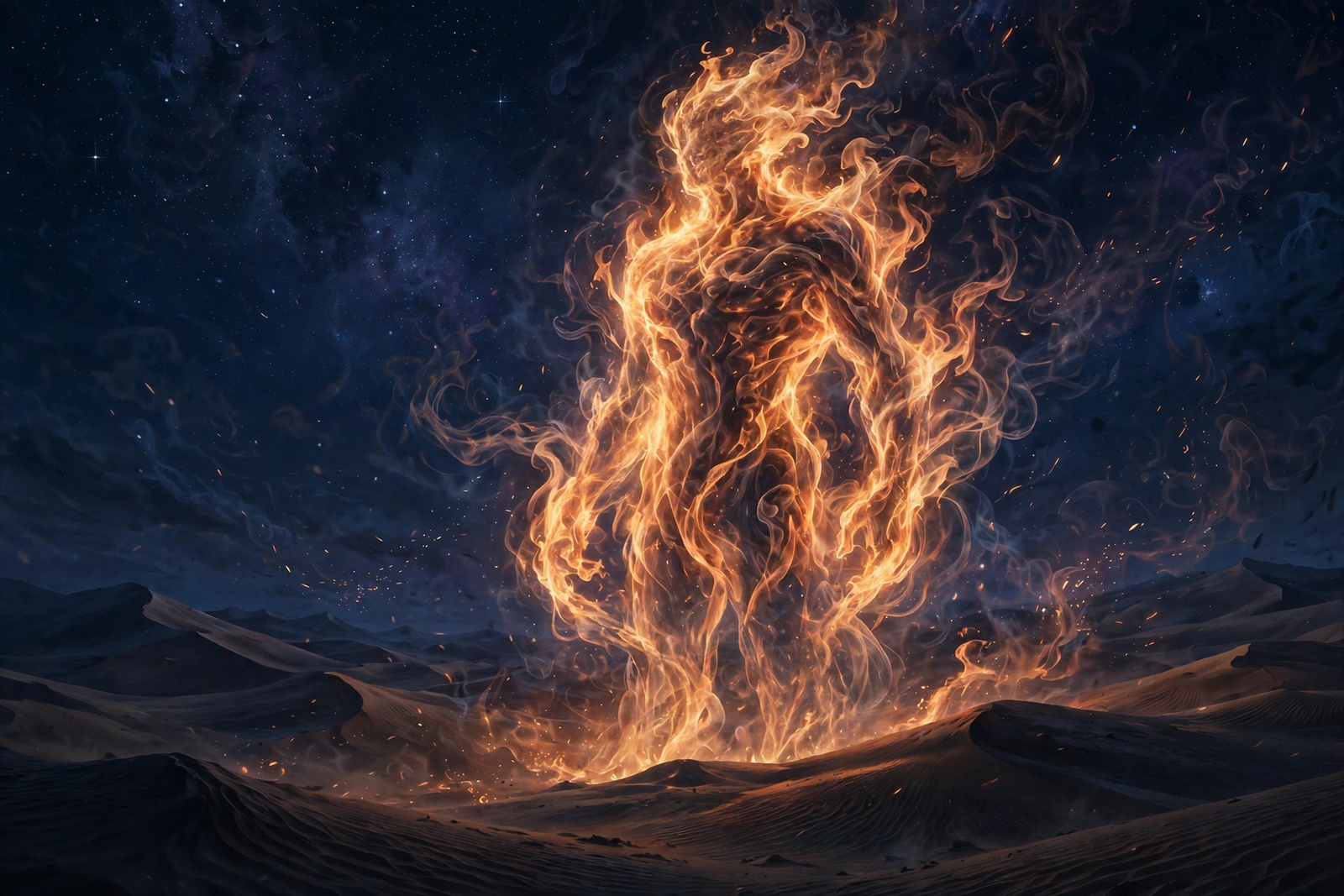
Jinn literally means “hidden from sight” — describing how humans experience them: present but veiled. Genie shares this root; it’s not a separate creature, just the Westernized pronunciation that stuck after French translators brought the Thousand and One Nights to Europe. “Djinni” usually means one spirit; “djinn,” the whole unseen order.
What Are Djinn in Islam?
For over a billion people this isn’t mythology — it’s theology. Islam teaches three intelligent orders: angels (light, no free will), humans (earth/clay, free will), and djinn (smokeless fire, free will). The Quran mentions djinn throughout, addresses them directly, and describes Muhammad as a messenger to both humans and djinn.
Three teachings define them. First, djinn are morally accountable: like humans, they can believe or disbelieve and face judgment — neither innately evil nor good. Second, they are created, not divine: Islam rejects the pre-Islamic practice of worshipping djinn or praying to them; they have no power beyond what God permits. Third, Iblis — who refused to bow to Adam — is identified in Islamic tradition as a djinn, not a fallen angel.
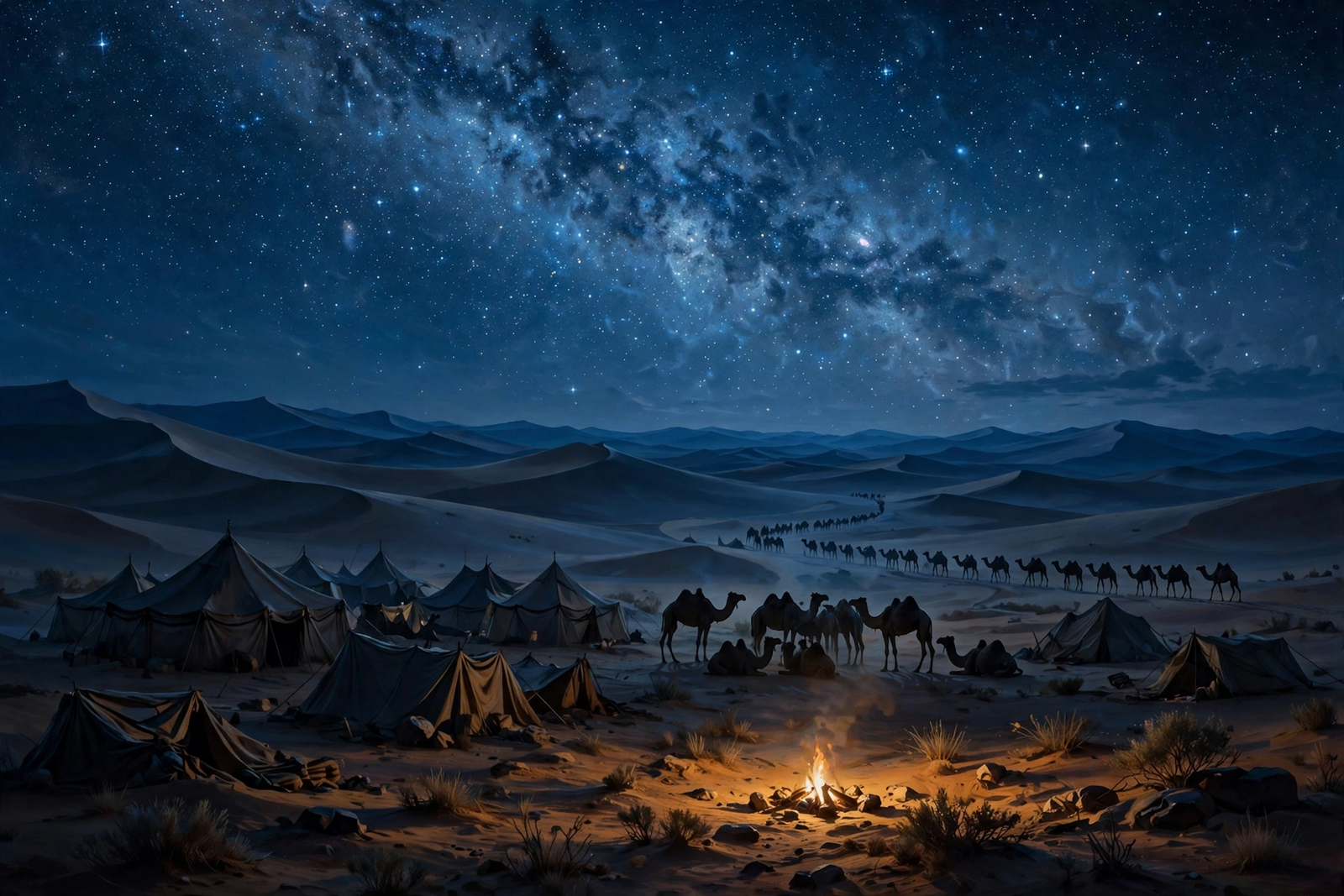
Before Islam, Arabian tribes both feared and courted them: poets claimed djinn inspired their verses, soothsayers said theirs whispered the future, travelers prayed to them to guard desert caravans. Islam kept the beings but demoted them — fellow creatures, not gods.
What Powers Do Djinn Have?
Classical sources credit djinn with abilities beyond humans but far short of divine. Naturally invisible with thin, subtle bodies, they shapeshift — most often into snakes, but also scorpions, lizards, dogs, and humans — move fast, pass through barriers, and are generally stronger than people.
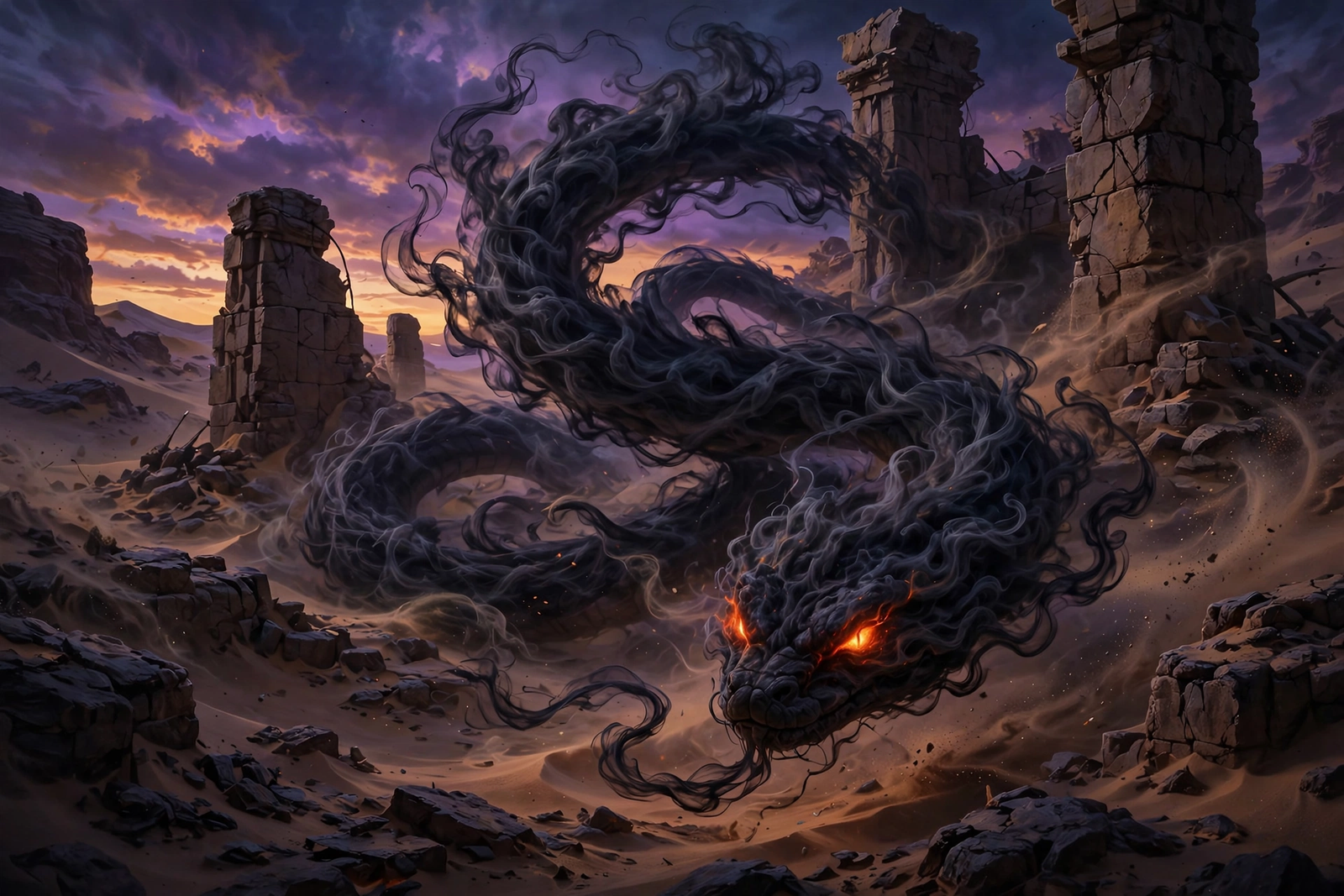
But they have limits: djinn eat and drink, form tribes with leaders, marry, feud, and die like humans — pre-Islamic tales even say a human could kill one in single combat. In folklore they haunt desolate places — ruins, deserts, abandoned wells — and retaliate when disturbed, getting blamed for sudden illnesses and accidents, and for the crushing presence of sleep paralysis in many Muslim folk traditions.
In stories, humans who learn the right rituals — bindings, Solomon’s legendary command — can compel a djinn’s service. That’s folklore, not theology, and it seeded every lamp-rubbing tale the West ever told.
What Are the Different Types of Djinn?
Classical Arabic literature sorts djinn into rough classes. The names vary by source, but three appear again and again, with a fourth famous from story collections:
| Type | Nature | Known for |
|---|---|---|
| Ghūl (ghoul) | Treacherous, shape-changing | Luring travelers in the desert; the root of the English “ghoul” |
| ʿIfrīt (ifrit) | Powerful and evil | The Quran’s term for a rebellious, mighty djinn; a byword for malice |
| Siʿlā | Treacherous, fixed form | A female-class spirit of unchanging shape in old tales |
| Mārid (marid) | Giant, proud, immensely strong | The great djinn of the Nights — the archetype behind the lamp-genie |
Ordinary djinn are just that — unseen neighbors, mostly minding their tribal business. Our list of demon names and meanings covers more entities across traditions.
Djinn vs Genie: What’s the Difference?
Almost everything Westerners “know” about djinn comes from a double mistranslation. In 1704, Antoine Galland’s first European Thousand and One Nights rendered jinnī as French génie (from Latin genius). English took “genie,” and pantomimes, cartoons, and Disney cemented the image: blue, funny, lamp-bound, granting three wishes.
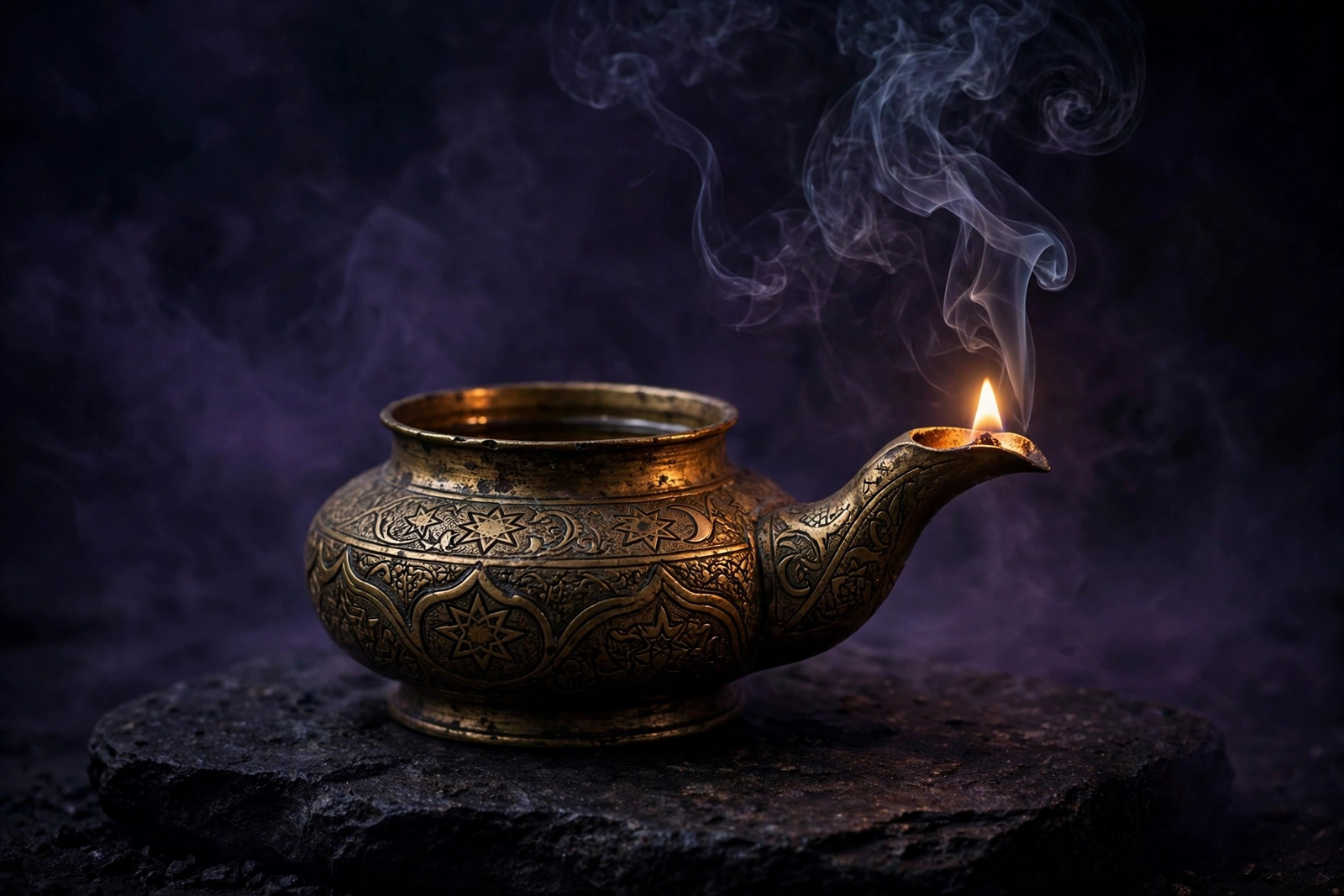
The gap is enormous: the Islamic djinn is a free, accountable being — closer to an unseen human than a servant. It grants no wishes and lives in no lamp. The genie is a literary device wearing the djinn’s name. For the scholarly account of the jinni, Britannica’s entry is the clearest starting point.
How Do People Seek Protection From Djinn?
Belief in djinn is living belief, so protection has practiced answers. Islamic tradition teaches remembrance of God, not magic: reciting Quranic verses — Ayat al-Kursi (the Throne Verse), Al-Falaq, and An-Nas, which ask God for refuge from unseen harms — and saying bismillah (“in the name of God”) before entering dark places.
What’s forbidden is telling: seeking protection from the djinn themselves — bargaining with them or wearing their talismans — is condemned as associating partners with God. Other cultures have their own home protection rituals: same instinct, different tradition. Scholars add that djinn-belief maps onto real anxieties — desert dangers, unexplained illness, the vulnerability of sleep — giving people a language for fear and rituals a way to act on it.
People Also Ask About Djinn
Are djinn real?
In Islamic theology, yes — djinn are real created beings. Belief is standard across the Muslim world. There’s no scientific evidence, so outside faith they’re best understood as religious belief and folklore.
Can a djinn grant wishes?
Not in Islamic teaching — only God has that power. The wish-granting djinn comes from Western stories: the Thousand and One Nights, Aladdin, film. Folklore has tales of bound djinn doing favors, but that’s storytelling, not scripture.
Are djinn good or evil?
Neither by nature, says Islamic teaching. Djinn have free will and choose good or evil like humans. Some classes, like the ifrit, are described as evil — but the Quran places djinn as a whole on humanity’s moral plane.
Frequently Asked Questions
Are djinn real?
In Islamic theology, yes — djinn are real created beings, and belief is standard across the Muslim world. There is no scientific evidence for them, so outside faith they are understood as theology and folklore.
Can a djinn grant wishes?
In Islamic theology, no — djinn have no divine power; only God can grant such things. The wish-granting genie is a Western pop-culture invention from the Thousand and One Nights tradition and films like Aladdin.
What does djinn mean in Arabic?
From Arabic jinn, literally “hidden from sight.” The singular is jinnī (djinni). English “genie” is the Westernized form of the same word.
More Folklore Stories
- Demon Names and Meanings: The Complete List
- Sleep Paralysis Demon: Why You See a Figure
- How to Sage Your House for Negative Energy
This article presents traditional beliefs and folklore for informational purposes only, not as proven fact. If you experience persistent distress, please consult a qualified professional.