Last updated: 23 October 2026
If you’ve ever found a family member standing in the kitchen at 3 a.m., eyes open but clearly not awake, you’ve seen the strangest trick the human brain can play. So why do we sleepwalk? The short answer: the brain wakes up only halfway. The parts that move the body switch on, but the parts that think, remember, and judge stay asleep. That half-awake state is called a “disorder of arousal,” and doctors say it happens during the deepest stage of sleep. Here’s what the science actually says — and what to do about it.
- Sleepwalking is a disorder of arousal that happens in N3 sleep, the deepest stage of non-REM sleep (Mayo Clinic).
- Episodes peak in children between ages 8 and 12, and most kids outgrow it.
- Risk roughly doubles or triples if one parent sleepwalked — and can reach 60% if both parents did.
- Episodes usually strike in the first part of the night and last only a few minutes.
- Sleepwalkers typically remember nothing the next morning.
What is sleepwalking? A parasomnia — an unwanted behavior during sleep — where a person sits up, walks, or performs routine actions while still mostly asleep, eyes open but unresponsive, with no memory of it afterward.
What happens during a sleepwalking episode?
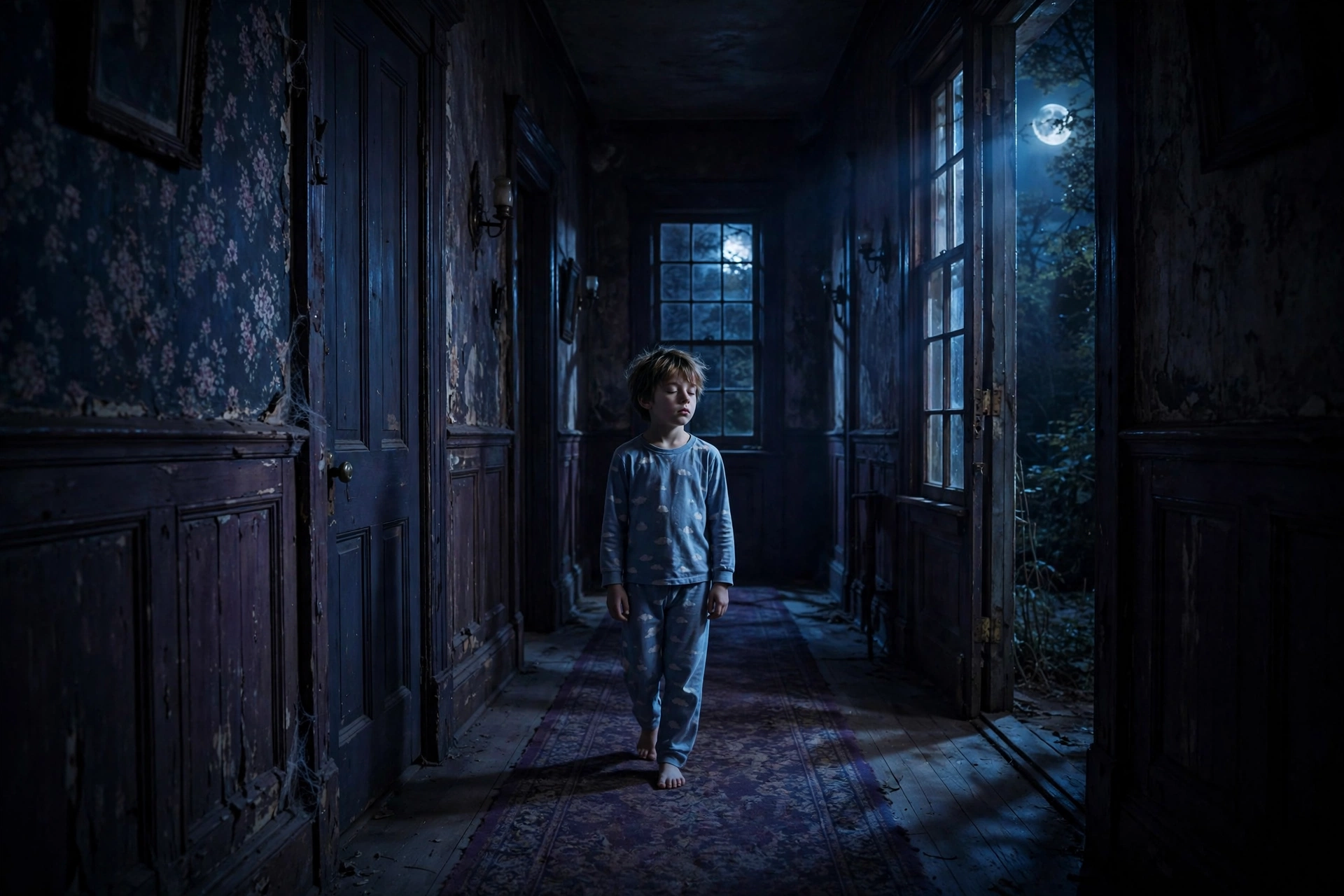
A sleepwalker usually sits up in bed first, then gets up. Their eyes are open, but the face looks blank. They might get dressed, walk around the house, or open the fridge. Less commonly, they do stranger things — eat odd food, leave the house, even drive a car. The episode normally ends within minutes: either they go back to bed on their own, or someone gently guides them back.
They don’t respond normally when you talk to them, and waking them is hard. When they do wake mid-episode, they’re confused and groggy, then forget the whole thing. It’s eerie to watch, but the person themselves feels nothing — which is exactly why the real danger is physical: stairs, locked doors, sharp objects, and traffic.
Why do we sleepwalk? The brain science
Here’s the core mechanism, and it’s simpler than it sounds. Sleep isn’t one flat state — it moves in cycles through light sleep, deep sleep (N3), and REM sleep. Sleepwalking happens when the brain tries to climb out of N3 deep sleep and stalls halfway. The motor circuits that walk, open doors, and handle objects wake up. The prefrontal cortex — judgment, orientation, memory — doesn’t.
Doctors call this a disorder of arousal. Think of it as a power cut where half the building’s lights come back on. That’s why a sleepwalker’s behavior looks purposeful but isn’t: there’s no planning behind it, just motor routines running on autopilot.
There usually isn’t one single cause. Research describes a three-part pattern: an underlying vulnerability (a brain more prone to unstable arousals from deep sleep), plus sleep pressure or instability (exhaustion, stress, illness, irregular hours), plus a nighttime arousal that kicks off the episode — a sound, a full bladder, a breathing interruption. On some nights all three line up; on most nights they don’t. That’s why episodes seem so random.

What triggers a sleepwalking episode?
If you sleepwalk, you’re not doomed to wander forever. Episodes cluster around triggers — and most of them are fixable. The Mayo Clinic lists the main ones:
- Sleep deprivation. Not getting enough sleep is the number-one trigger — it makes deep sleep deeper and arousals more unstable.
- Stress and anxiety. Mental strain fragments deep sleep, especially in adults.
- Fever and illness. A high temperature is a classic trigger in children.
- Alcohol. It disrupts sleep cycles and is a well-known trigger, especially later in the evening.
- Certain medications. Sedatives, hypnotics, and some mental-health drugs can interfere with sleep stages.
- Irregular sleep schedules. Shift work, jet lag, and erratic bedtimes destabilize the whole cycle.
- Underlying sleep disorders. Sleep apnea, restless legs syndrome, and anything that repeatedly interrupts sleep can set episodes off.
Noise, light, and sleeping somewhere unfamiliar can also do it. If episodes keep coming, a sleep diary helps: note bedtime, sleep quality, caffeine or alcohol, stress levels, and whether you walked. Patterns jump out fast — and that’s also the first thing a doctor will ask for. For more on strange nighttime experiences, see our guide on why people see a figure during sleep paralysis, which comes from a completely different sleep stage.
Sleepwalking triggers at a glance
| Trigger | How it raises the risk |
|---|---|
| Sleep deprivation | Deepens N3 sleep and destabilizes arousals — the top trigger |
| Stress and anxiety | Fragments deep sleep, especially in adults |
| Fever or illness | Classic trigger in children; body stress sparks episodes |
| Alcohol | Disrupts sleep cycles, particularly later in the evening |
| Sedatives and hypnotics | Interfere with normal sleep-stage transitions |
| Sleep apnea / restless legs | Repeated breathing or movement interruptions trigger arousals |
| Irregular schedule, jet lag | Destabilizes the whole sleep cycle |
Is sleepwalking hereditary?
Short answer: largely, yes. Sleepwalking runs in families, and the numbers are striking. If one parent has a history of sleepwalking, the child’s risk roughly doubles or triples. If both parents sleepwalked, the odds can climb toward 60%.
That doesn’t mean it’s destiny. Plenty of people with sleepwalking parents never walk, and some sleepwalkers have no family history at all. Genetics sets the vulnerability; triggers pull the trigger, so to speak. It’s the same three-part pattern: a prone brain + pressure + a nighttime arousal.
Age matters too. Sleepwalking is far more common in children because young nervous systems regulate sleep transitions poorly — it peaks between ages 8 and 12 and usually fades by the teen years. When it starts for the first time in adulthood, doctors treat it differently: it’s more often tied to a trigger like a new medication, sleep apnea, or heavy stress, and it deserves a medical check.

How do you keep a sleepwalker safe?
The person sleepwalking is the last one who can protect themselves, so safety is on everyone else. These are the practical steps health services recommend:
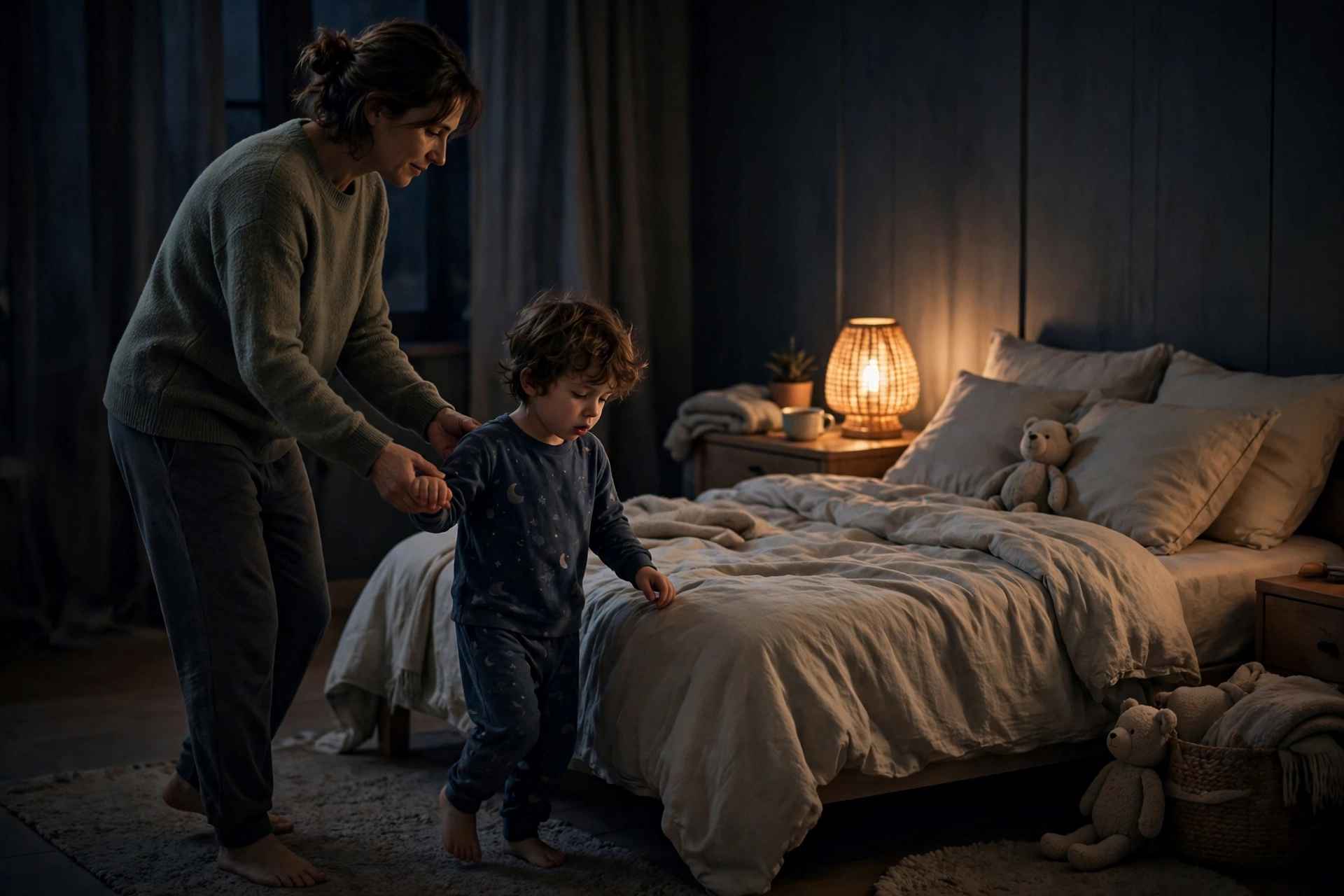
- Don’t try to wake them forcefully. The old story that waking a sleepwalker kills them is a myth — but startling one can cause confusion or aggression. Gently steer them back to bed instead.
- Lock doors and windows, and use stair gates for children. Fit door alarms if there’s any risk of leaving the house.
- Clear the floors and remove anything someone could trip over. Lock away knives and tools.
- Fix the sleep: same bedtime and wake time daily, wind down before bed, skip naps, and cut evening alcohol and caffeine.
- Manage stress — it’s one of the most common adult triggers.
- Keep a sleep diary to spot what sets episodes off.
See a doctor if episodes happen more than once or twice a week, involve dangerous behavior or injuries, disturb the whole household’s sleep, leave the person exhausted during the day, continue into the teen years, or start for the first time in adulthood. Those are the red flags that something beyond ordinary childhood sleepwalking may be going on — like sleep apnea or a medication side effect.
Sleepwalking vs sleep terrors: what’s the difference?
People mix these up constantly, because both happen in deep N3 sleep and both leave no memory. Here’s how they differ:
| Feature | Sleepwalking | Sleep terrors |
|---|---|---|
| What it looks like | Sitting up, walking, doing routine tasks calmly | Screaming, thrashing, sweating, look of terror |
| The person | Blank-faced, unresponsive, may wander | Seems terrified and inconsolable, usually stays in bed |
| Duration | A few minutes | Seconds to a couple of minutes |
| Main risk | Injury from wandering (stairs, doors, outdoors) | Distress for watchers; rarely dangerous |
| Memory after | None | None |
Both are NREM arousal disorders and can even occur together in the same person — sleep paralysis, by contrast, happens at the REM boundary and is a different beast entirely. If strange nighttime wake-ups are your thing, our piece on waking up at 3 a.m. every night and the story behind hearing your name called when no one is there cover the rest of the night’s mysteries.
How is sleepwalking diagnosed and treated?
Diagnosis starts simple: a doctor takes a history and asks about the episodes — how often, what the person does, any injuries, family history, and medications. A sleep diary covering a couple of weeks is often enough. If the picture is unclear, a sleep study (polysomnography) — an overnight lab test tracking brain waves, breathing, and movement — can confirm it and rule out lookalikes like nocturnal seizures or REM behavior disorder. Some clinics use actigraphy, a wrist-worn motion tracker, for longer at-home monitoring.
Treatment targets the triggers, not the walking itself. For children, doctors often recommend scheduled awakenings: waking the child briefly about 15–30 minutes before episodes usually occur, for a few weeks, which can reset the pattern. Adults get trigger control — treating sleep apnea, reviewing medications, cutting alcohol, fixing the schedule. Medication is rarely the first answer and only enters the picture for frequent, dangerous episodes. Most childhood cases need nothing at all except time and a safe bedroom.
Sleepwalking: children vs adults
| Feature | Children | Adults |
|---|---|---|
| How common | Common — peaks at ages 8–12 | Much less common |
| Main drivers | Developing nervous system, fever, overtiredness | Stress, alcohol, medications, sleep apnea |
| Typical course | Fades on its own by the teen years | Persists unless triggers are addressed |
| When to worry | If it continues into the teens or involves injury | New onset in adulthood — see a doctor |
People also ask
Should you wake up a sleepwalker?
It’s not dangerous the way the myth says — no one dies from being woken. But it’s still unwise. A sleepwalker ripped out of deep sleep is confused, disoriented, and can lash out. The safer play is to speak softly and gently guide them back to bed without forcing them awake.
Why do adults suddenly start sleepwalking?
Adult-onset sleepwalking is usually trigger-driven: heavy stress, sleep deprivation, alcohol, new sedatives or hypnotics, or an underlying problem like sleep apnea. Because it’s less typical than childhood sleepwalking, new episodes in adulthood are worth mentioning to a doctor to rule out a medical cause.
Can sleepwalking be cured?
Children mostly outgrow it as their nervous systems mature. For adults there’s no single cure, but trigger control works well: treat sleep apnea, review medications with a doctor, cut alcohol, and keep a strict sleep schedule. Most adults who address their triggers see episodes drop sharply or stop.
Why don’t sleepwalkers remember anything?
Because the brain’s memory and awareness systems never wake up. Only the movement circuits come online during the episode. The whole thing happens in deep N3 sleep — the stage least connected to conscious memory — so by morning, there’s simply nothing stored to recall.
More Sleep stories
- Sleep Paralysis Demon: Why You See a Figure
- Why Do I Wake Up at 3 a.m. Every Night?
- Hearing Your Name Called (No One There)? Meaning
This article presents traditional beliefs and folklore for informational purposes only, not as proven fact. If you experience persistent distress, please consult a qualified professional.