You open your eyes, turn off the alarm, and walk to the bathroom. Then you wake up again — back in bed, the alarm still ringing. The whole routine happened inside a dream. That’s a false awakening: dreaming you’ve woken up while still asleep.
Last updated: 23 October 2026
- Most false awakenings strike during REM sleep, the dream-heavy stage that lengthens toward morning.
- Researchers describe 2 types: Type 1 (ordinary, mundane) and Type 2 (charged with unease).
- Harvard’s Deirdre Barrett (1991) analyzed 2,000 dreams from 200 subjects on false awakenings and lucidity.
- Adults cycle through sleep stages 4–6 times per night, giving the brain repeated chances to blur dreaming and waking.
What is a false awakening? A dream that convincingly simulates waking up — your bedroom, your routine — while your body stays asleep.
Why does a false awakening feel so real?
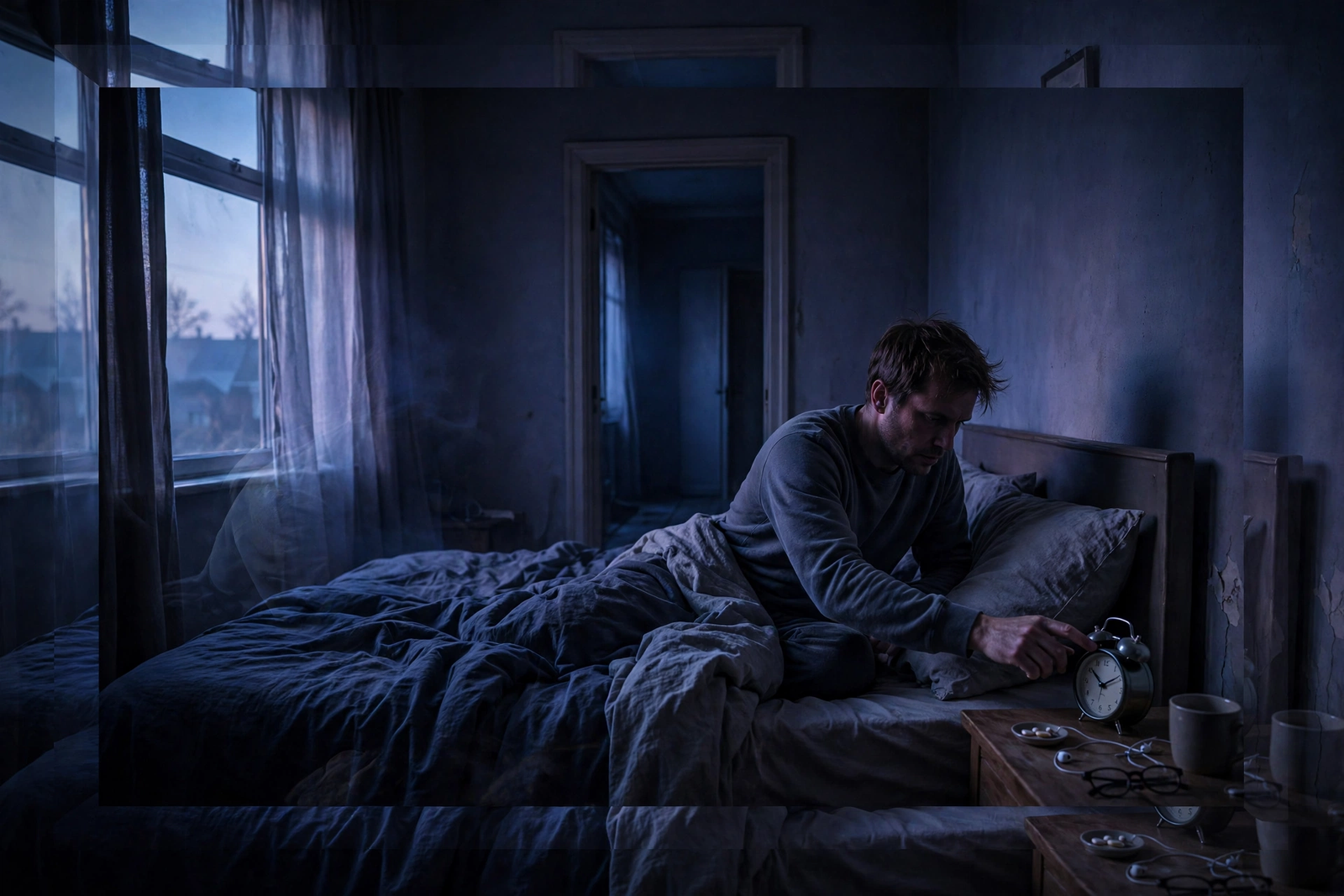
Your brain copies from its most familiar script — your own morning. During REM sleep, brain activity resembles waking activity, so a fuzzy boundary can boot up a simulation of “being awake.” It holds because almost everything is right — until a small glitch (an impossible clock time, a dead switch, scrambling text) breaks the illusion.
Realism and non-realism in false awakenings
The setting is hyper-realistic, yet small details go wrong — objects out of place, text that swims or won’t stay still. That blend of the familiar and the slightly off is the signature of a false awakening.
What are the two types of false awakening?
British researcher Celia Green distinguished the two types in her 1968 book Lucid Dreams — the classification still used today:
| Type | What happens | How it feels |
|---|---|---|
| Type 1 (common) | You dream you wake up and go about a dull, realistic routine | Ordinary; you only realize it was a dream when you truly wake |
| Type 2 (rarer) | You “wake” to a room that feels subtly wrong — tense, charged | Uneasy; a sense of presence or dread, can slide into sleep paralysis |
Type 2 feeds ghost lore: folklore in several cultures describes waking to a room that looks like yours but feels “occupied.” Sleep science points to a half-awake brain.
What causes false awakenings?
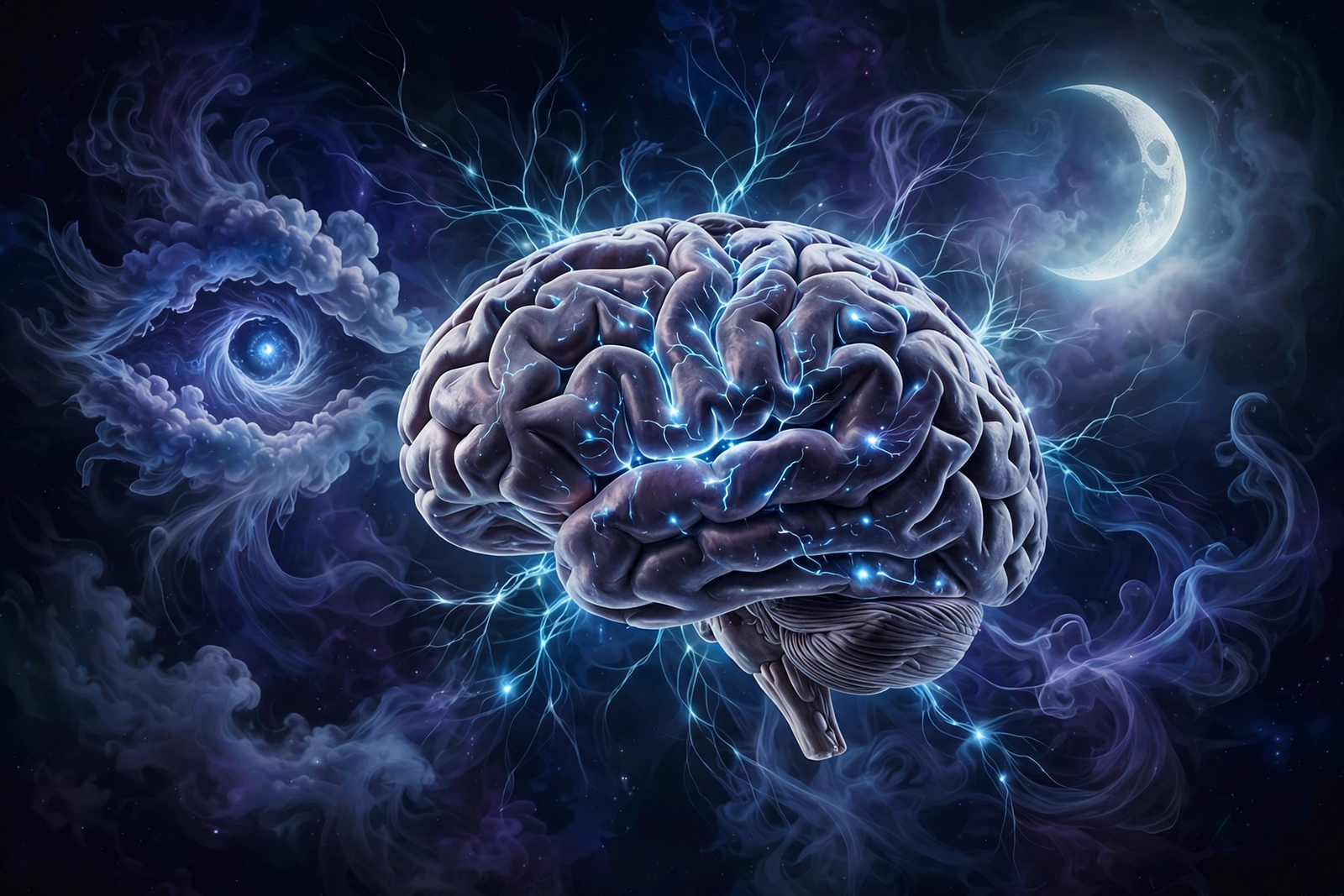
The direct answer: false awakenings come from the brain straddling REM sleep and wakefulness at once. These make that overlap more likely:
- Stress and anticipation. A big day keeps the brain half-alert through the night. False awakenings spike before important mornings.
- Fragmented sleep. Jet lag, shift work, new parenthood, or a few short nights scramble sleep architecture.
- Lucid dreaming practice. People who track their dreams report more false awakenings. If your nights have felt strange, our guide to feeling watched while sleeping covers a related half-awake phenomenon.
False awakening loops. Sometimes several stack in a row — you “wake up,” live a few minutes, then “wake up” again, each layer feeling real. Bertrand Russell reported about a hundred in succession while coming round from an anesthetic (1948). Gogol’s Portrait (1835) features a double false awakening; Inception (2010) made the loop famous. Loops always end when your brain leaves REM sleep; a reality check every time you wake up is the fastest way to break one.
How can you tell you’re having a false awakening?

The direct answer: test something the dreaming brain renders badly — text, clocks, physics. Build these checks into your real mornings so they fire automatically inside a false awakening:
| Reality check | What to do | In a false awakening |
|---|---|---|
| Double clock check | Look at a clock, look away, look back | The time changes or shows something impossible |
| Light switch test | Flip a switch | Lights rarely respond correctly |
| Hand check | Try pushing a finger through your palm | It often passes through or looks distorted |
| Read twice | Read a sentence, look away, read again | The text morphs between readings |
Catch even one glitch and don’t panic — many lucid dreamers treat a false awakening as a free ticket: realize you’re dreaming, and you can take control of the dream.
What have experimental sleep studies found about false awakenings?
Lab research here is rare but revealing. Harvard psychologist Deirdre Barrett analyzed 2,000 dreams from 200 subjects (1991) and found false awakenings and lucid dreaming cluster together — false awakenings often precede lucidity as a cue. A 2021 EEG study (Mainieri et al.) found brain activity close to regular REM sleep — low alpha/beta, high delta/theta, with spontaneous rapid eye movements — confirming these come from a dreaming brain, not a half-conscious one.
The protoconscious world hypothesis
Giorgio Buzzi (2011) proposed that false awakenings replay unaltered waking memories, glimpsing the “protoconscious” mind — the brain’s background model of the world during sleep. Related work by Gibson suggests they follow fixed patterns from daily routine, which is why they so often stage your actual morning.
How is a false awakening related to lucid dreaming and sleep paralysis?
These related concepts get mixed up because they all live on the border of sleep and waking:
| Experience | Are you actually awake? | Can you move? | Do you know it’s a dream? |
|---|---|---|---|
| False awakening | No — still asleep | Yes, inside the dream | No — feels real |
| Sleep paralysis | Yes — awake | No — temporarily frozen | Usually yes |
| Lucid dream | No — still asleep | Yes, inside the dream | Yes — that’s the point |
A false awakening can turn into any of the others: realize you’re dreaming and it becomes a lucid dream; wake up frozen and it’s sleep paralysis. More: why people see a figure during sleep paralysis.
Are false awakenings dangerous? What do spiritual traditions say?
The direct answer: false awakenings are not dangerous. They’re a normal quirk of REM sleep, not a disorder. See a doctor only if they happen several times a week and ruin your sleep.
Spiritually, interpretations vary. Some traditions describe awareness hovering between worlds; others treat repeated episodes as a nudge to examine stress. These are beliefs, not medical facts — but they explain why Type 2 false awakenings entered ghost lore. The practical view: a stressed, overtired brain blurs dreaming and waking. Fix the sleep, and episodes usually fade. See also the Sleep Foundation’s guide.
People also ask
Is a false awakening dangerous?
No. It’s harmless in itself and no one gets permanently stuck in one. Loops feel unsettling but pose no physical risk. If episodes happen several times a week and wreck your sleep, talk to a doctor — the pattern usually points to stress or fragmented sleep.
What causes false awakenings?
They happen during REM sleep, when the brain’s dream simulation overlaps with the process of waking up. Stress, fragmented sleep, irregular schedules, jet lag, and anticipating an early start all make them more likely. They’re also common among lucid dreamers and people who keep dream journals.
How do I stop false awakening loops?
Do a reality check every time you wake up: look at a clock twice, try pushing a finger through your palm, or flick a light switch. In dreams these behave strangely. Staying calm, sleeping consistently, and cutting evening stress also help.
Is a false awakening the same as sleep paralysis?
No. In a false awakening you’re mobile inside a convincing dream of being awake; in sleep paralysis you’re actually awake but temporarily can’t move. A charged Type 2 episode can slide into sleep paralysis. Some people also hear their name called in these half-awake states.
More Sleep stories
- Sleep Paralysis Demon: Why You See a Figure
- Feeling Watched While Sleeping? Symptoms, Causes & Fixes
- Hearing Your Name Called (No One There)? Meaning
This article presents traditional beliefs and folklore for informational purposes only, not as proven fact. If you experience persistent distress, please consult a qualified professional.