
No — the Loch Ness Monster has never been proven real. But the Loch Ness Monster sightings history runs from a 565 AD monk’s tale to a 1933 media craze, a famous 1934 photograph (later admitted as a hoax), sonar expeditions, and a full-loch DNA survey in 2018. Here is the timeline, what each era actually reported, and what science says.
Last updated: 21 October 2026
- 565 AD — earliest written account linked to the loch: St. Columba and the “water beast,” recorded about a century later by Adomnán of Iona.
- 1933 — the Inverness Courier publishes a couple’s roadside sighting; the modern Nessie craze begins.
- 1934 — the “Surgeon’s Photograph” appears; in 1994 it is revealed as a hoax made with a toy submarine.
- 2018 — an environmental DNA survey samples the entire loch and finds no trace of an unknown large creature.
- 23 miles (37 km) long, ~230 m (755 ft) deep — Loch Ness is one of the UK’s largest bodies of freshwater.
- 1,000+ reported sightings logged in enthusiasts’ registers since 1933.
What is the Loch Ness Monster? “Nessie” is the legendary creature said to live in Loch Ness in the Scottish Highlands — usually described as a long-necked, grey-skinned animal with a humped back and flippers, most often compared to a plesiosaur. It is folklore, not a confirmed species.
Was there really a monster sighting in 565 AD?
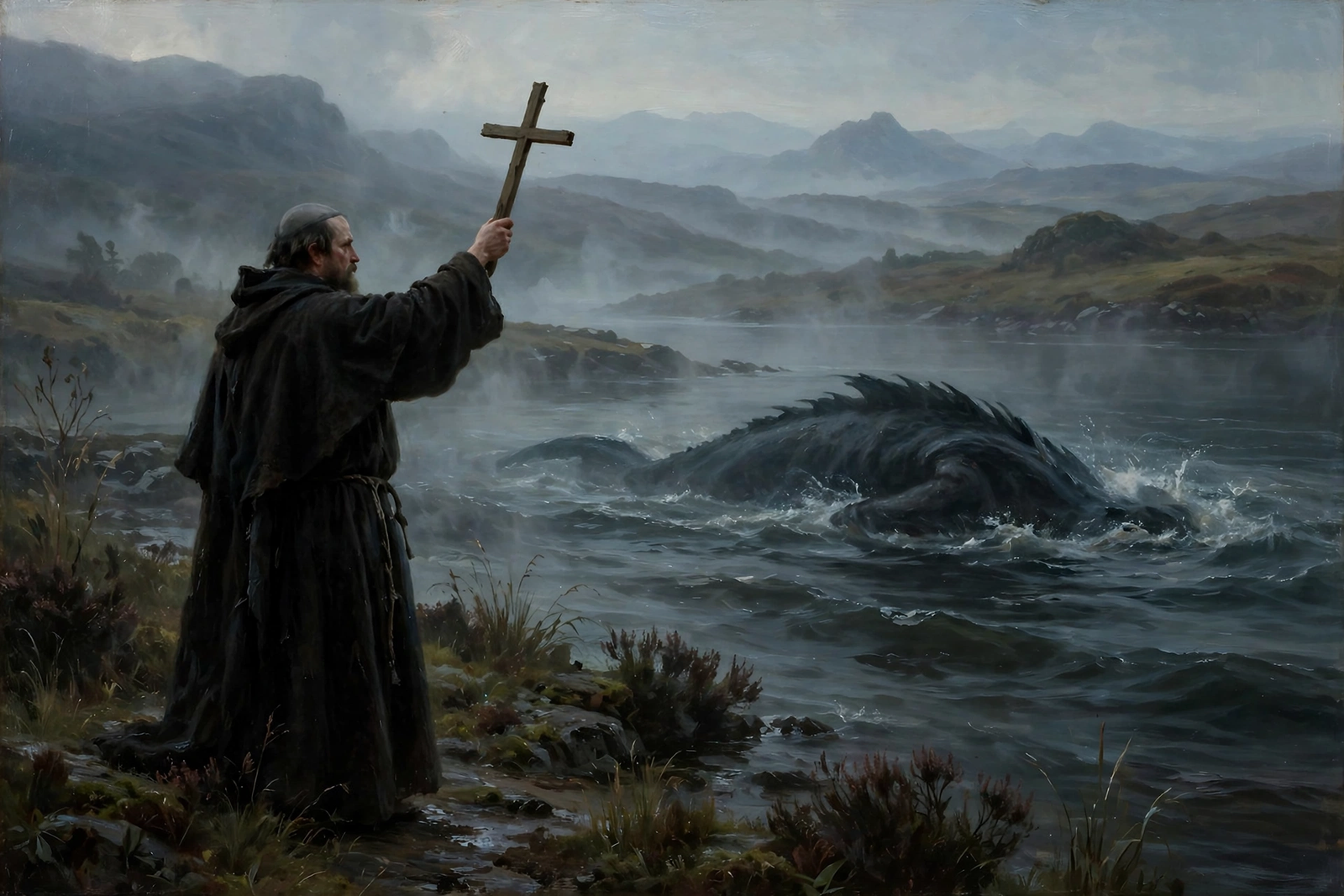
Probably not a sighting in the modern sense — but this is where the written record starts. According to the Life of St. Columba — written by Adomnán of Iona about a century later — the Irish monk met locals near the River Ness burying a man supposedly killed by a “water beast.” When the creature approached a swimmer, Columba made the sign of the cross and commanded it back. It fled.
Historians read it as a religious miracle story, not a sighting report — but it remains the earliest surviving written reference to a mysterious creature in the region.
What sparked the 1933 Nessie craze?
A new road — and a newspaper. In 1933, George Spicer and his wife reported an enormous long-necked animal crossing the road ahead of their car and vanishing into the loch. The Inverness Courier picked it up, London papers sent correspondents north, and within months dozens of sightings poured in — the new shore road had given motorists their first front-row view of the water.
Blurry, disputed photographs that same year kept the story alive — and turned a local legend into an international mystery.
Where did the name “Nessie” come from?
After the Spicers’ 22 July 1933 sighting hit the press on 4 August, the wording settled: the Oxford English Dictionary records 9 June 1933 as the first use of the exact phrase “Loch Ness monster.” Since the 1940s, the diminutive Nessie — from Scottish Gaelic Niseag — has been the standard. Footnote: Daniel Loxton and a Columbia University review argue the Spicers’ account was shaped by King Kong, then packing London cinemas.
Is the 1934 Surgeon’s Photograph real?
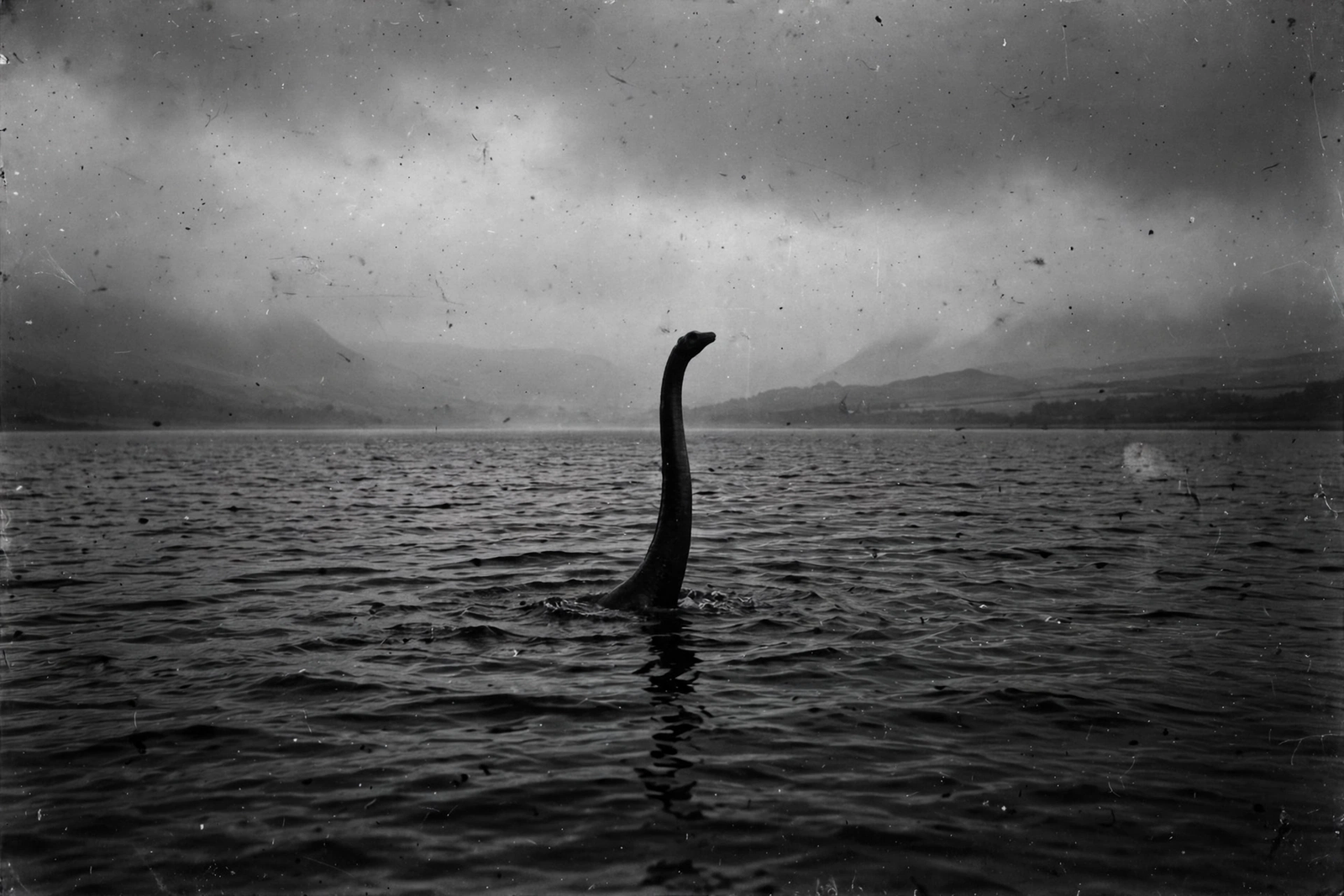
No. The grainy image of a long neck rising from the water was published in 1934 and credited to London gynaecologist Robert Kenneth Wilson — hence the “Surgeon’s Photograph.” For sixty years it was the most convincing piece of Nessie “evidence.”
In 1994, one of the hoaxers confessed: the “monster” was a toy submarine with a sculpted head and neck, staged as revenge against a newspaper. The image had already shaped what the world thinks Nessie looks like.
What did the 2018 DNA study of Loch Ness actually find?
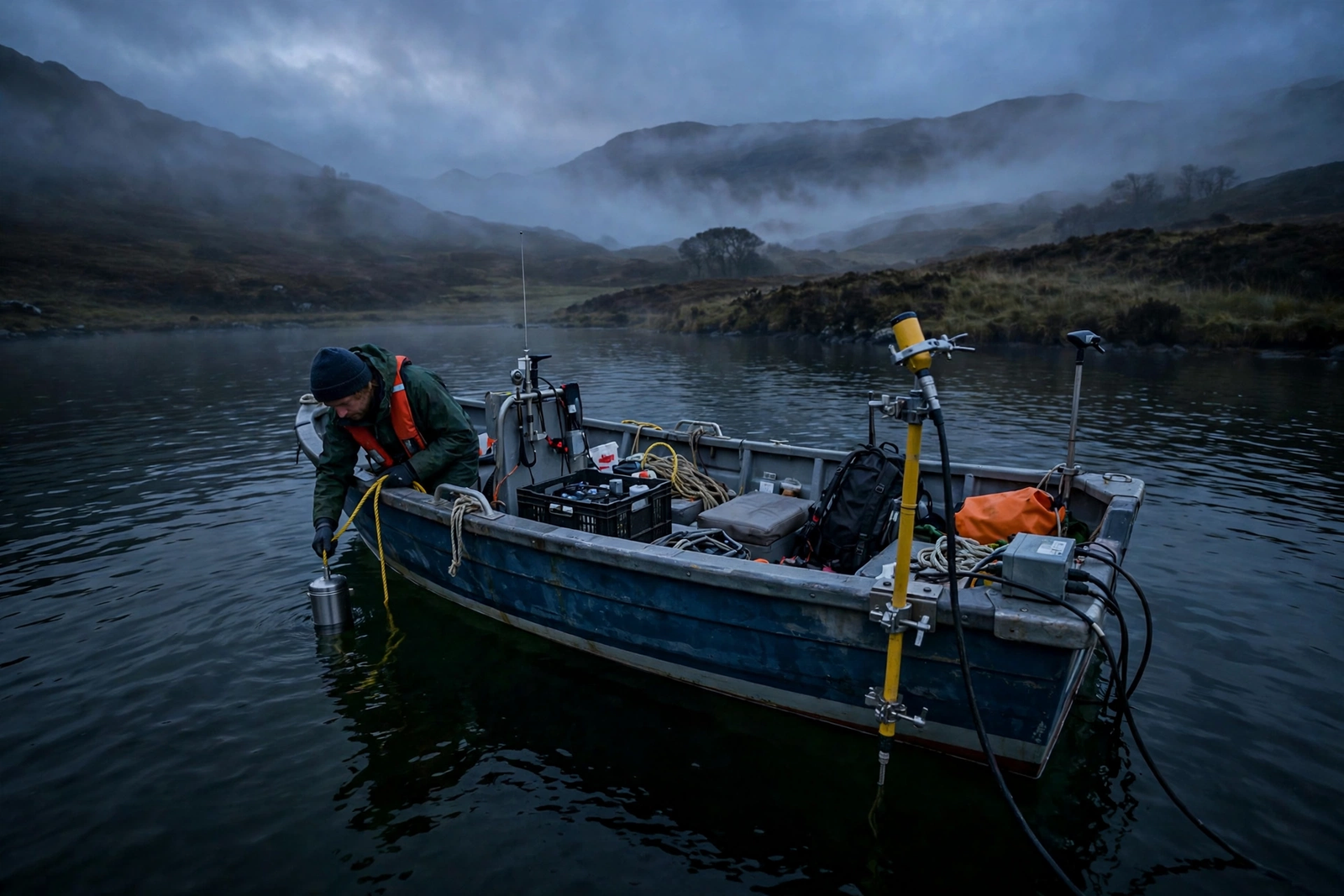
No monster — but a thorough inventory of everything else. In 2018, an international team sampled environmental DNA (eDNA) from water across the loch, picking up genetic traces shed by every living thing in it.
The results: fish, eels, and other ordinary aquatic life — and lots of eel DNA, which led to the wry suggestion that some sightings were simply very large eels. No DNA from any unknown large animal turned up.
Has science ever proven the Loch Ness Monster?
No — and the pattern explains why the legend survives anyway. Every major “proof” has collapsed: the famous photograph was a hoax, sonar contacts were never identified, and the DNA survey found nothing unknown. Most sightings reduce to wakes, logs, and ordinary animals (see above).
That is the honest version of the Loch Ness Monster sightings history: a genuine folk tradition layered over misidentifications, a few deliberate hoaxes, and the simple fact that a 23-mile, 230-metre-deep loch of near-black water is the perfect stage for the imagination. Compare it with other water cryptids like the Mokele-Mbembe of the Congo — same ingredients, different continent.
What explanations do scientists give for the sightings?
No single explanation — but the mundane ones cover most sightings. Giant eels: the 2018–2019 DNA work confirmed European eels in the loch, and many scientists blame oversized eels. Elephants: a 1979 study read the surgeon’s photo as a swimming trunk, and Neil Clark (2006) blamed circus elephants. Greenland sharks (Jeremy Wade, River Monsters, 2013) and Wels catfish (Steve Feltham, after a Guinness-recognized vigil) were blamed too. Plus the water itself: a seiche standing wave on a 31.5-minute cycle, mirages (W. H. Lehn, 1979), and boat wakes — plus the kelpie, the Highland water-horse behind the template. A plesiosaur? A 2006 review showed its neck couldn’t lift its head swan-like above water, and the loch is only ~10,000 years old.
Loch Ness Monster sightings history: legend vs documented record
| Era | What the legend says | What the records show |
|---|---|---|
| 565 AD | St. Columba banished the monster | A miracle story written ~100 years later; historians don’t read it as a sighting report |
| 1933 | A dinosaur-like beast crossed the new shore road | The Spicers’ newspaper account; a media boom followed, not a scientific one |
| 1934 | A photograph proved the creature | The Surgeon’s Photograph; confessed as a toy-submarine hoax in 1994 |
| 1970s–80s | Sonar found something big down there | Large unexplained sonar contacts, never identified or repeated |
| 2018 | Science finally checked the whole loch | eDNA survey: fish and eels, no unknown large animal |
What other Nessie photos and films made headlines?
Early precursors
Reports of something strange in the loch predate the 1933 craze — though skeptics consider them dubious. In October 1871 (or 1872), D. Mackenzie of Balnain reported an object like a log or upturned boat “wriggling and churning up the water,” though his account wasn’t published until 1934. In 1888, mason Alexander Macdonald of Abriachan sighted “a large stubby-legged animal” surfacing near the shore, which he said looked like a salamander.
Aldie Mackay’s 1933 sighting
The story actually started that spring: on 2 May 1933, the Inverness Courier ran Alex Campbell’s report of Aldie Mackay’s 15 April sighting — a huge “whale-like” creature rolling in the loch — and it was this article that first used the word “monster.”
George Spicer’s 1933 sighting
The sighting that ignited the whole craze came on 22 July 1933, when George Spicer and his wife watched a long-necked animal cross the road ahead of their car — a body about 4 feet high and 25 feet long, with a neck “slightly thicker than an elephant’s trunk.” Their account was published in the Inverness Courier on 4 August 1933, and the surge of sightings that followed fixed the name “Loch Ness Monster” for good.
Hugh Gray’s 1933 photograph
Six months later, on 12 November 1933, Hugh Gray snapped the first alleged photograph near Foyers. It looks like a blurred hump — and the likeliest explanation is far more mundane: researchers who later studied copies of the original negative concluded it was an otter rolling at the surface, possibly even Gray’s own Labrador fetching a stick from the water.
Arthur Grant’s 1934 encounter
In January 1934, motorcyclist Arthur Grant claimed he nearly rode into the creature near Abriachan on a moonlit night, describing a cross between a seal and a plesiosaur. Zoologist Maurice Burton examined Grant’s sketch and found it consistent with an otter.
The Taylor film (1938)
On 29 May 1938, South African tourist G. E. Taylor filmed something in the loch for three minutes on 16mm colour film. Popular science writer Maurice Burton obtained the film but never showed it to other researchers; his published analysis concluded it showed a floating object, not an animal.
William Fraser’s 1938 sighting
On 15 August 1938, William Fraser, the chief constable of Inverness-shire, wrote that the monster existed beyond doubt — and expressed concern about a hunting party that had arrived with a custom-made harpoon gun, determined to catch the creature “dead or alive.” His letter, released by the National Archives of Scotland in 2010, shows how seriously even local officials took the hunt.
The 1954 sonar readings
In December 1954, the fishing boat Rival III picked up sonar readings of a large object keeping pace with the vessel at a depth of 146 metres, tracked for 800 metres before contact was lost and regained. Previous sonar attempts had been inconclusive or negative — but no one could identify what the Rival III‘s equipment had tracked.
Peter MacNab’s 1955 photograph
Peter MacNab photographed two long black humps in the water at Urquhart Castle on 29 July 1955. The image wasn’t published until it appeared in Constance Whyte’s 1957 book, and skeptics have argued it was a wave effect — or even doctored, since a tree visible in the book version is missing from the original negative.
The Dinsdale film (1960)
Then, in April 1960, aeronautical engineer Tim Dinsdale filmed a dark hump leaving a wake; a 1966 RAF intelligence analysis judged it “probably animate” — but later frame-by-frame reviews found what looked like a boat’s helmsman. None of the three ever became proof.
Which big sonar hunts actually happened at Loch Ness?
In 1972, a team led by Robert H. Rines used sonar and a strobe-lit underwater camera and captured two photos of what looked like a diamond-shaped “flipper.” On the strength of those images, naturalist Sir Peter Scott announced the creature’s scientific name in 1975: Nessiteras rhombopteryx, Greek for “Ness inhabitant with diamond-shaped fin.” Critics quickly noticed the name is an anagram of “monster hoax by Sir Peter S.” — and team members later admitted the flipper images had been retouched.
In 1987, Operation Deepscan swept the loch with 24 sonar-equipped boats sailing in formation; a few unidentified contacts turned out to be debris — and possibly seals. In 2003, a BBC-sponsored search used 600 sonar beams, enough to spot a small buoy, and found no large animal; the scientists concluded the monster was a myth. In 2016, an underwater robot survey found something else entirely: a sunken Nessie prop built for Billy Wilder’s 1970 film The Private Life of Sherlock Holmes.
Famous Nessie “evidence” — and what it turned out to be
| Claimed evidence | What was reported | What investigators concluded |
|---|---|---|
| Hugh Gray photo (Nov 1933) | First alleged Nessie photograph | Likely an otter at the surface — or Gray’s Labrador fetching a stick |
| Tracks of “a very powerful soft-footed animal about 20 feet long” | Made with a hippopotamus-leg umbrella stand, per the Natural History Museum | |
| Surgeon’s Photograph (1934) | Long neck rising from the loch | A toy submarine with a wooden-putty neck — a confessed hoax (1994) |
| Arthur Grant sketch (Jan 1934) | Seal-and-plesiosaur cross on a moonlit road | Zoologist Maurice Burton: consistent with an otter |
| Dinsdale film (1960) | Dark hump leaving a wake across the loch | Later frame analysis points to a boat filmed in poor light |
| Rines flipper photos (1972) | Diamond-shaped underwater “flipper” | Retouched images; skeptics say bubbles, rock, or a fish fin |
| George Edwards photo (2011) | A “manatee-like” hump on the surface | Edwards admitted in 2013 that it was a hoax |
Which Loch Ness monster stories were outright hoaxes?
In August 1933, journalist Francesco Gasparini filed the first Nessie news article, then invented the eyewitness quotes — admitted in 1959. In 1972, Flamingo Park Zoo showed off a 5-metre carcass with “a bear’s head and clawlike fins”; police seized it, and the park’s education officer confessed he’d shaved a dead bull elephant seal and dumped it in the loch. A 2003 “fossil” was planted, and a 2004 Five TV crew floated an animatronic plesiosaur, “Lucy” — 600 sightings followed.
Can you visit Loch Ness today?
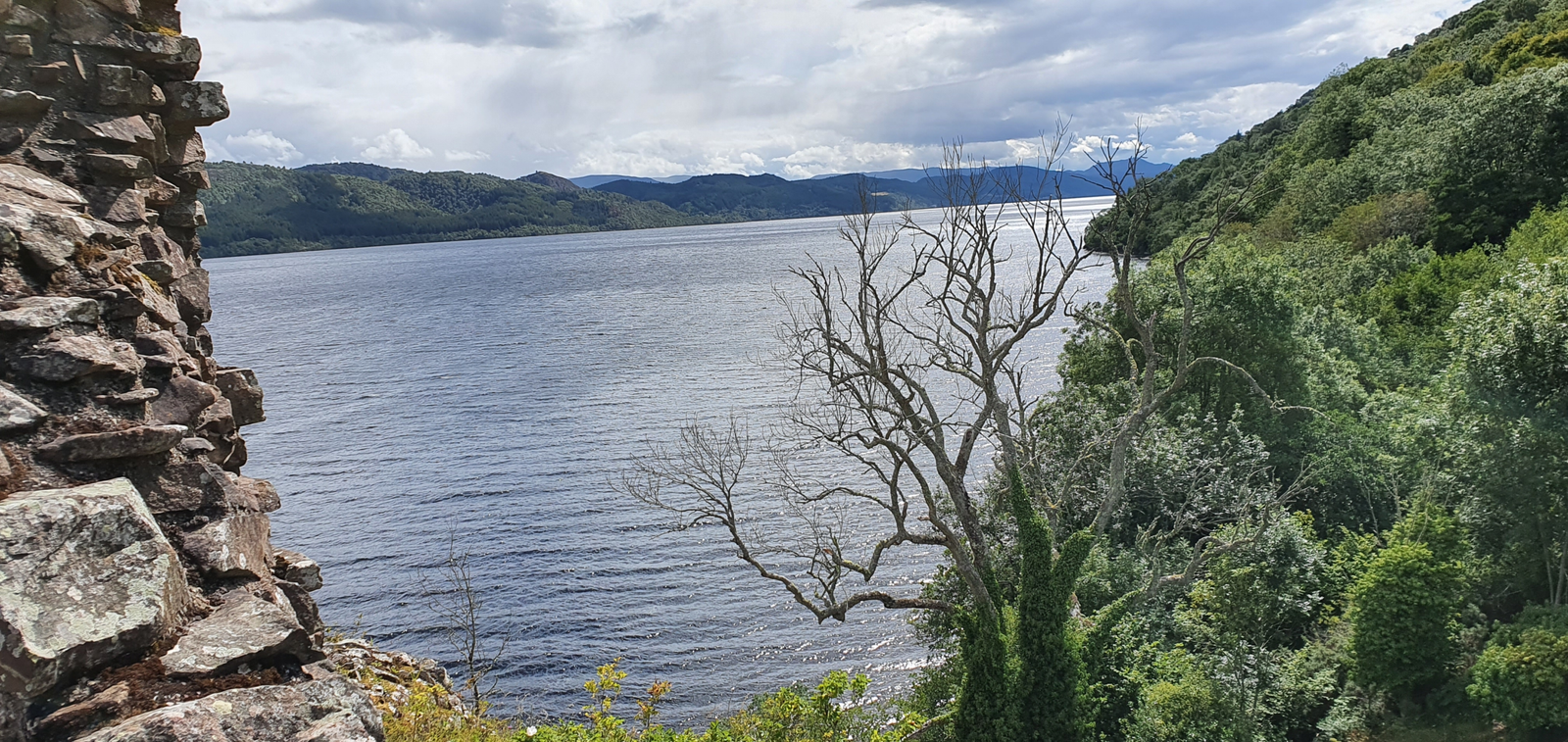
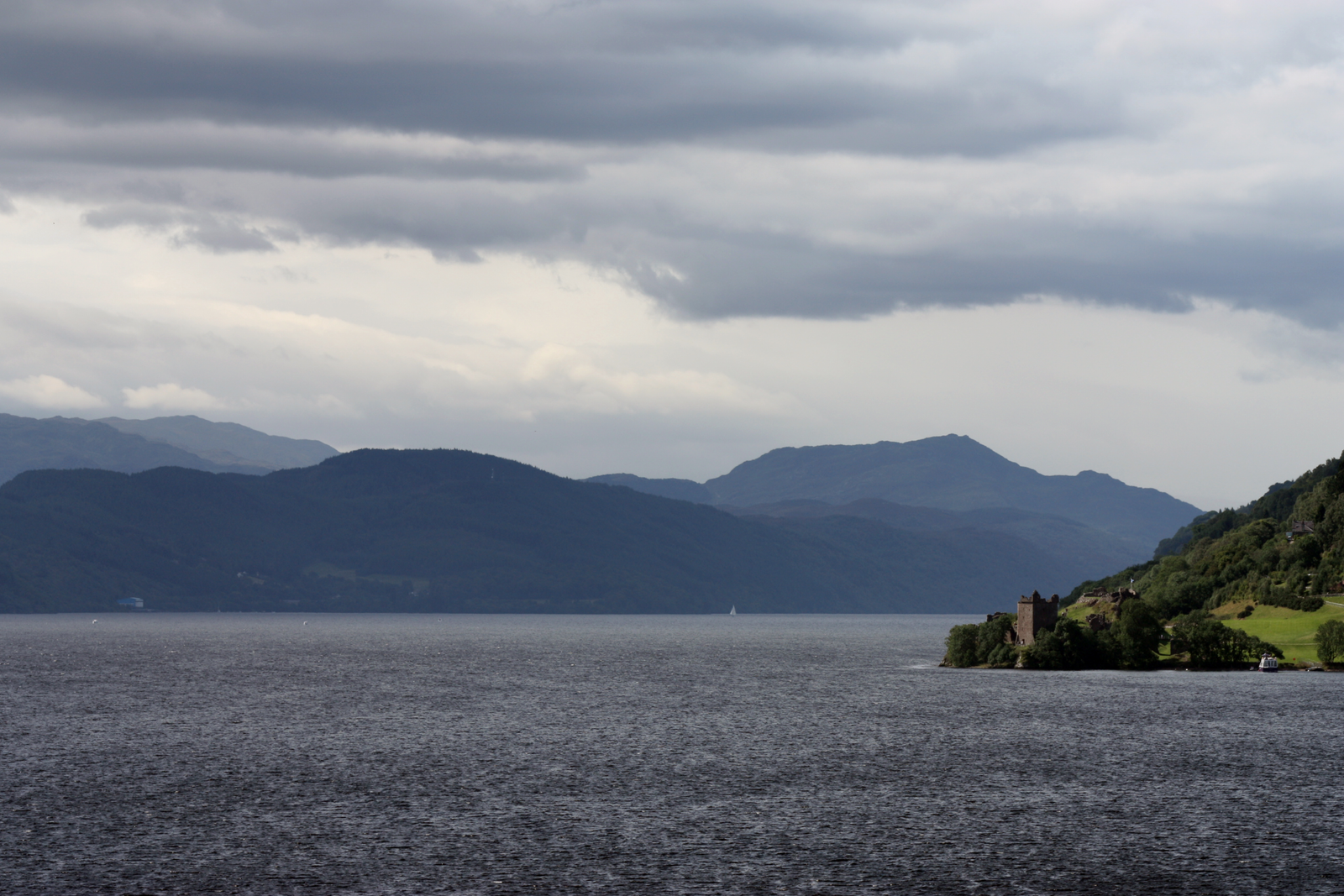
Yes — and millions do. The loch sits near Inverness in the Scottish Highlands; Urquhart Castle’s ruins are the classic viewpoint. Loch Ness is the largest body of fresh water by volume in the UK, and Nessie tourism is serious business — Britannica notes the legend was once estimated to bring nearly $80 million a year into Scotland’s economy. The official tourism board VisitScotland lists Loch Ness as a top Highland attraction, with boat cruises running sonar “monster hunts,” and the Loch Ness Centre in Drumnadrochit tells the full sightings history.
Go for the scenery and the story, not a guaranteed sighting. And if monsters are your thing, the Skinwalker legend of the American Southwest makes a good companion read.
People Also Ask
Why do people still believe in the Loch Ness Monster?
Three things keep it alive: the loch itself is enormous, deep, and nearly opaque, so “something could be down there” always sounds plausible; tourism gives the story an economic engine; and the 1934 photograph burned a dinosaur-shaped image into popular culture that facts struggle to erase.
What did the 2018 Loch Ness DNA study find?
Researchers sampled environmental DNA across the entire loch and found genetic traces of fish, eels, and other ordinary aquatic life — but no DNA from any unknown large reptile or mammal. High eel DNA led to the theory that some sightings were simply very large eels.
Was the Surgeon’s Photograph faked?
Yes. In 1994, one of the participants confessed that the 1934 image was staged using a toy submarine with a sculpted head and neck, as revenge against a newspaper that had ridiculed a Nessie hunter. It remains the most famous hoax in the legend’s history.
How deep is Loch Ness?
About 230 metres (755 feet) at its deepest, and roughly 23 miles (37 km) long. It holds more fresh water than all the lakes of England and Wales combined, which is part of why the “hidden monster” idea feels plausible.
Frequently Asked Questions
Has the Loch Ness Monster been proven real?
No. No photograph, sonar contact, or DNA sample has ever confirmed an unknown large animal in the loch.
What is the most famous Loch Ness Monster photo?
The 1934 “Surgeon’s Photograph” — revealed in 1994 to be a hoax built from a toy submarine.
When was the first Loch Ness Monster sighting?
The earliest written account is from 565 AD in the Life of St. Columba, though historians read it as a miracle story rather than a sighting report.
Where is Loch Ness?
In the Scottish Highlands near Inverness — about 23 miles long and 230 metres deep.
This article presents traditional beliefs and folklore for informational purposes only, not as proven fact. If you experience persistent distress, please consult a qualified professional.