
Aboriginal stories tell of something waiting under the black water of Australia’s reedy swamps. The bunyip — bunyip Australia‘s most famous mystery creature — has haunted billabongs for centuries. Is it real? No physical evidence has ever been found. But the legend is real, the colonial sightings were widely reported, and the theories about what people actually saw are fascinating.
Last updated: 21 October 2026
- First printed English account: Sydney Gazette, 1812 — “bahnyip”, “a large black animal like a seal”.
- “Bunyip” first used in print: Geelong Advertiser, July 1845.
- 1847: a “bunyip skull” from the Murrumbidgee near Balranald — a deformed foal or calf skull, yet displayed at the Australian Museum for two days.
- At least 9 regional variations identified across Aboriginal Australia (Robert Holden, 2001).
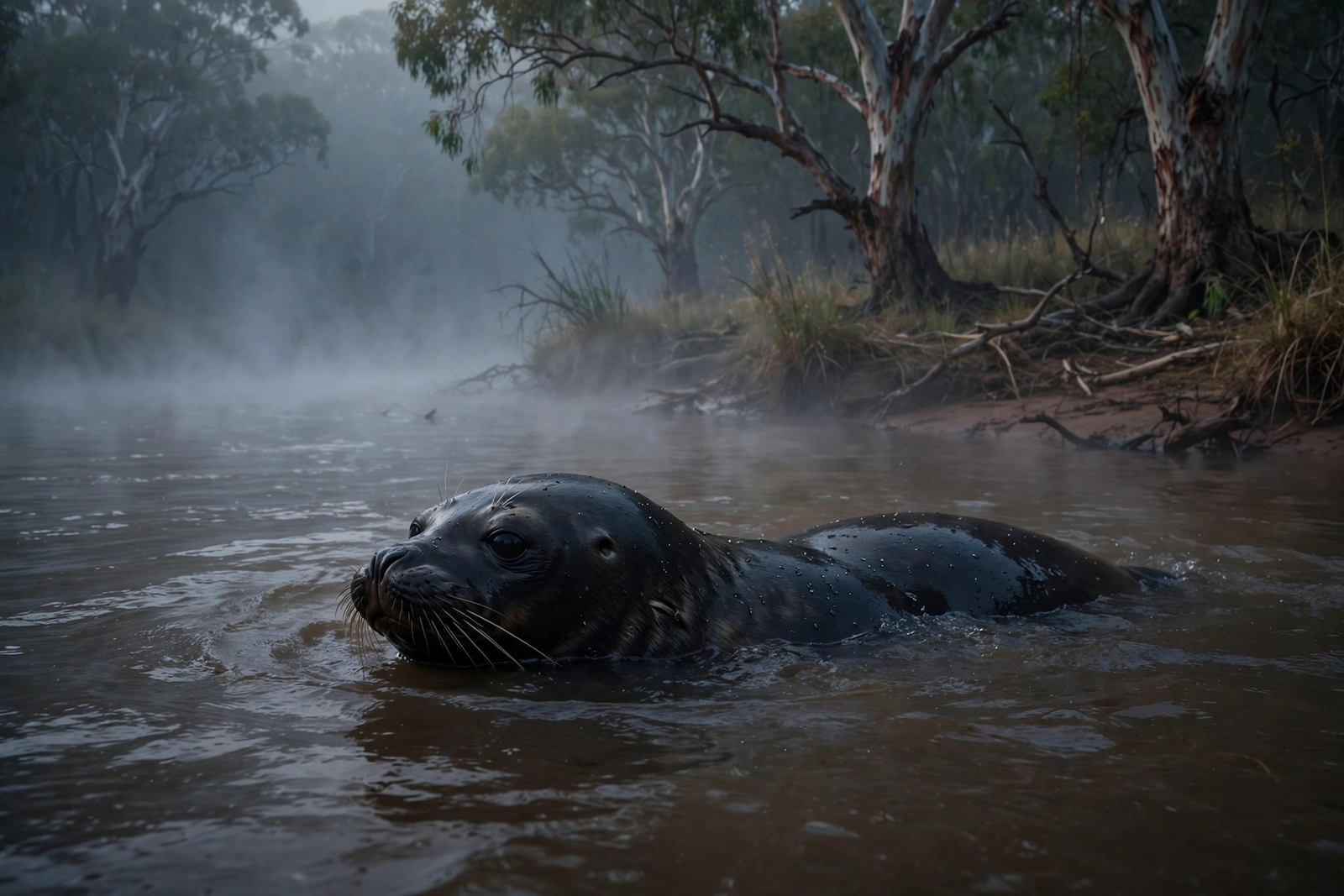
- 60% of colonial sightings describe a seal-like animal; 20% a long-necked one.
- Challicum bunyip outline, carved near Ararat, Victoria, recorded 1851 — about 11 paces long.
What is the bunyip? At the heart of bunyip Australia folklore is a legendary water creature from Aboriginal mythology, said to inhabit swamps, billabongs, creeks, and waterholes. Britannica describes an amphibious monster with a booming cry, blamed for devouring prey — especially women and children near the water.

What are the characteristics of the bunyip of Australia?
Nobody agrees. Accounts describe everything from a starfish-like blob to a dog-faced beast with flippers, tusks, and a duck-like bill; from a bulldog head to a long maned neck and horse-like tail. The one constant: it lives in the water, and you don’t want to meet it. Like the skinwalker of Navajo legend, its shifting shape made it scarier. Every account describes a different being — which kept the legend alive.

Where does the word “bunyip” come from?
The bunyip before European settlement
Before any English account, the bunyip lived in Dreaming stories told around southeastern Australia — a teaching story as much as a monster, passing down water law.
The word is traced to the Wemba-Wemba or Wergaia language of Victoria, usually translated as “devil” or “evil spirit”. It goes by other names too: kianpraty on the Murrumbidgee, wowee in the Hunter Valley, wee waa near Narrandera, and the Mulyawonk of the Ngarrindjeri — whose version punished taking more fish than a fair share.
| Regional name | Where it was used |
|---|---|
| Bunyip | Wemba-Wemba / Wergaia country, Victoria |
| Kianpraty | Along the Murrumbidgee River |
| Wowee | Hunter Valley, New South Wales |
| Wee waa | Narrandera region, New South Wales |
| Mulyawonk | Ngarrindjeri country, South Australia |
What are the most famous bunyip sightings?
Notable events in bunyip history
The legend’s paper trail:
Early accounts of European settlers
Europeans took the bunyip literally — one more strange animal to catalogue. The 1840s–50s brought a wave of early reports from Victoria, New South Wales, and South Australia:
- 1845 — the Geelong Advertiser. Fossil bones near Geelong were shown to an Aboriginal man who reportedly identified them as bunyip remains, an account that links the legend to real fossils,, then drew it: an emu-like head, serrated bill, alligator body, 12–13 feet tall.
- 1847 — the Australian Museum’s bunyip skull. A strange skull from the Murrumbidgee near Balranald drew crowds. Experts, including anatomist Sir Richard Owen, called it a deformed foal or calf skull — but the museum displayed it as the “bunyip” for two days anyway.
- 1852 — William Buckley’s account. The escaped convict who lived 30 years with the Wathaurong people wrote of an amphibious animal in Lake Modewarre, calf-sized, its back covered in dusky grey feathers.
- 1857 — Stocqueler’s drawings. Artist Edwin Stocqueler sketched glossy black, hair-covered creatures with long swan-like necks on the Murray and Goulburn rivers; locals reportedly called them “Bunyip’s brother.”
First written use of the word ‘bunyip’ (1845)
The Australian Museum’s bunyip of 1847
William Buckley’s account of bunyips (1852)
The debate over the bunyip’s origins: what scientists think
Four explanations dominate the debate — and the truth may mix them:
- Lost seals. In 1933, Charles Fenner argued seals swim far up the Murray and Darling rivers — smooth fur, prominent eyes, bellowing cries. This matches the 60% “seal-like” reports.
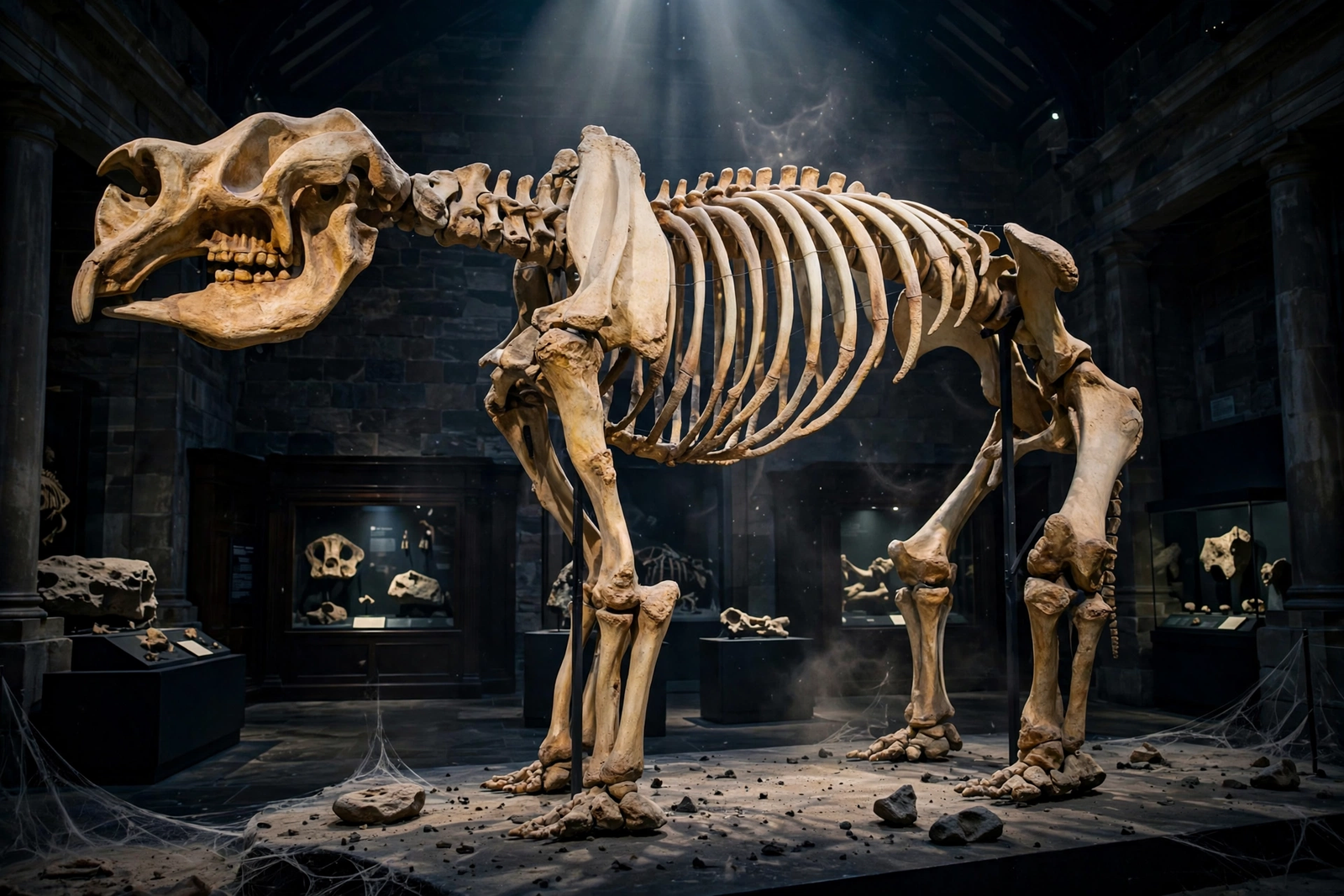
- Fossil memories. In 1871, Dr George Bennett of the Australian Museum suggested the legend grew from bones of extinct giant marsupials like Diprotodon — three-metre, wombat-like giants of the same waterways.
- The “bunyip bird”. The Australasian bittern booms in breeding season — the “bunyip bird”. Many “roarings” were likely this bird, never seen.
- The cassowary. In 2017, Karl Brandt noted the 1845 description — huge pale eggs, deadly claws, emu-like head — reads like a southern cassowary.
| Account | What the bunyip looked like |
|---|---|
| 1845 Geelong Advertiser | Emu-like head, serrated bill, alligator body, 12–13 ft tall |
| Most colonial reports (~60%) | Seal-like: dark fur, bulldog head, whiskers, 4–6 ft long |
| Long-necked reports (~20%) | Horse-like head, maned 3-ft neck, flippers, 5–15 ft long |
| Buckley, 1852 | Calf-sized back, dusky grey feathers; head never seen |
Is the bunyip Australia legend real?
No living bunyip has ever been found — every “specimen” turned out ordinary. For Aboriginal communities, the bunyip kept children from dangerous water, punished greed, and embodied respect for country. For colonial Australia, the 1840s–50s craze shows what happens when newcomers meet a land they don’t understand.
Bunyip vs other famous water cryptids
The bunyip has plenty of company. Here’s how the world’s best-known lake monsters compare:
| Creature | Home waters | First famous reports | Skeptics say |
|---|---|---|---|
| Bunyip | Swamps and billabongs, SE Australia | 1812; sighting wave 1840s–50s | Seals, fossils, bittern calls |
| Loch Ness Monster | Loch Ness, Scotland | 1933 (modern sightings) | Boat wakes, eels, hoaxes |
| Champ | Lake Champlain, USA/Canada | 1800s; 1977 photograph | Large sturgeon, floating logs |
| Ogopogo | Okanagan Lake, Canada | 1870s settler reports | Waves, otters, misidentification |
Where does the bunyip legend live on today?
The bunyip in the modern period
Bunyip State Park in Victoria is named for the legend. Novelist Rosa Praed wrote the gothic short story “The Bunyip” in 1891. An 1890 illustration by J. Macfarlane and a 1935 drawing by Gerald Markham Lewis show how wildly it varied. Long after the last colonial “sighting,” the bunyip Australia legend survives as the country’s original monster — its first viral legend. For more, see what really happened at Skinwalker Ranch or the secrets inside Area 51. The town of Murray Bridge in South Australia even runs an official bunyip tourism page for visitors.
People Also Ask
What does bunyip mean in Aboriginal language?
It comes from the Wemba-Wemba or Wergaia language of Victoria — usually translated “devil” or “evil spirit”.
Has anyone ever caught a bunyip?
No. The closest was the 1847 “bunyip skull” — a deformed foal or calf skull shown at the Australian Museum for two days.
What is the difference between a bunyip and a Yowie?
The bunyip haunts swamps and billabongs; the Yowie is Australia’s land-based ape-like cryptid — the Australian Bigfoot.
Are bunyips dangerous?
In legend, yes — stories describe it devouring people near the water. In practice, the tales kept children from deep waterholes.
Frequently Asked Questions
Is the bunyip of Australia real?
No physical evidence exists. It’s an Aboriginal legend; researchers blame seals, misidentified animals, or fossil tales.
What does bunyip mean?
From the Wemba-Wemba or Wergaia language of Victoria — usually translated “devil” or “evil spirit”.
Has anyone ever caught a bunyip?
No. The closest was an 1847 “bunyip skull” from the Murrumbidgee — identified as a deformed foal or calf skull.
What is the difference between a bunyip and a Yowie?
The bunyip is a water creature of swamps and billabongs, while the Yowie is Australia’s land-based ape-like cryptid — their Bigfoot equivalent.
This article presents traditional beliefs and folklore for informational purposes only, not as proven fact. If you experience persistent distress, please consult a qualified professional.