Last updated: October 20, 2026
You wake up but you can’t move. You can’t scream. And there — at the foot of the bed, or sitting on your chest — is a dark figure watching you. Millions of people describe this exact sleep paralysis demon. So why do you see a figure during sleep paralysis? The short answer from neuroscience: your brain is still dreaming while your body is still paralyzed, and your fear system fills the gap with a hallucinated intruder. It feels completely real — but it is not an entity, and understanding the mechanism is the fastest way to make the terror smaller.
- 8–50% of people experience at least one sleep paralysis episode in their lives
- ~75% of episodes involve fear, and the sensed presence or shadow figure is the most reported hallucination type
- Seconds to a couple of minutes — how long a typical episode lasts before movement returns on its own
- 3 categories of hallucination: intruder (the figure), incubus (chest pressure), vestibular-motor (floating sensations)
- REM atonia — the normal, protective muscle paralysis of dream sleep that lingers too long
What is the sleep paralysis demon? It is the common name for the shadowy figure — sometimes called the intruder, the old hag, or the hat man — that people see or sense during sleep paralysis. It is a hallucination produced by the brain’s threat-detection system misfiring during the transition between dreaming and waking, not a supernatural visitor.
What exactly happens during sleep paralysis?

During REM (rapid eye movement) sleep, your brain is highly active and you dream vividly — while your body is temporarily paralyzed (REM atonia) so you don’t act out your dreams. This paralysis is normal and protective.
Sleep paralysis strikes when your brain wakes up before the paralysis switches off. You are conscious, your eyes are open, you can see your bedroom — but you can’t move or speak. The state usually lasts a few seconds to a couple of minutes, and movement always returns on its own. Understanding this much already helps: our Hindi readers describe the same experience as नींद में दबाया जाना, with identical symptoms across cultures.
Why do you see a figure? The brain is still dreaming
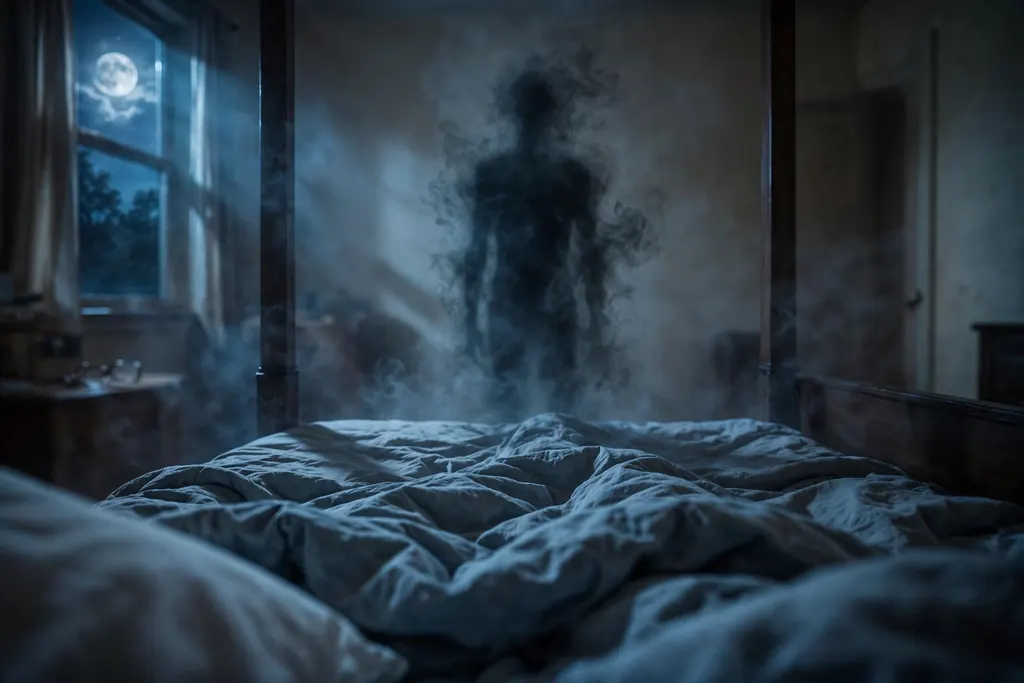
The single biggest reason: part of your brain is still in dream mode while you feel awake. The visual areas that create dream images are active, the emotional fear center (amygdala) is firing hard, and the rational prefrontal cortex isn’t fully online yet.
Your brain is confronted with a terrifying puzzle — I’m awake but I can’t move, and I feel afraid — and it does what brains do: it invents an explanation. Researchers describe it as a threat-detection system on high alert. Since humans are wired to detect other humans quickly, the brain generates a person-shaped threat: a tall silhouette, a cloaked figure, sometimes one wearing a hat, with indistinct features. Physician-reviewed explainers describe exactly this mechanism — dream imagery overlaying a real bedroom.
Why does the figure look the same across cultures?
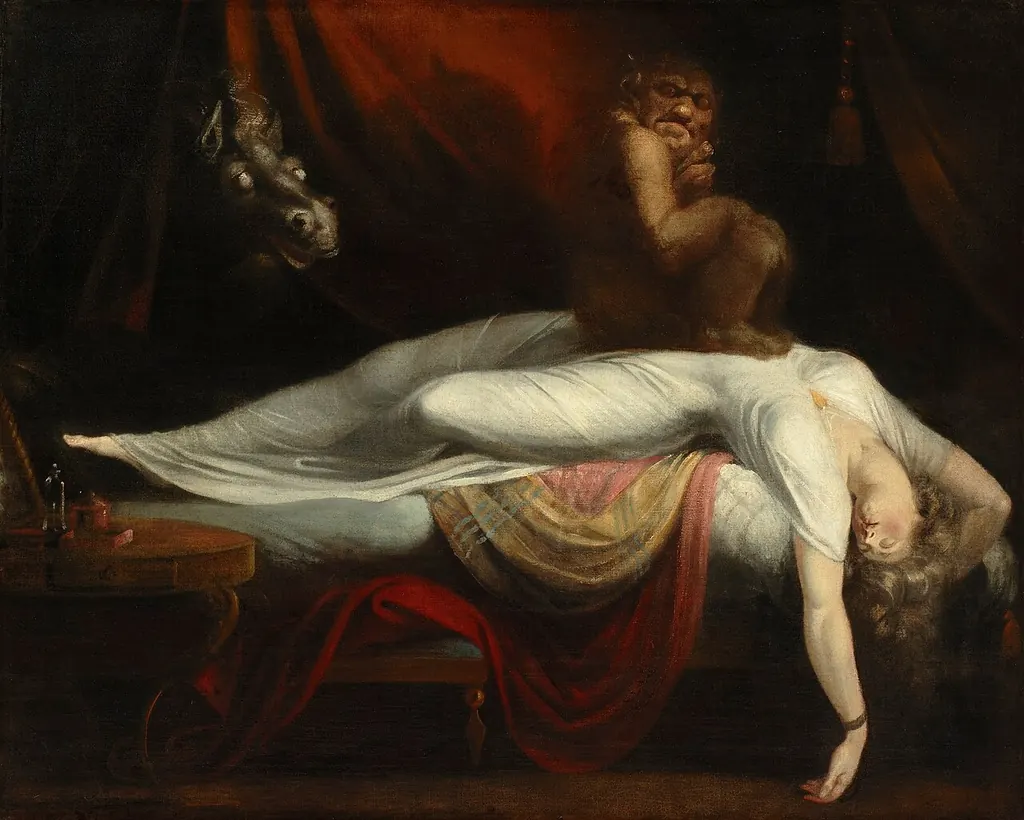
This is the detail that convinces people it’s supernatural — and it has a natural explanation. The figure is always dark, vaguely humanoid, and menacing because it comes from the same malfunctioning circuitry every time: threat-detection circuits firing without enough sensory detail to build anything more complex.
Culture then dresses the figure up:
| Culture / era | Name for the figure | What neuroscience says it is |
|---|---|---|
| Medieval Europe | Old hag, incubus | Intruder + incubus (chest pressure) hallucinations |
| Japan | Kanashibari | Same REM-intrusion mechanism |
| Turkey | Karabasan | Same REM-intrusion mechanism |
| Modern internet | Hat man, shadow people | Intruder hallucination + cultural imagery |
| Some Muslim traditions | Jinn pressing on the sleeper | Same REM-intrusion mechanism |
One striking theory: the figure may literally be a distorted projection of yourself. The right superior parietal cortex — the region that maps where your body ends and space begins — gets disoriented during the REM-to-wake transition and can project a vague “body image” outward into the room. The demon isn’t visiting you. It might be you.
Is the sleep paralysis demon dangerous?

No — not physically. There is no documented case of sleep paralysis itself harming anyone. The figure cannot touch you. The crushing chest sensation comes from noticing the shallow, automatic breathing pattern of REM sleep — not from anything sitting on you — and breathing continues on its own throughout.
The real cost is fear, and fear is treatable. People who understand the mechanism report shorter, less terrifying episodes. Panicking lengthens an episode; calm genuinely shortens it.
How do you stop seeing the figure? Break the episode

In the moment: stop trying to move large muscles. Focus on slow breathing and pour all effort into one tiny movement — a finger, a toe, your tongue. Small movements break the paralysis first. Mentally repeat that the figure is a hallucination; naming it as unreal weakens its grip.
Preventing episodes: recurring sleep paralysis almost always tracks a trigger — sleep deprivation, irregular schedules, sleeping on your back, evening alcohol, or high stress. Keep a short log of when episodes strike; the pattern usually shows itself within weeks. Fix the trigger and the nights calm down. Regular sleep hours, back-sleeping avoidance, and stress management are the highest-yield changes.
What triggers episodes — and what fixes them
| Common trigger | What to change |
|---|---|
| Sleep deprivation | Keep a consistent 7–9 hour sleep schedule |
| Sleeping on your back | Train yourself to sleep on your side |
| Irregular sleep times | Same bedtime and wake time daily, weekends included |
| Evening alcohol | Avoid alcohol in the hours before bed |
| High stress / anxiety | Wind-down routine; consider CBT if episodes persist |
When should you see a doctor?
Occasional episodes are common and harmless. See a doctor or sleep specialist if: episodes happen several times a week, you feel excessively sleepy during the day (possible narcolepsy), the fear is damaging your sleep or mental health, or episodes come with loud snoring and gasping (possible sleep apnea). There is no specific medical treatment for the hallucinations themselves — treatment targets the underlying sleep disorder, if one is found. Cognitive behavioral therapy has strong evidence for reducing both frequency and distress. Treat the visitor as information rather than an omen — and it visits less and less.
People also ask
Why do I see a demon during sleep paralysis?
Your dream machinery is still running while your eyes are open, and your brain’s threat system interprets the paralysis as danger. The result is a hallucinated presence shaped by your culture and expectations — the same reason Japanese sleepers meet kanashibari and others meet the old hag.
Can sleep paralysis demons hurt you?
No. The figure is a hallucination with no physical form. The chest pressure is your awareness of REM’s shallow breathing, not an attack. Episodes end on their own every time.
What is the hat man?
A widely reported shadow figure in a wide-brimmed hat seen during sleep paralysis. Researchers view it as the standard intruder hallucination with cultural imagery layered on top — which is why reports cluster after the figure appears in media.
How do I wake up from sleep paralysis faster?
Focus on slow breathing plus one tiny movement — a finger, toe, or tongue. Small movements break the paralysis first. Staying calm genuinely shortens episodes, while panic lengthens them.
Frequently asked questions
Q: Is sleep paralysis caused by evil spirits or jinn?
A: Many traditions describe it that way, and the experience feels supernatural. But the same episode occurs across unrelated cultures with identical features, which points to a shared brain mechanism — REM sleep intruding into wakefulness — rather than any external entity.
Q: Why does sleep paralysis keep happening to me?
A: Recurring episodes almost always track a trigger: sleep deprivation, an irregular schedule, back sleeping, evening alcohol, or high stress. A short log of episodes usually exposes the pattern, and fixing the trigger fixes the nights.
Q: Can you die from sleep paralysis?
A: No documented case exists. The choking feeling comes from noticing REM’s shallow automatic breathing, not from any real obstruction. Breathing continues on its own.
Q: Does sleeping on my back really cause it?
A: Back sleeping is one of the most consistent triggers in research, though the exact reason isn’t fully settled. Side sleeping is a simple, evidence-backed change worth trying.
More Sleep stories
- नींद में दबाया जाना: कारण, विज्ञान और उपाय
- Feeling Watched While Sleeping? Symptoms, Causes & Fixes
- नींद में दबाया जाना क्या होता है? कारण व उपाय
This article presents traditional beliefs and folklore for informational purposes only, not as proven fact. If you experience persistent distress, please consult a qualified professional.
Published by NegativeVibeFix — folklore, mysteries, and the science behind them.